Your organic rankings look healthy. Then a buyer asks an AI search engine for recommendations, and your competitors appear without you.
That creates a reporting problem. Search positions explain one part of discovery, while your leadership team wants to understand the whole path to pipeline. An AEO GEO software platform can help close that measurement gap.
Pew Research Center reported in 2026 that 60% of U.S. adults read AI summaries at the top of search results. For marketers, those answers create another surface to measure alongside traditional organic performance.
Buying another dashboard deserves scrutiny, though. AEO tools serve different jobs, from monitoring citations to managing content production. Some extend an existing SEO subscription. Others introduce a separate operating workflow.
Start with the decision your current stack cannot support. Do you need evidence of missing visibility, a way to improve content, or better connections between discovery and conversions?
The useful question is which platform helps you act on AI search visibility and explain the business impact.
What’s inside
- A comparison of 17 platforms: Dedicated AI visibility products alongside content research tools, SEO suites, and technical website platforms.
- Four selection criteria: Monitoring depth, execution support, integration fit, and total cost at your expected usage.
- Pricing and review context: Vendor plan information and G2 sources dated November 24, 2026, with billing terms and product-specific distinctions.
- Practical buying guidance: What each option contributes to a growth stack and what to test before committing.
The best AEO tools for your team should address a defined reporting or execution gap. This shortlist separates those jobs rather than treating every product as interchangeable.
TL;DR
- Best starting point for dedicated visibility intelligence: Profound combines answer analysis with prompt research and content agents.
- Best for content operations: AirOps connects search intelligence with governed production and publishing workflows.
- Best for focused monitoring: Peec AI suits teams prioritizing visibility and competitive reporting; Otterly offers a lower entry price.
- Best for stack consolidation: Evaluate Semrush or SE Ranking before adding another subscription to your SEO workflow.
- Best for technical requirements: Lumar combines website optimization with a separately priced GEO Studio product.
- Best for existing HubSpot teams: HubSpot AEO offers prompt monitoring and recommendations within familiar packaging. Avoid assuming that proximity to your CRM proves revenue attribution.
What is an AEO GEO software platform?
An AEO GEO software platform helps teams measure and improve how brands and content appear in AI-generated answers. AEO means answer engine optimization; GEO means generative engine optimization.
AEO emphasizes answering questions in a form that answer systems can interpret and cite. GEO also considers how generative systems discover sources and represent brands.
Traditional SEO remains relevant. It addresses search rankings and organic traffic, supported by technical health and useful content. AEO extends that work into AI answer surfaces rather than replacing it.
Four practical platform categories
AI visibility monitoring measures brand presence across tracked questions. These AEO tracking tools emphasize prompt tracking, citation tracking, and competitor benchmarking.
Content and execution workflows help teams research topics and improve pages. Their value comes from turning identified gaps into reviewed, publishable work.
Enterprise SEO and GEO governance combines search intelligence with organizational reporting. Evaluate ownership controls and how recommendations move across large teams.
Technical GEO platforms examine website conditions that affect machine access and interpretation. Assess crawlability, rendering, structured data, and monitoring requirements.
Capabilities worth evaluating
- AI engine coverage: Relevant answer surfaces, locations, languages, and refresh schedules
- Source analysis: Citations, linked pages, and opportunities beyond your own website
- Competitive measurement: Brand mentions and share of voice measurement
- Execution support: Content optimization, approvals, and publishing connections
- Data access: Exports and integrations that fit your reporting process
Coverage varies. Ask specifically about ChatGPT brand visibility, Perplexity citation tracking, and Google AI Overviews tracking when those surfaces matter.
Treat an AEO platform’s visibility score as a defined measurement, not a universal market share figure. Its usefulness depends on the questions and engines included.
Likewise, answer engine optimization software does not automatically establish attribution. Keep AI answer monitoring separate from website conversion reporting until you can connect the underlying evidence.
The right combination of AI search optimization tools should help you answer two questions. Where are buyers encountering your brand, and what should your team change next?
When to use an AEO GEO software platform
Track AI visibility before traffic shifts
Use monitoring when leadership asks where your brand appears and manual searches cannot support a repeatable answer. Build a prompt set around buying questions, then compare citations and competitor presence over time.
Separate branded questions from category discovery. Otherwise, strong performance on your company name can obscure weak visibility among buyers who have never heard of you.
Turn content gaps into answer-shaped assets
Choose execution support when you have findings but no reliable process for updating pages. Prioritize a defined backlog, with owners and review requirements attached.
Answer-shaped content should address a specific question directly and support its claims. Pair editorial improvements with technical investigation when rendering or AI crawler analytics raises access questions.
Prove AI search impact to leadership
Add an AEO GEO tool when existing reports cannot explain this discovery channel. Decide beforehand which business outcome the work should influence.
Track observable website behavior alongside visibility changes, without presenting correlation as proven causation. Ask how exports reach your analytics or BI workflow, and which CRM connections require additional implementation.
AEO GEO software platform comparison
Use this table to identify the buying category before comparing AEO software pricing. A content research subscription and an enterprise AI visibility platform solve different problems.
Entry prices also represent different units of value. Some packages charge for prompt capacity; others cover content tasks or a broader SEO suite. Annual prices below are monthly equivalents billed annually.
The recommendations reflect documented capabilities and plan information, rather than a claim of hands-on testing. Product-specific details matter: Lumar’s listed entry price belongs to GEO Studio, while Ahrefs’ rating covers the broader company product.
| # | Product | Best for | Key differentiator | Pricing | G2 rating |
|---|---|---|---|---|---|
| 1 | Profound | Dedicated AI visibility intelligence | Answer analysis with prompt research and agents | From $99/month, annual billing | 4.5/5 |
| 2 | AirOps | Content execution | Governed workflows from research through publishing | Custom pricing | 4.7/5 |
| 3 | Peec AI | Focused visibility reporting | Brand, source, and shopping visibility analytics | From $95/month | 4.7/5 |
| 4 | Scrunch | Brand and agent experiences | Monitoring with page optimization and agent traffic analysis | From $250/month | 4.6/5 |
| 5 | Semrush | SEO stack consolidation | Traditional search and AI visibility capabilities | Free; paid SEO from $117.33/month, annual billing | 4.4/5 |
| 6 | Ahrefs Brand Radar | Brand discovery analysis | Custom prompts alongside broader visibility indexes | Custom prompts from $50/month | 4.5/5, Ahrefs |
| 7 | SE Ranking | Integrated agency reporting | SEO and AI visibility with analytics integrations | From $103.20/month, annual billing | 4.7/5, seller profile |
| 8 | Goodie AI | Optimization and revenue measurement | Prompt research with prioritized actions | From $295/month | N/A |
| 9 | Otterly | Recurring AI answer monitoring | Multi-engine analysis and citation reporting | From $29/month | 4.7/5 |
| 10 | AthenaHQ | Dedicated AI search programs | Visibility intelligence with optimization recommendations | Free; paid from $295/month | 4.9/5 |
| 11 | BrightEdge | Large enterprise search programs | SEO and AI search reporting with ROI measurement | Custom pricing | 4.4/5 |
| 12 | Conductor | Enterprise organic marketing | AEO, content creation, and website monitoring | Custom pricing | 4.5/5 |
| 13 | Adobe LLM Optimizer | Adobe-centered enterprise teams | Now Adobe Brand Visibility; optimization with analytics connections | Custom pricing | 3.8/5, Adobe Brand Visibility |
| 14 | MarketMuse | Content strategy | Topic modeling and competitive content analysis | Free plan; paid custom pricing | 4.6/5 |
| 15 | AnswerThePublic | Question research | Search listening and content opportunity discovery | From $13.33/month, annual billing | 4.5/5 |
| 16 | Lumar | Technical website and GEO programs | Enterprise site optimization plus GEO Studio | GEO Studio from $25/month | 4.6/5 |
| 17 | HubSpot AEO | Existing HubSpot marketing teams | Prompt monitoring within HubSpot’s product offering | $50/month; included in qualifying Marketing Hub plans | 4.5/5 |
The 17 best AEO GEO software platforms for 2026
1. Profound
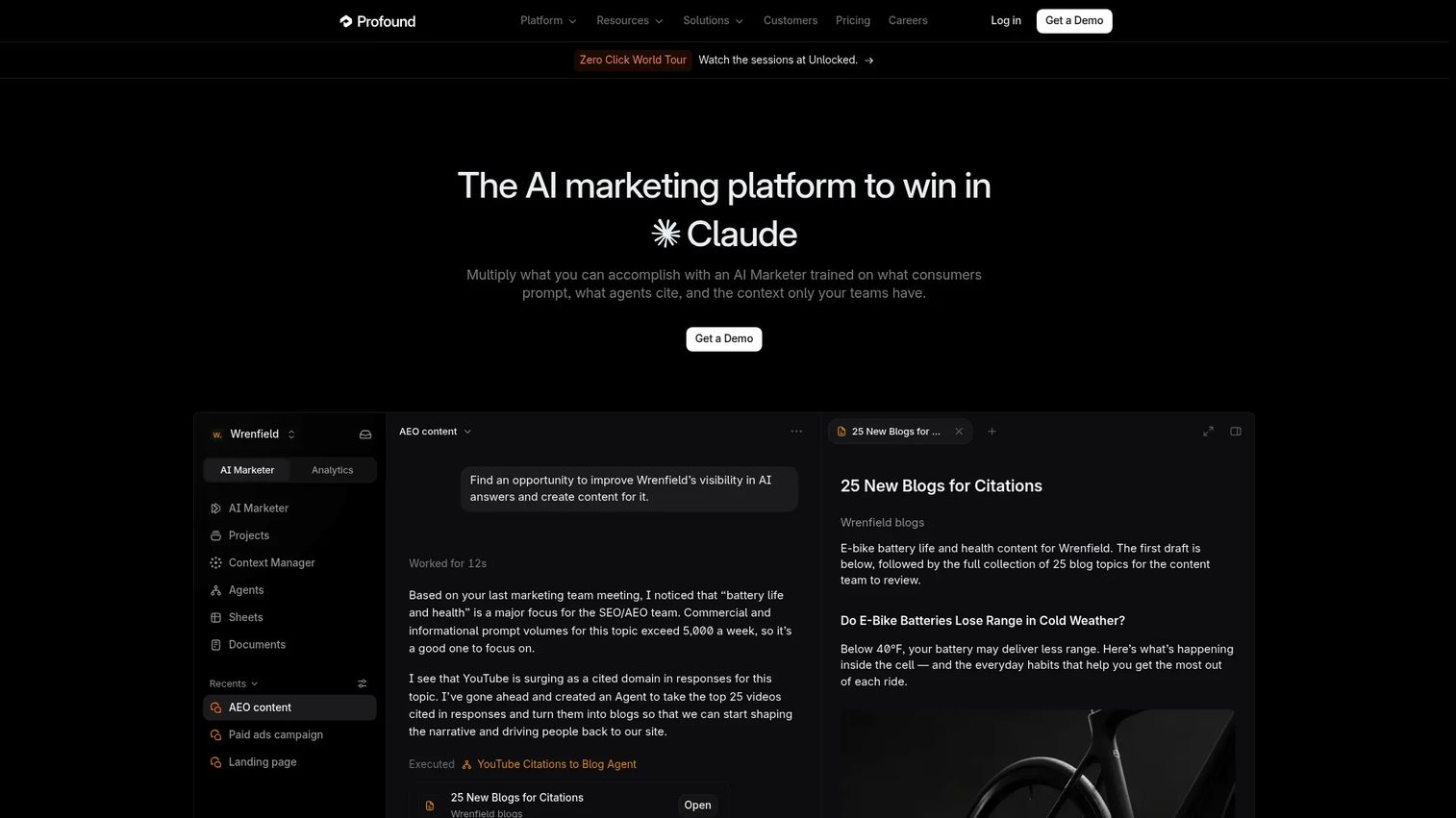
Profound combines AI answer intelligence with research into the questions people ask on AI platforms. Its scope also includes content generation and optimization through agents. That makes it relevant when your team wants to investigate visibility and build an action plan from the findings.
Best for: Growth and search teams establishing a dedicated AI visibility program across commercially important categories.
Key features
- Answer Engine Insights
- Prompt Volumes research
- Brand and competitor visibility analysis
- Content generation and optimization agents
Why choose Profound: Choose it when leadership needs a defensible view of AI discovery and your team needs direction for subsequent content work.
A useful evaluation starts with a category where your business already competes. Ask how the platform distinguishes a passing mention from a recommendation, then inspect the supporting answer.
Keep prompt research and monitored performance separate in your assessment. Understanding what people ask is valuable, but your reporting also needs consistent questions over time.
For a growth team, the operational test is whether a finding becomes an assigned action. Follow an identified opportunity through content review and into your existing measurement process.
Also examine how much of your current manual reporting it can replace. A dedicated subscription earns its place when it changes decisions, rather than adding another score to the monthly deck.
Profound pricing: Starter costs $99/month and Growth costs $399/month, billed yearly. Enterprise uses custom pricing; a free trial is available.
G2 rating: 4.5/5.
2. AirOps
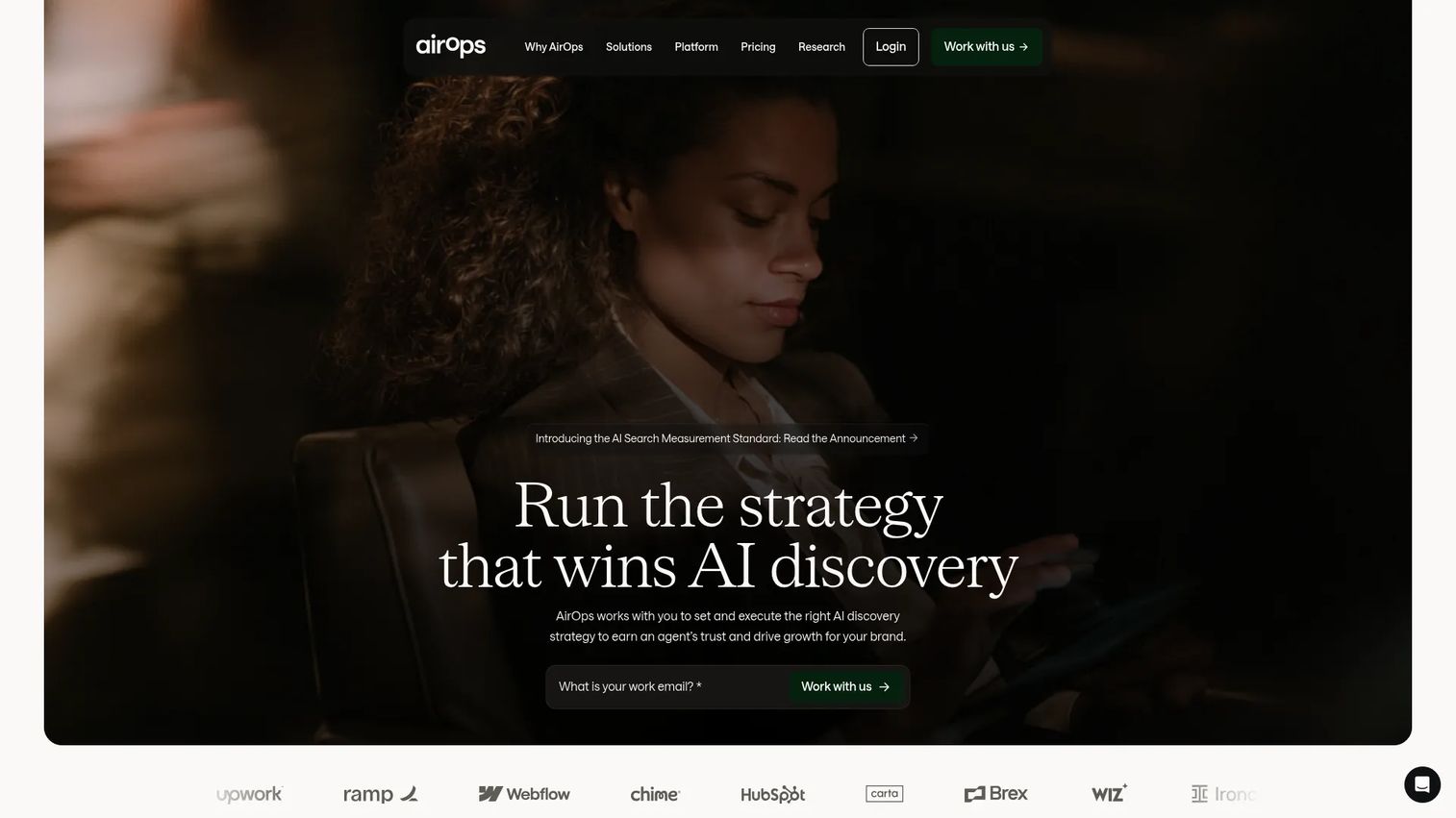
AirOps is an AI search growth platform connecting visibility intelligence with content operations. Its workflows span research through publishing and refreshing. Brand context and human review are central to its documented approach, making it relevant when execution is the bottleneck.
Best for: Content and growth teams that need a repeatable production process around AI search opportunities.
Key features
- Brand Kits and Knowledge Bases
- Agent-powered research and content production
- Human review and approval workflows
- Version history and rollback
- CMS, API, and workflow integrations
Why choose AirOps: It suits teams with a backlog of content opportunities and insufficient production capacity. Evaluate it as an operating workflow, not solely a reporting subscription.
Bring an existing page to the evaluation. Ask the team responsible for publishing to review the proposed changes, including factual accuracy and brand language.
Then test the handoff. A workflow should fit your approval process without creating a parallel queue that editors must maintain manually.
Task allowances deserve attention because content operations involve more than generating a draft. Map the steps you expect to run, including refreshes and review cycles, before estimating ongoing usage.
AirOps lists 35,000 content-production tasks for Solo and 100,000 for Pro. Enterprise has custom limits and dedicated support.
The consolidation question is specific: Can it replace disconnected research and production steps while preserving editorial accountability? Measure that through completed, approved updates rather than generated output.
AirOps pricing: Custom pricing across Solo, Pro, and Enterprise.
G2 rating: 4.7/5
3. Peec AI
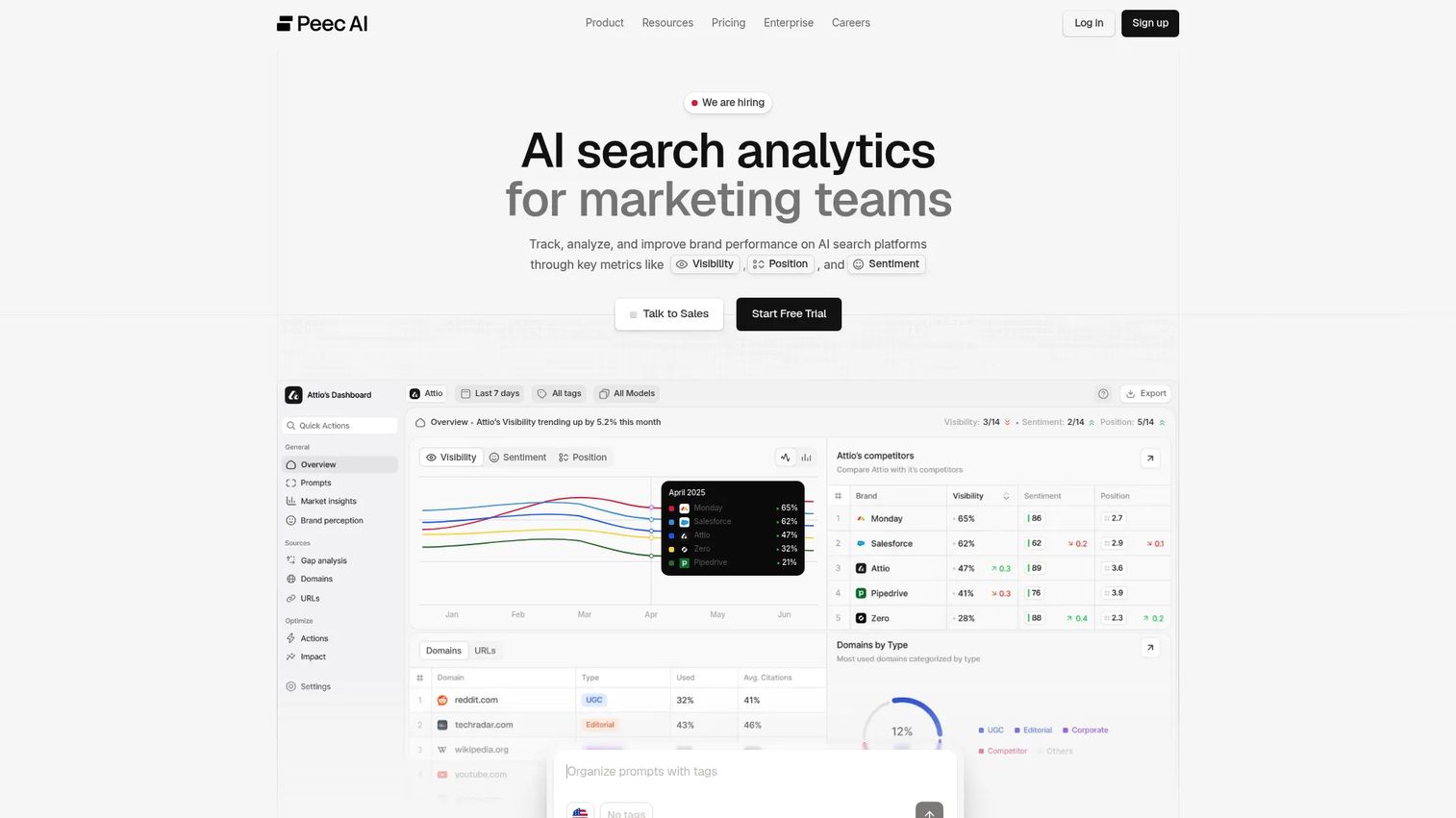
Peec AI focuses on AI search analytics for marketing teams and agencies. It tracks visibility and sentiment alongside competitive positioning. Source analysis and shopping-related capabilities give buyers more to evaluate than a basic brand mention count.
Best for: Marketing teams building a focused reporting process without replacing their entire SEO stack.
Key features
- Visibility and position tracking
- Sentiment and share-of-voice analysis
- Competitor benchmarking
- Source and citation analytics
- SKU-level AI shopping visibility
Why choose Peec AI: Consider it when your primary gap is understanding competitive presence in AI answers. Product-level analysis also makes it relevant to commerce teams.
Organize a pilot around the reports your stakeholders need. A brand manager may care about representation, while a category owner needs evidence of competitive displacement.
Ask how those views relate to the same underlying prompt set. Clear definitions matter more than presenting a single aggregate score to every stakeholder.
For agencies, inspect project and country allowances before estimating margins. Peec’s packages differ across those dimensions, as well as API access and support.
Commerce teams should separately test product discovery questions. A company-level mention does not necessarily explain whether an individual SKU appears in relevant recommendations.
Use the evaluation to determine whether the reporting produces a specific content or distribution decision. If every finding requires another spreadsheet analysis, include that work in the total cost.
Peec AI pricing: Starter costs $95/month, Pro $245/month, and Advanced $495/month. Enterprise uses custom pricing.
G2 rating: 4.7/5
4. Scrunch
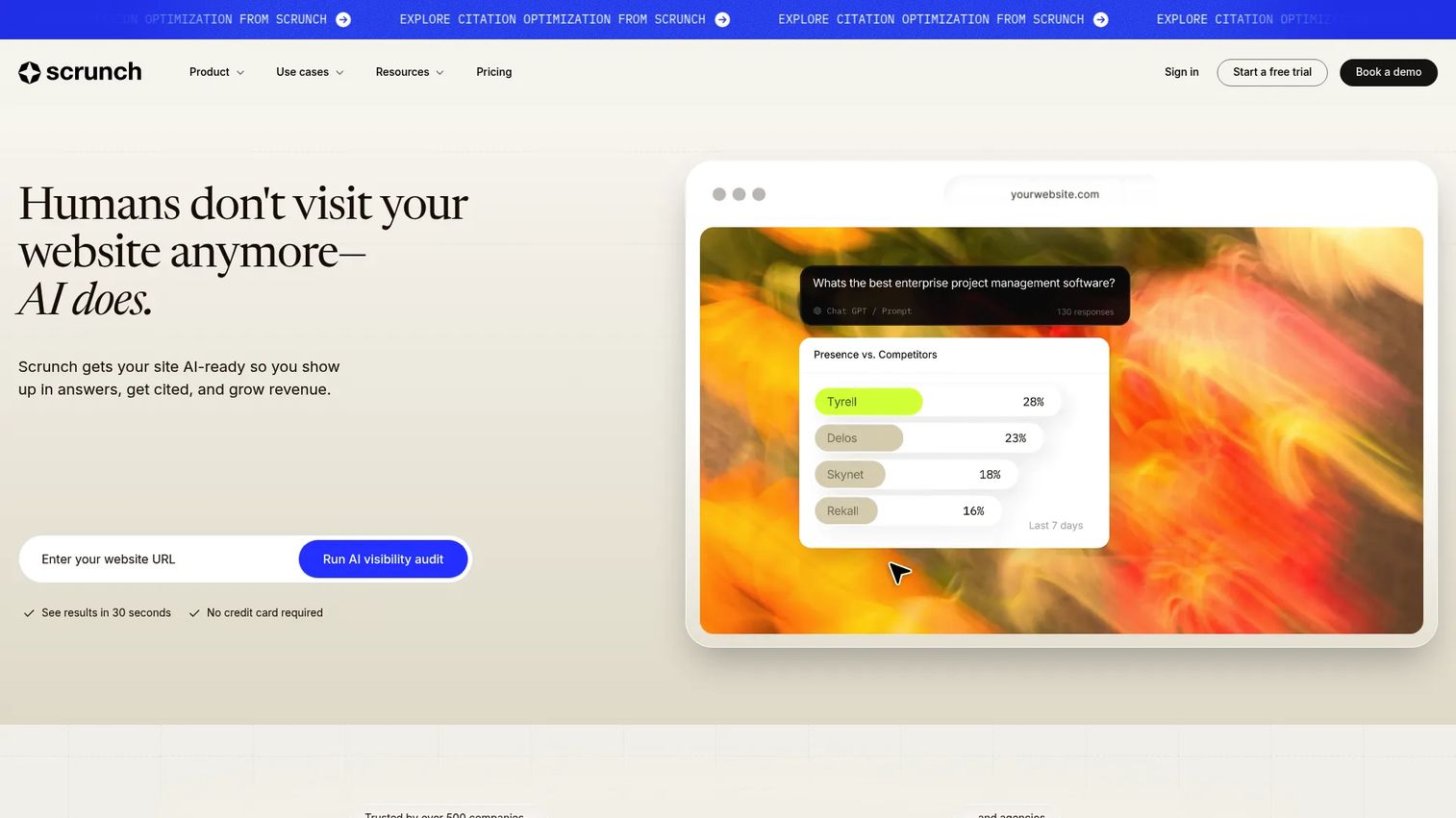
Scrunch combines AI response monitoring with website and agent-experience optimization. Its documented capabilities include citation analysis and AI agent traffic reporting. This gives brand teams a route to investigate both how answers describe the business and how agents encounter its content.
Best for: Brands and agencies evaluating AI representation alongside website optimization opportunities.
Key features
- AI response and citation monitoring
- Fact-checked page optimization
- Agent Pages
- AI agent traffic analysis
- Product-level search performance
Why choose Scrunch: It fits teams concerned with answer accuracy and the content behind those answers. Its scope extends beyond observing whether a brand appears.
Start with a claim that buyers frequently misunderstand, such as product eligibility or a supported use case. Compare the answer against your approved source material.
Next, examine what the platform recommends changing and who would approve that change. Marketing ownership should remain clear when content is prepared for agent consumption.
Core includes one brand and five seats. Its monthly allowances cover 15,000 AI responses, ten citation targets, ten optimized pages, and ten generated pages.
Those limits make multi-brand AEO reporting an important packaging question. Enterprise adds unlimited brands and seats, alongside API access and SSO.
During procurement, distinguish response volume from actionable work. Your team needs enough capacity to investigate recurring questions without paying for a monitoring scope nobody will review.
Scrunch pricing: Core costs $250/month. Enterprise uses custom pricing with yearly billing.
G2 rating: 4.6/5
5. Semrush
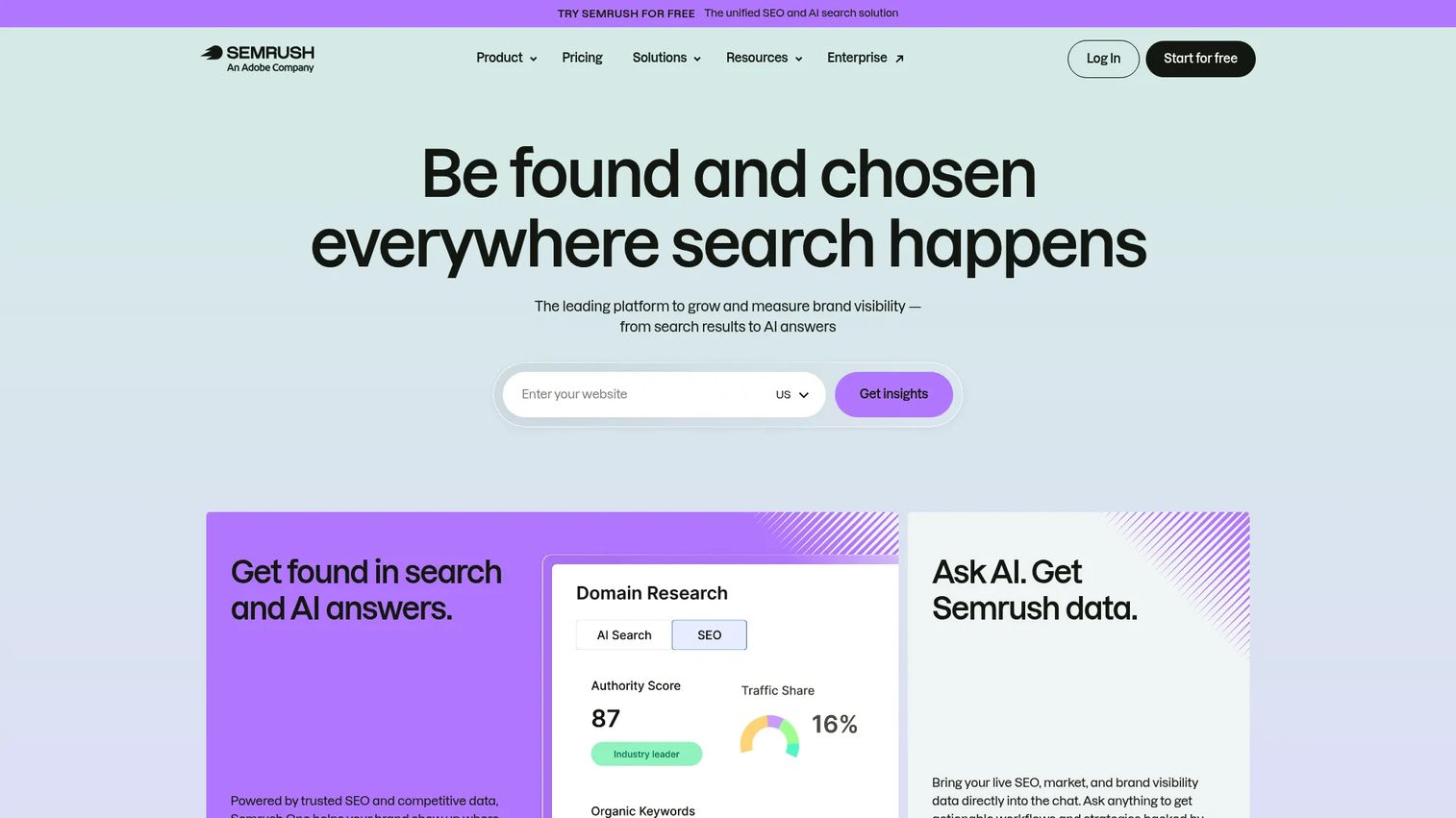
Semrush covers traditional SEO and AI search visibility within a broader marketing platform. Its documented capabilities include content optimization and brand-sentiment monitoring. Existing customers should assess this route before assuming AI discovery requires a separate vendor.
Best for: SEO and growth teams prioritizing stack consolidation across traditional and AI search.
Key features
- Keyword and competitor research
- Technical audits and backlink analysis
- Rank tracking and reporting
- AI visibility and sentiment monitoring
- Content creation and optimization
Why choose Semrush: It is a practical option when your team already runs search programs here. The decision depends on whether its AI capabilities satisfy your reporting requirements.
Evaluate the combined workflow around a commercial topic you already track. Compare what your existing search report explains with the additional questions AI visibility data can answer.
Avoid assuming that familiar branding guarantees identical packaging. Semrush separates SEO and SEO plus AI Search offerings on its pricing page.
Ask which reports your team would retire after adoption. If the answer is none, document the additional decision-making value before calling the purchase consolidation.
For marketers accountable for acquisition costs, connect the evaluation to a content investment decision. You should be able to explain why one page deserves work before another.
A dedicated AEO platform remains worth comparing when custom monitoring methodology is your primary requirement. Test the same questions across shortlisted products rather than judging dashboard appearance.
Semrush pricing: Free access is available; SEO starts at $117.33/month, billed annually. Starter costs $165.17/month on annual billing.
G2 rating: 4.4/5.
6. Ahrefs Brand Radar
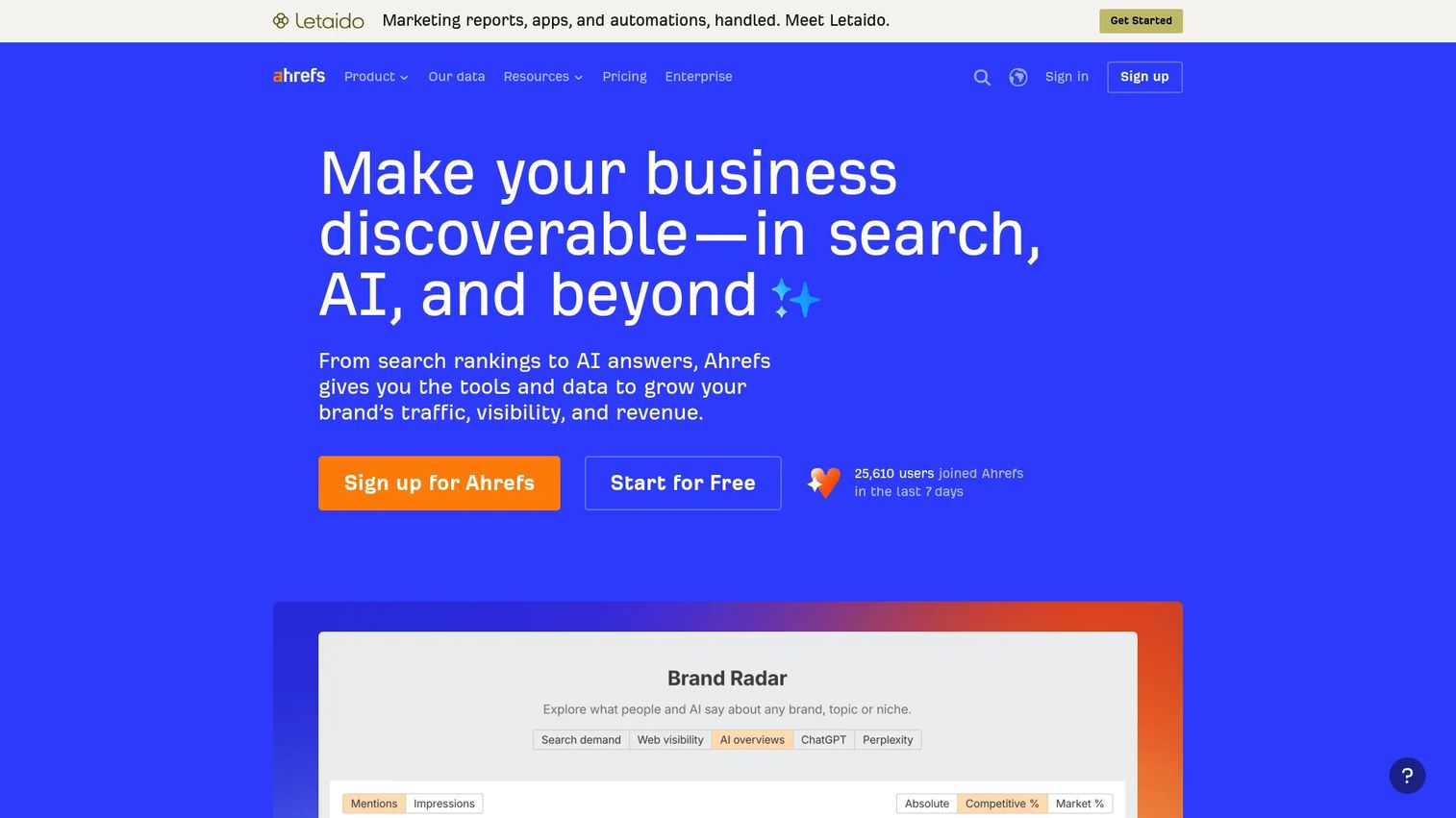
Ahrefs Brand Radar measures brand visibility across AI answers and related discovery channels. It combines custom prompt monitoring with broader visibility indexes. Buyers should distinguish these products from the core Ahrefs SEO subscription when comparing cost and coverage.
Best for: Search and brand teams investigating AI presence alongside wider online visibility.
Key features
- Brand mentions and citation analysis
- AI Share of Voice
- Configurable custom prompt monitoring
- Competitive citation opportunities
- Search and social discovery context
Why choose Ahrefs Brand Radar: It suits teams that want to compare their own tracked questions with broader discovery data. That distinction is useful for research and reporting.
Start by deciding which question you need answered. Tracking an approved list of buying prompts differs from investigating where a brand appears across a larger dataset.
A growth marketer may need both views, but they should not share an undefined denominator. Ask how each report calculates visibility and how its coverage changes.
The product also analyzes web visibility and channels including YouTube, Reddit, and TikTok. Use those views to investigate discovery context rather than automatically assigning conversion credit.
Custom prompt packages and index access have separate prices. All-platform access includes 2,500 custom prompt checks monthly.
For an existing Ahrefs customer, assess the incremental reporting benefit rather than assuming Brand Radar is already included. Budget against the specific access your stakeholders will use.
Ahrefs Brand Radar pricing: Custom Prompts Basic starts at $50/month; AI Visibility Index starts at $199/month. All-platform access costs $699/month.
G2 rating: 4.5/5
7. SE Ranking
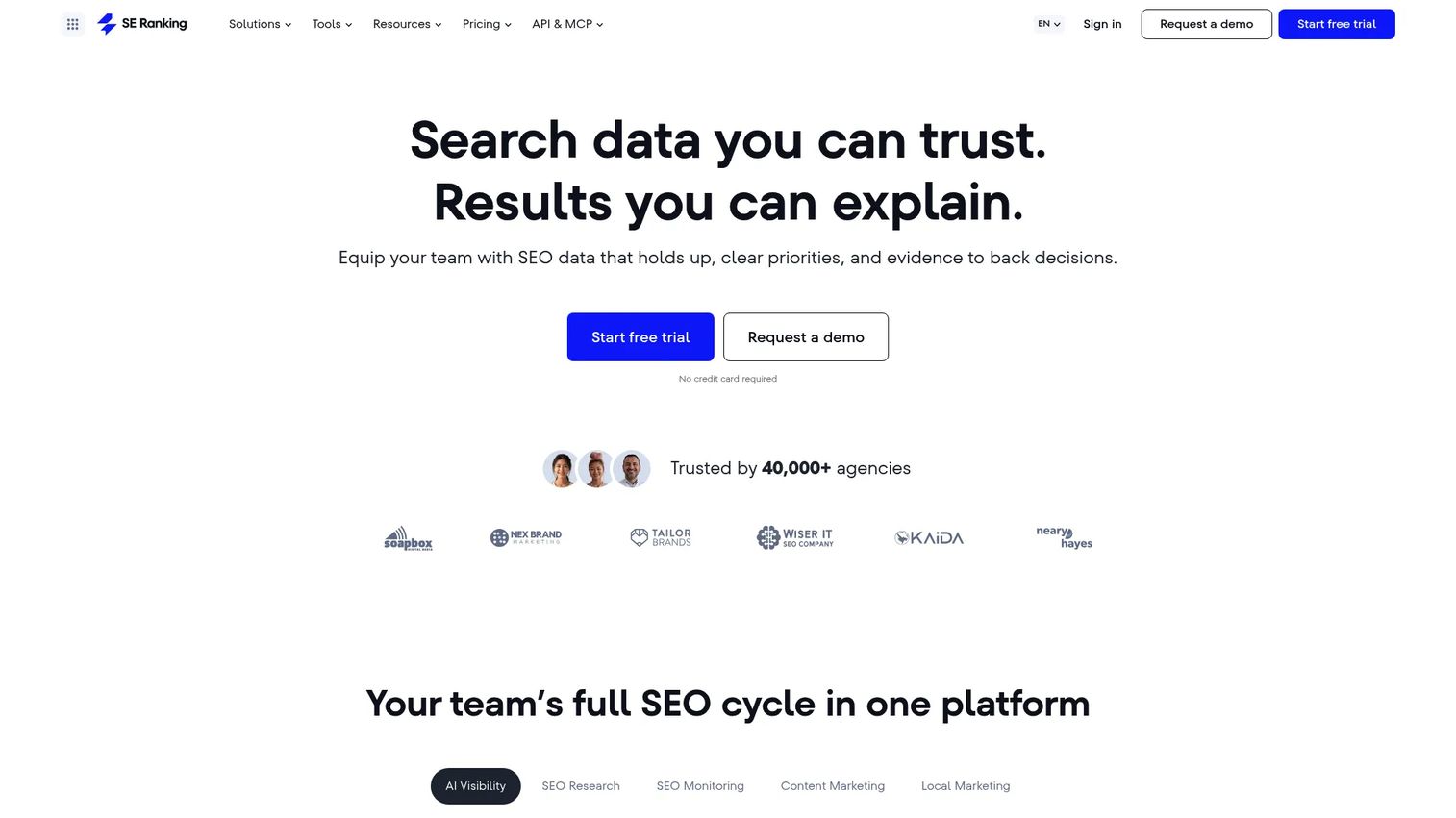
SE Ranking combines SEO research and website auditing with AI visibility tracking. Its integration list includes established analytics and search reporting products. That makes it relevant to agencies and in-house teams seeking a connected search workflow.
Best for: Small and midsize teams evaluating SEO and AI visibility under the same subscription relationship.
Key features
- Search rank tracking
- Keyword and backlink research
- Website and on-page audits
- AI visibility tracking
- Analytics and Search Console integrations
Why choose SE Ranking: Consider it when maintaining separate search reports consumes too much time. Compare the complete package against your existing subscriptions before assuming a cost saving.
The documented integrations include Data Studio, Matomo, Google Analytics, and Google Search Console. Their presence is useful, but the evaluation should examine which fields reach your reporting destination.
An agency should use a representative client account for the trial. Test whether the resulting report explains a business issue without requiring extensive manual interpretation.
For in-house teams, bring an existing organic performance review. Determine how AI visibility findings would change priorities within that meeting.
Check the scope of the selected plan rather than treating every platform feature as included. Agency requirements can differ from a single-brand program, especially around recurring delivery.
The clearest success criterion is a report your team can maintain consistently. Count preparation time and the resulting actions alongside the subscription cost.
SE Ranking pricing: Core costs $103.20/month annually or $129/month monthly. A 14-day free trial is available.
G2 rating: 4.7/5
8. Goodie AI
Goodie AI is an AEO platform covering research through optimization and measurement. Its active product website is higoodie.com. The documented offering includes prioritized actions and revenue attribution, making it broader than a lightweight visibility checker.
Best for: Marketing teams seeking an execution-oriented AEO program with a path toward revenue measurement.
Key features
- AI prompt research
- Brand visibility monitoring
- Prioritized optimization actions
- AI-optimized content creation
- AI traffic and revenue analysis
Why choose Goodie AI: Evaluate it when reporting gaps and execution capacity both need attention. Revenue-oriented teams should inspect attribution requirements before choosing a plan.
Core includes five models and 110 prompts, with 50 optimizations monthly. Pro expands those allowances to eight models, 250 prompts, and 100 optimizations.
The Enterprise offering includes revenue attribution and multi-brand performance, plus API access. Those distinctions matter if the purchase depends on connecting activity to pipeline.
Ask the vendor to explain an attribution example using your conversion definitions. Identify which events are observed directly and which conclusions rely on a model.
Then assess the work behind an optimization recommendation. A useful action should have a clear owner and an approval path before it enters production.
For lean teams, compare the available action capacity with realistic publishing bandwidth. Paying for recommendations that nobody implements will not address the underlying execution gap.
Goodie AI pricing: Core costs $295/month and Pro costs $999/month. Enterprise uses custom pricing; no free plan is available.
9. Otterly
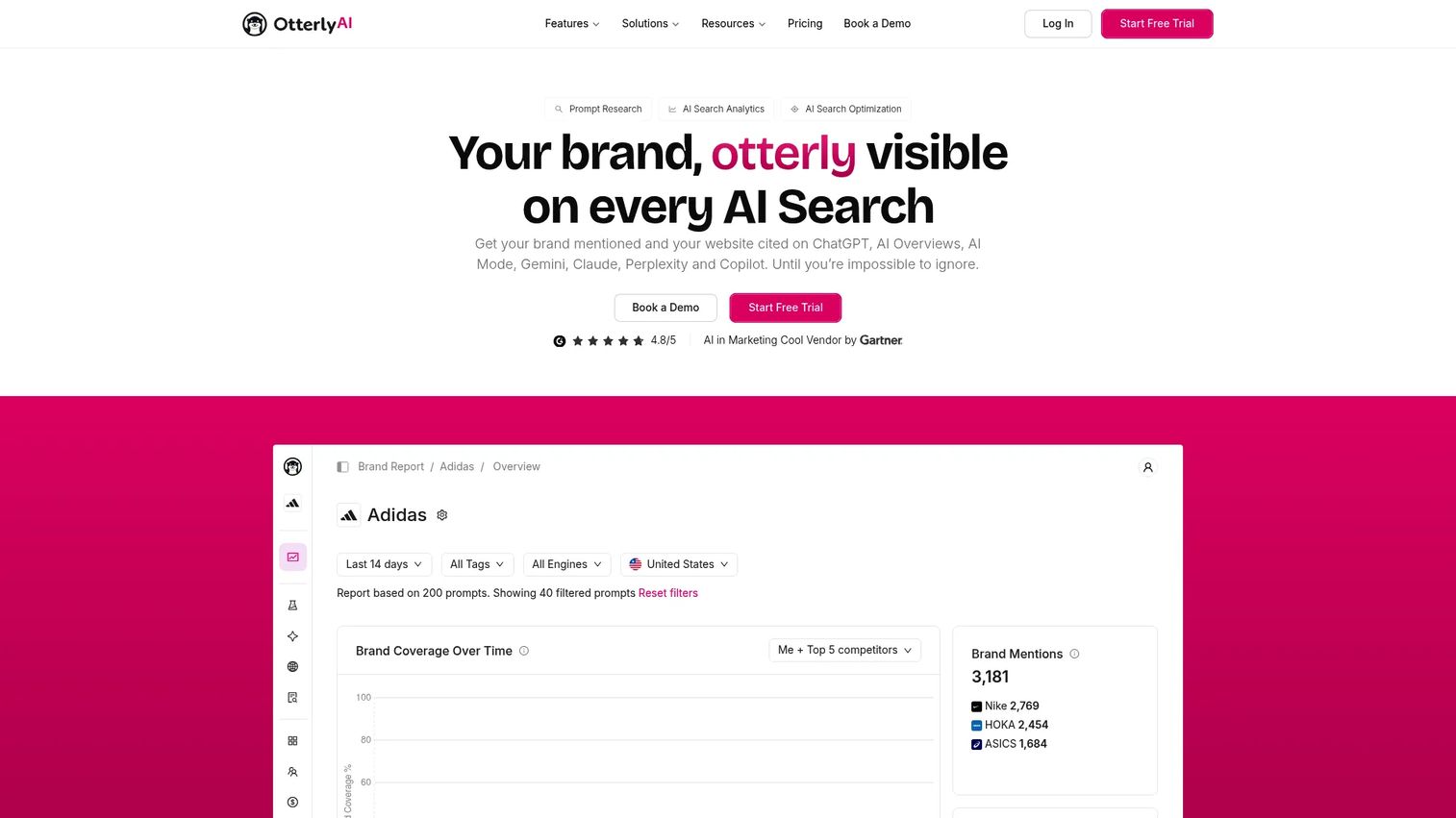
Otterly focuses on AI search monitoring and optimization. It combines prompt research with brand visibility analysis and citation reporting. Content audits extend its role beyond a simple record of mentions.
Best for: Marketers and agencies establishing recurring AI answer monitoring with a lower subscription entry point.
Key features
- AI prompt research
- Brand visibility analytics
- Link citation analysis
- GEO content audit recommendations
- Reports and exports
Why choose Otterly: It is worth shortlisting when ongoing observation is the immediate requirement. Evaluate its recommendations against your existing content workflow.
Documented coverage includes ChatGPT and Perplexity, plus Gemini, Claude, and Microsoft Copilot. Google AI Overviews and AI Mode are also listed.
Engine availability alone should not decide the purchase. Inspect how your chosen package handles prompt capacity and the reporting cadence your stakeholders expect.
For an agency, use the evaluation to build a recurring client report. Include a plain explanation of what changed and which action you recommend next.
A low entry price is useful for testing a narrow scope. It does not establish the cost of a larger program spanning many questions or clients.
Keep your initial prompt set tied to a commercial decision. Expanding coverage is easier to justify after the first report influences a page update or campaign priority.
Otterly pricing: Lite costs $29/month, Standard $189/month, and Premium $489/month. A seven-day free trial is available.
G2 rating: 4.7/5
10. AthenaHQ
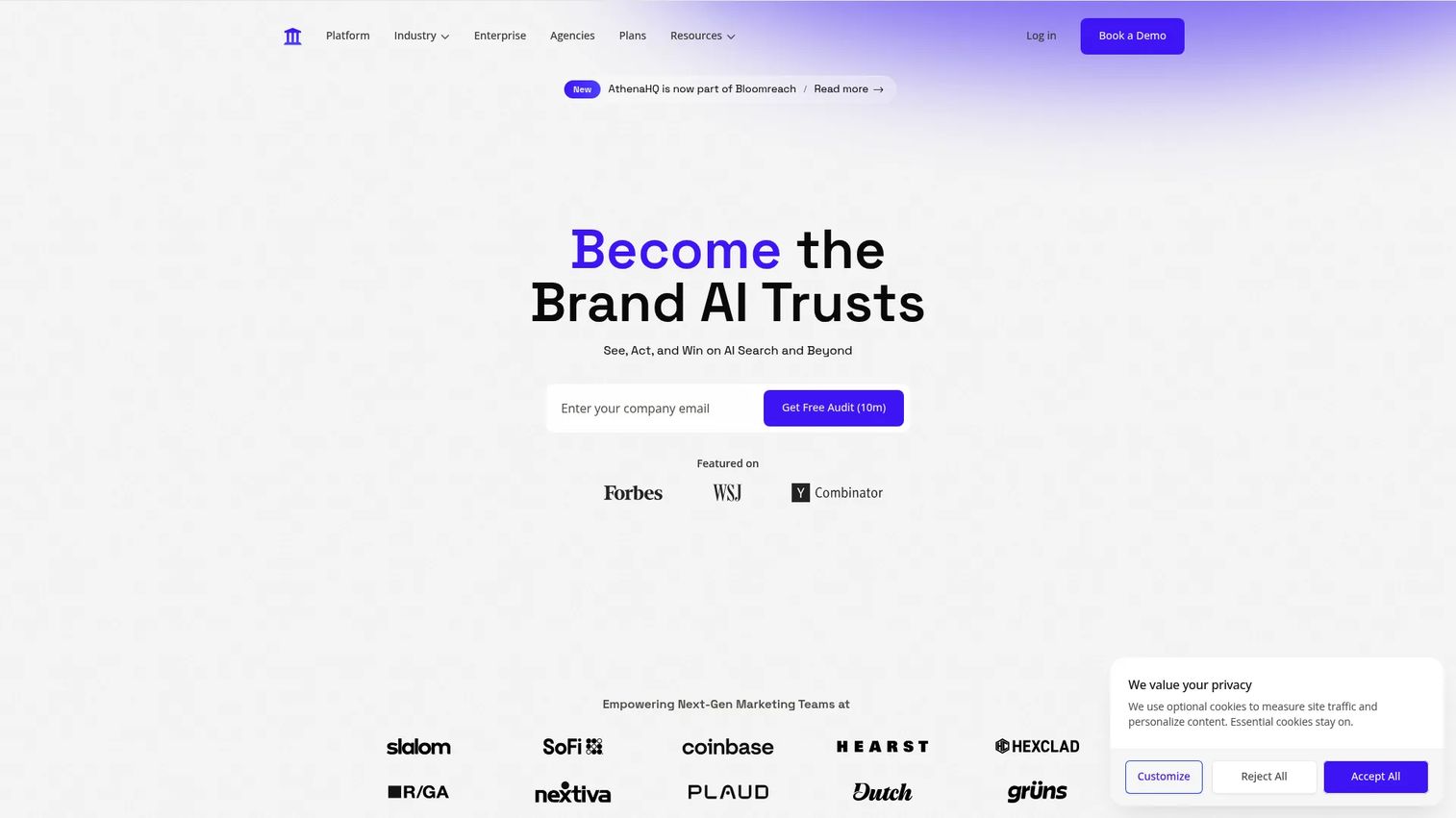
AthenaHQ combines AI visibility tracking with content optimization recommendations. Citation analysis and competitive monitoring support the research side of the workflow. Brand alerts and sentiment analysis add context for marketing and PR teams.
Best for: Teams establishing a dedicated AEO program across search, content, and brand functions.
Key features
- Cross-platform visibility tracking
- Content optimization recommendations
- Citation source analysis
- Competitor monitoring
- Brand alerts and sentiment analysis
Why choose AthenaHQ: It suits buyers who want monitoring and recommended actions within the same product. Its credit model deserves close attention during evaluation.
Essential includes 300 credits. Starter includes 3,600 credits and visibility across 11 models, with unlimited topics and prompts.
Those allowances describe different dimensions. Unlimited prompt creation should not be interpreted as unlimited analysis capacity.
Ask the vendor to map your proposed reporting schedule to expected credit consumption. Include repeat analysis and the additional work prompted by a major content release.
For cross-functional teams, define who owns each finding. PR may investigate an external citation opportunity while content operations handles a page change.
Enterprise adds governance and SSO, along with executive dashboards and custom credits. Assess those requirements early if procurement or centralized access management will shape the decision.
A useful pilot should end with an agreed reporting owner and an implemented recommendation. Treat those as adoption evidence rather than relying on login counts.
AthenaHQ pricing: Essential is free; Starter costs $295/month. Enterprise uses custom pricing.
G2 rating: 4.9/5.
11. BrightEdge
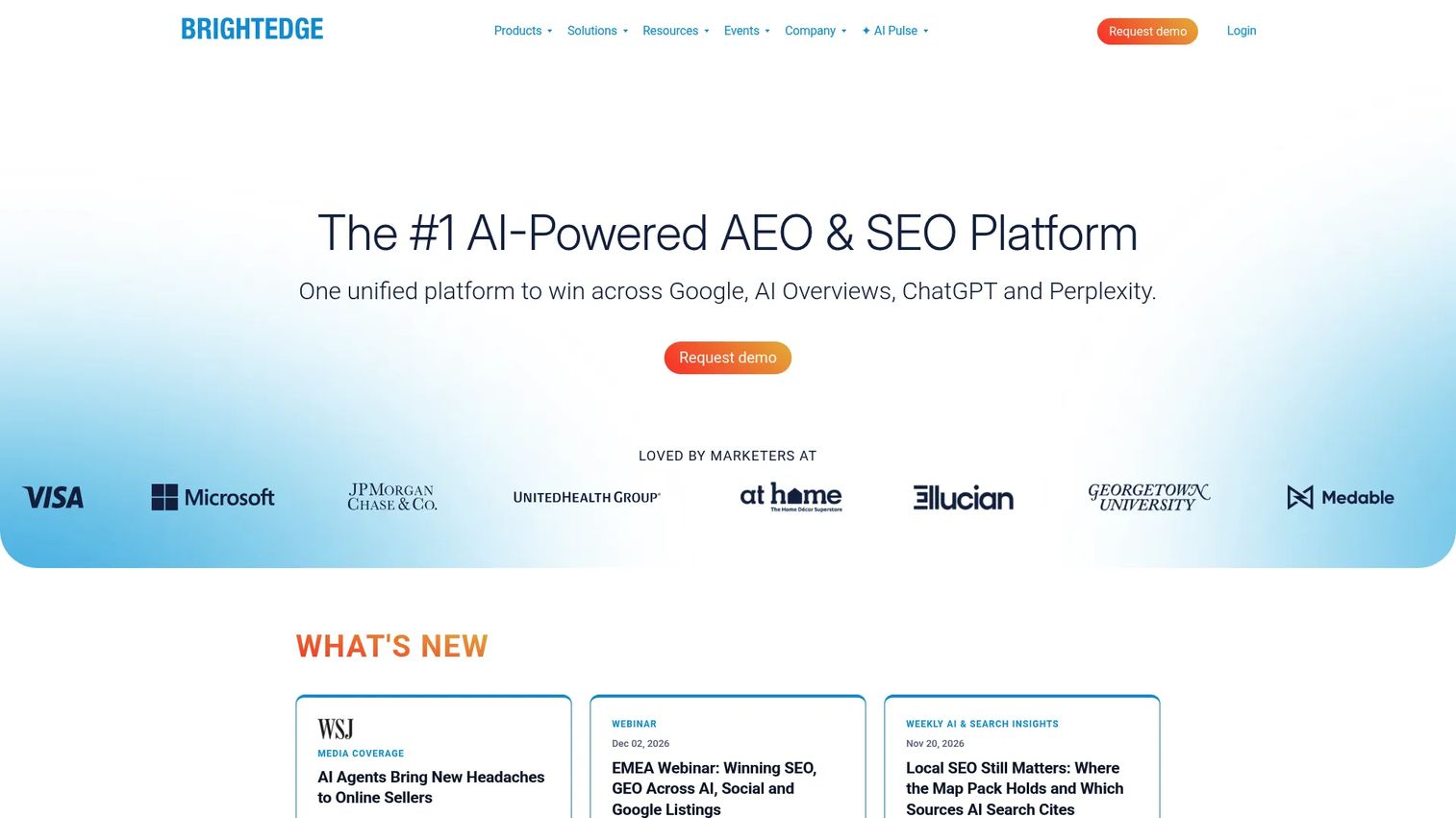
BrightEdge brings AI search measurement into an enterprise SEO platform. Its documented scope includes content recommendations and technical auditing. Reporting capabilities also cover forecasting and ROI measurement, which matter when search investment spans large organizations.
Best for: Enterprise marketing teams managing search performance across large or global website portfolios.
Key features
- AI search visibility measurement
- Keyword tracking and competitive analysis
- Content optimization recommendations
- ContentIQ technical auditing
- Custom dashboards and ROI reporting
Why choose BrightEdge: Consider it when AI search must fit an established enterprise search program. A focused tracker may suit a narrower monitoring requirement.
BrightEdge documents AI visibility measurement across ChatGPT, Perplexity, and Google AI Overviews. Evaluate that coverage against the specific buying journeys your regional teams manage.
Bring the people who consume reports into the selection process. An executive dashboard and a technical action queue serve different purposes, even when they share data.
Ask how a central team would compare markets without flattening local context. Language and website ownership can change what a useful recommendation looks like.
The procurement discussion should include the operational work required to adopt the platform. Identify which existing reporting processes would remain and which would be retired.
For an organization already investing heavily in search, the central question is incremental value. Assess whether AI visibility intelligence improves allocation decisions across the portfolio.
Keep ROI methodology explicit. A forecast should remain distinguishable from observed conversions and closed revenue.
BrightEdge pricing: Custom pricing.
G2 rating: 4.4/5
12. Conductor
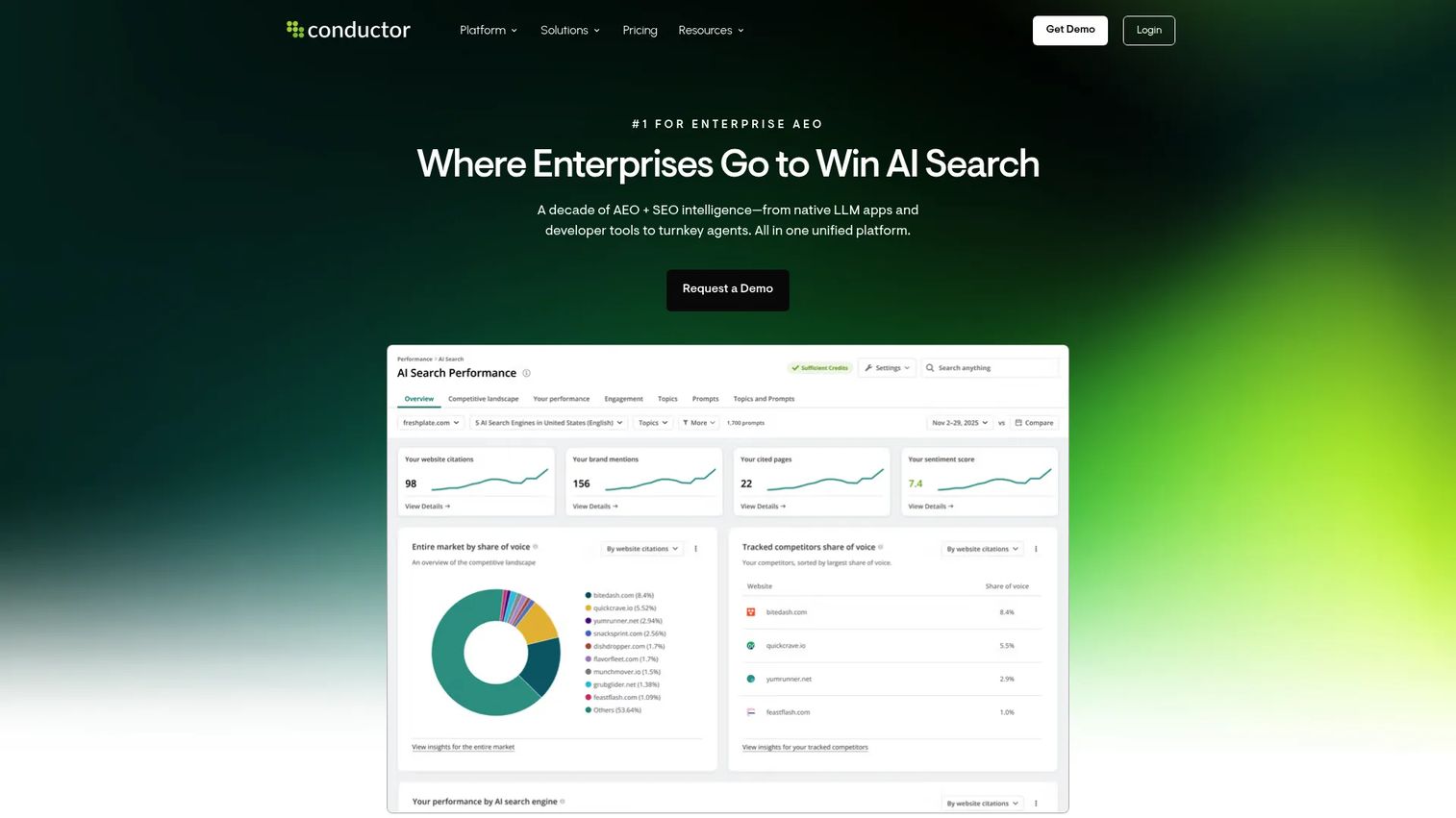
Conductor combines enterprise AEO and SEO with content creation and website monitoring. Its documented AI search coverage includes ChatGPT and Perplexity. The product also offers data access through an API and MCP server.
Best for: Enterprise organic marketing teams connecting content work with search intelligence and technical monitoring.
Key features
- AI search visibility tracking
- Content generation and optimization
- Topic research and competitive intelligence
- Website monitoring and change alerts
- Data API and MCP server
Why choose Conductor: It fits organizations evaluating a broader organic marketing workflow. Teams buying solely for prompt monitoring should compare that wider scope against their requirements.
The evaluation should follow a change from discovery through implementation. Start with an opportunity, assign a content update, and review how the result enters performance reporting.
Website monitoring introduces a separate operational benefit. Ask which alerts matter to marketing and which should go directly to technical owners.
For a large organization, data access deserves its own test. Determine whether the API provides the fields and history your BI team expects.
Conductor describes Essentials, Growth, and Enterprise packages with usage-based pricing. Build a usage estimate from your operating model before entering contract discussions.
The free trial gives teams room to assess workflow fit. Use it to validate handoffs across departments rather than asking one specialist to inspect every feature alone.
A platform becomes valuable when teams agree on the next action. Include that decision quality in the evaluation scorecard.
Conductor pricing: Custom pricing across Essentials, Growth, and Enterprise. A three-week free trial is available.
G2 rating: 4.5/5.
13. Adobe LLM Optimizer
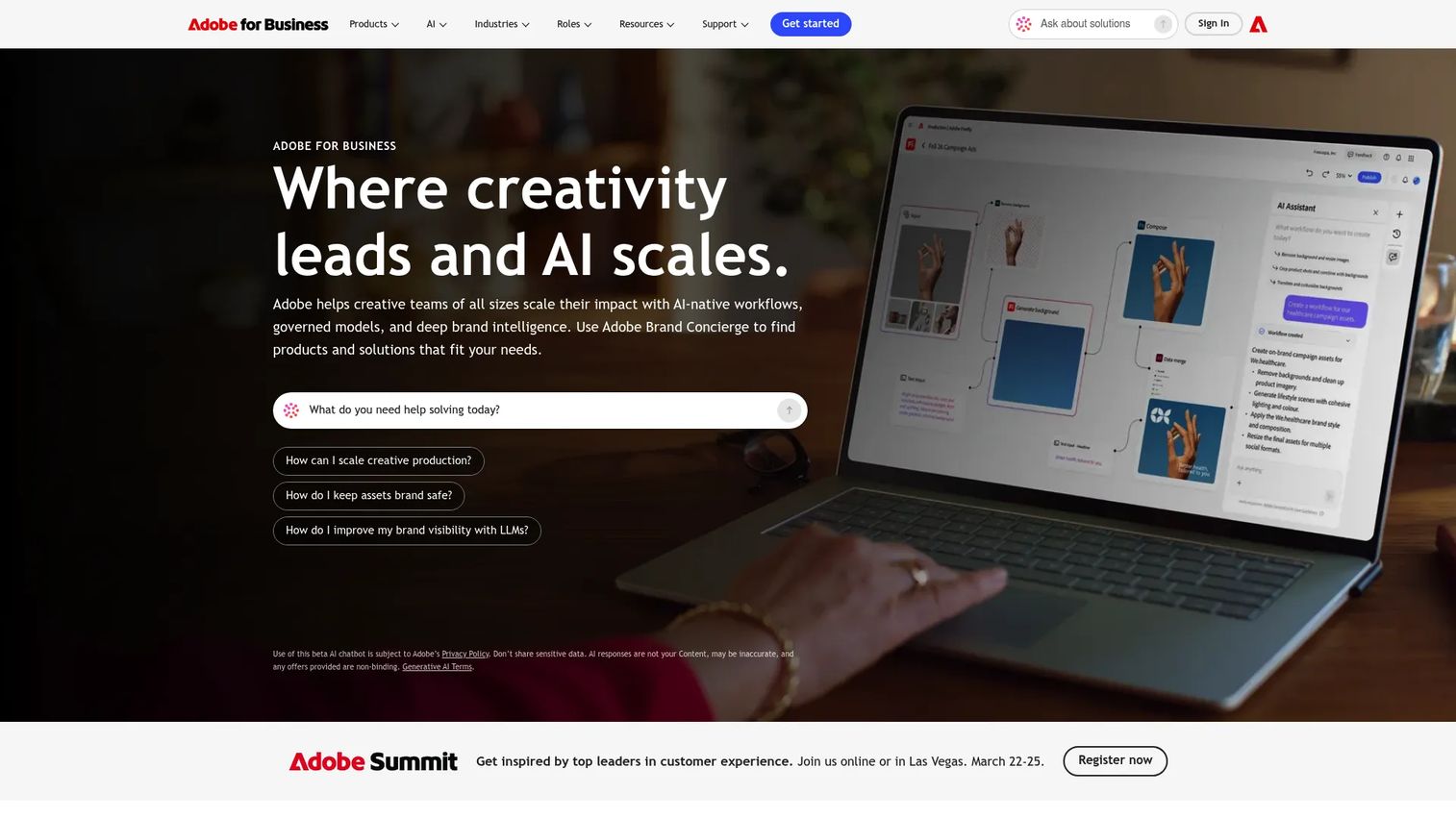
Adobe LLM Optimizer is now called Adobe Brand Visibility. The enterprise GEO product combines visibility measurement with optimization deployment. Its documented analytics connections make it particularly relevant to organizations already using Adobe’s experience and measurement products.
Best for: Enterprise teams evaluating AI visibility within an Adobe-centered marketing architecture.
Key features
- Brand mentions and citation tracking
- Sentiment and share-of-voice measurement
- CDN-edge GEO optimization
- Adobe Experience Manager Sites recommendations
- Adobe Analytics and Customer Journey Analytics connections
Why choose Adobe LLM Optimizer: Consider the current Adobe Brand Visibility offering when your analytics and publishing architecture already centers on Adobe.
The distinction between recommendations and deployed changes deserves attention. Ask which workflow fits your website and who approves changes before they reach visitors or machines.
Bring analytics and engineering into the evaluation early. Marketing should understand how optimization results connect to existing measurement definitions.
Adobe’s documented connections provide a specific integration story. They do not remove the need to establish how your organization will interpret attributed outcomes.
For procurement, assess required products and implementation responsibilities separately from the AI visibility interface. Existing Adobe customers and organizations adopting new infrastructure will face different decisions.
A useful pilot would trace one optimization from its supporting evidence to deployment and reporting. Record the approvals and dependencies involved.
That operational picture is more valuable than evaluating a dashboard in isolation. It also helps determine whether this enterprise approach fits the team that will maintain it.
Adobe LLM Optimizer pricing: Custom pricing for Adobe Brand Visibility.
G2 rating: 3.8/5
14. MarketMuse
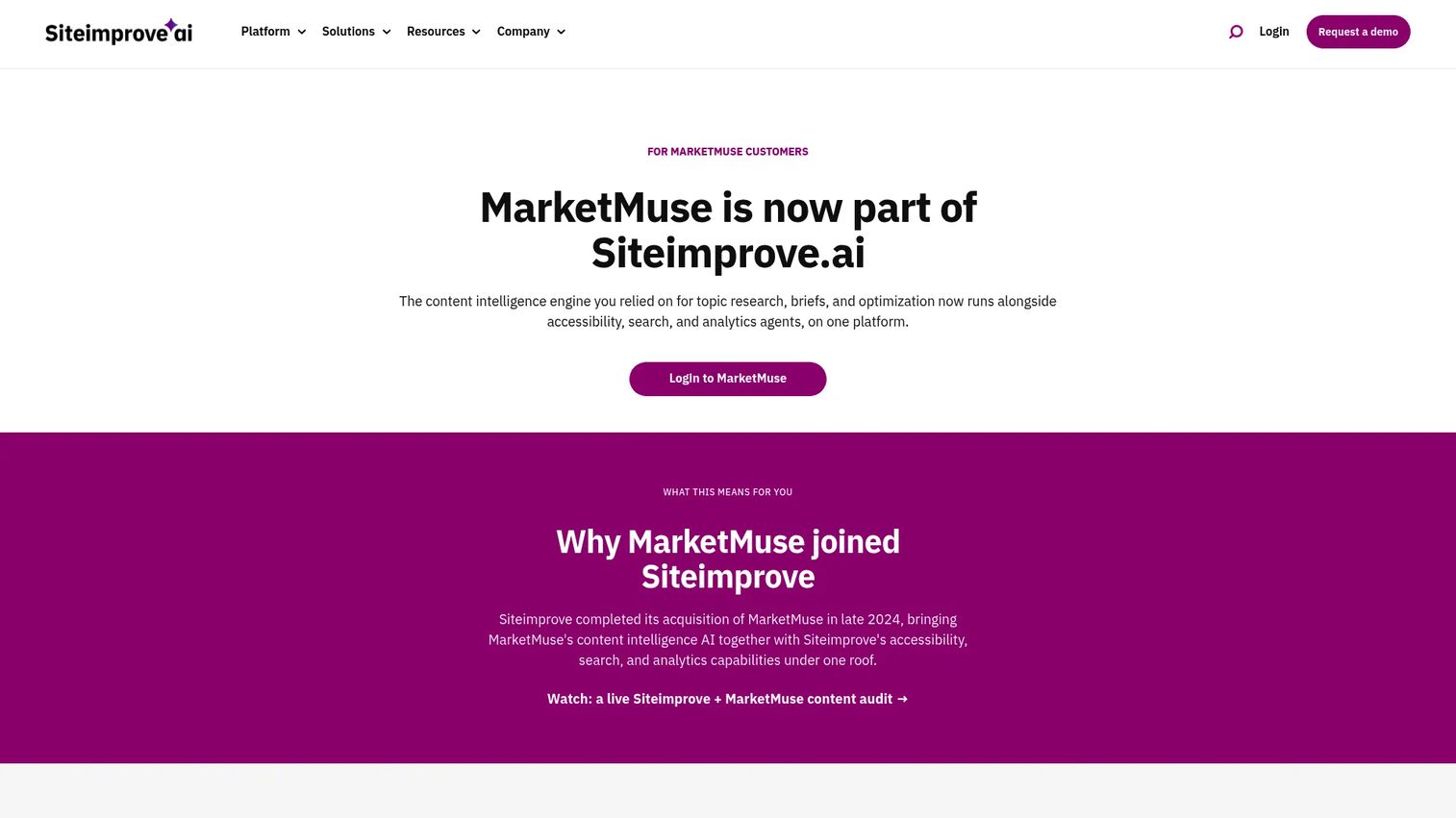
MarketMuse supports content research and strategy through topic modeling and competitive analysis. Its optimization tools help teams evaluate coverage within individual pages. In an AEO stack, its clearest role is strengthening content decisions rather than serving as the central answer-monitoring system.
Best for: Content teams prioritizing topic coverage and improving the quality of planned updates.
Key features
- Topic models and question research
- Content Score optimization
- SERP X-Ray and SERP Heatmap
- Site Heatmap and cluster analysis
- Linking suggestions
Why choose MarketMuse: It is relevant when your team needs to decide what content to improve and why. Pair content evaluation with visibility measurement when both jobs matter.
Bring a page that ranks reasonably well but does not answer an important buyer question clearly. Use the analysis to develop an editorial brief.
Ask writers to distinguish useful coverage from unnecessary expansion. A higher content score should not become a reason to add paragraphs without reader value.
Competitive analysis can support prioritization across a topic cluster. Translate that research into a manageable publishing plan with clear owners.
For growth marketers, the value test is editorial focus. Does the platform help you choose a worthwhile update instead of commissioning another loosely related article?
Keep AI search outcomes in a separate reporting layer unless you have established a direct measurement connection. Better content coverage is an input to the program, not proof of increased citations.
MarketMuse pricing: A Free plan is available. Optimize, Research, and Strategy use custom pricing.
G2 rating: 4.6/5.
15. AnswerThePublic
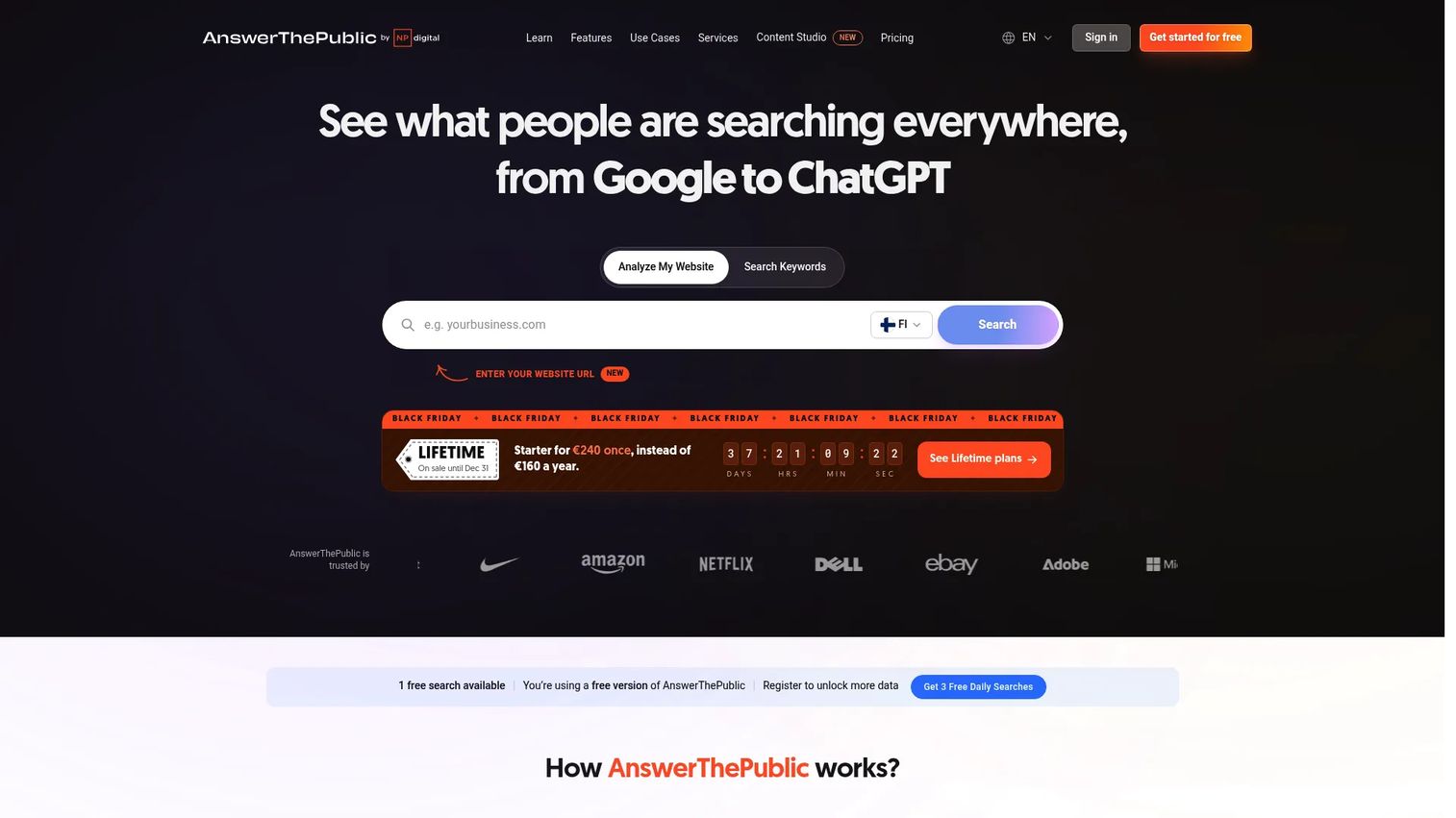
AnswerThePublic helps marketers investigate questions and search behavior around a topic. Its documented capabilities include keyword and URL-based insights, plus search listening. Treat it as a research component within an AEO workflow rather than a substitute for citation monitoring.
Best for: Marketers building question-led briefs and exploring demand before commissioning content.
Key features
- Keyword and URL-based insights
- Search-volume and CPC data
- Search listening alerts
- Trend comparisons
- Keyword lists and exports
Why choose AnswerThePublic: It is useful when the immediate task is finding questions worth answering. Full AEO reporting requires a separate measurement process.
Start with a product category and review the resulting questions against customer research. Prioritize queries that connect to a buying decision or a recurring objection.
Avoid turning every discovered phrase into a separate article. Group related questions around a useful page and decide which deserve a direct answer within it.
The research can also help challenge an internally generated prompt list. Compare the language your team uses with the language surfaced in search behavior.
Starter supports one user and 100 searches monthly. Growth increases capacity to three users and 200 searches, while Business supports ten users and 300 searches.
Those allowances make workload planning straightforward. Estimate how often strategists will research new topics and revisit existing ones before selecting a package.
Evaluate research quality through the briefs your team produces. A long question list has little value until it changes what gets published.
AnswerThePublic pricing: Starter costs $13.33/month, billed yearly. The website also offers free access to get started.
G2 rating: 4.5/5.
16. Lumar
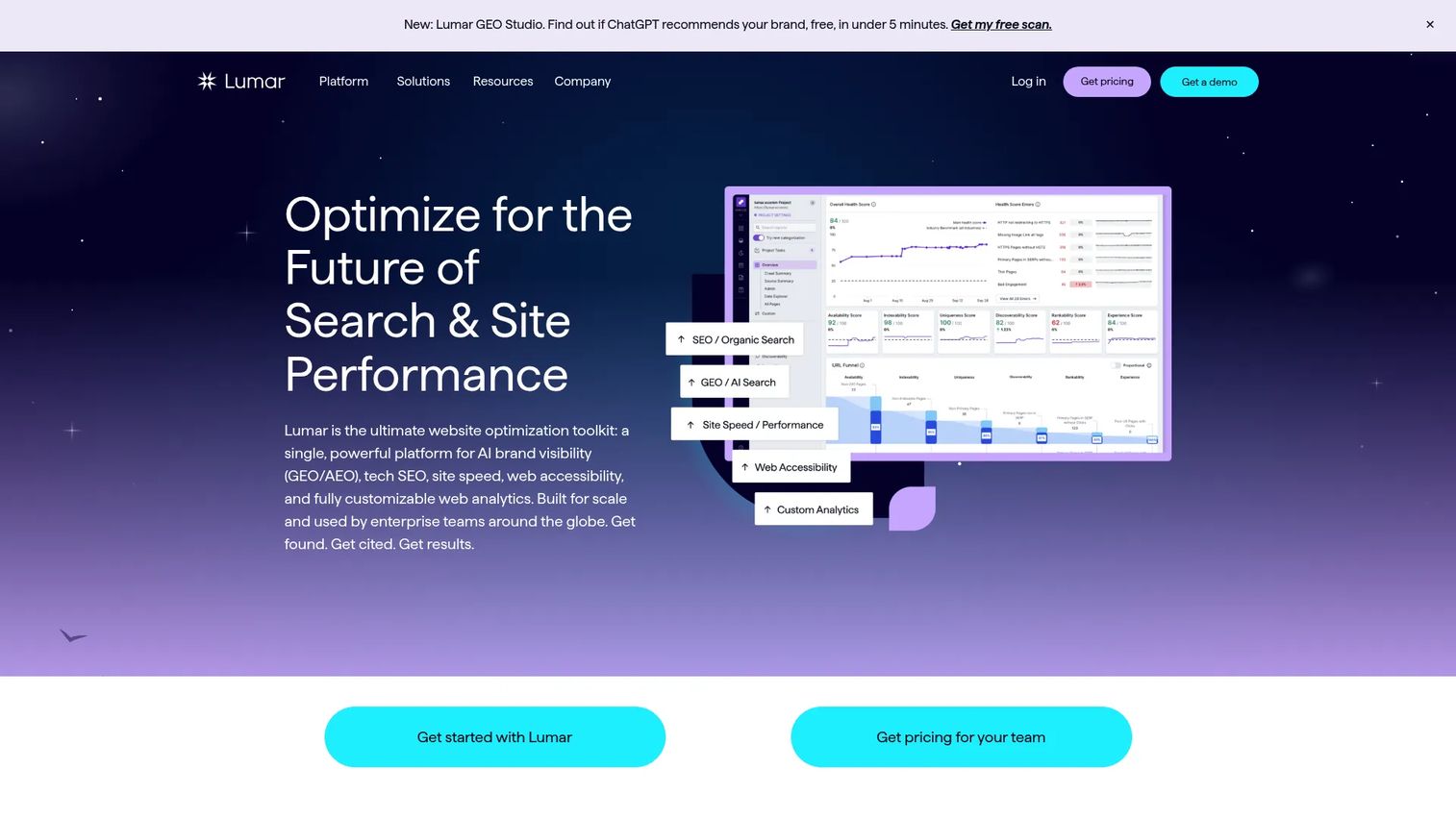
Lumar covers technical SEO and website optimization, with GEO auditing among its documented capabilities. The broader platform includes performance analysis and automated quality assurance. Its separately priced GEO Studio adds an important distinction: Lumar is not limited to technical site auditing.
Best for: Teams connecting AI search work with engineering ownership and website health.
Key features
- Technical SEO and GEO audits
- Lighthouse and CrUX performance analysis
- Website monitoring and custom alerts
- CI/CD website quality assurance
- Custom analytics and reporting
Why choose Lumar: Evaluate the broader platform when technical changes underpin your GEO program. Assess GEO Studio separately when prompt monitoring and content evaluation are the immediate requirements.
Technical GEO reviews should cover crawlability and rendering, alongside structured data and access policies. Ask which checks your selected Lumar package supports.
Likewise, distinguish AI crawler analytics from answer monitoring. Server-log evidence concerns access; prompt responses concern what an answer system produces.
GEO Studio Starter includes one AI engine and ten daily prompts. It also provides 300 monthly responses and 25 content evaluations.
Growth expands to three engines and 50 daily prompts, with higher response and evaluation allowances. These are GEO Studio limits, not specifications for the full enterprise platform.
For procurement, write separate requirements for technical remediation and visibility tracking. That prevents a low entry price from becoming an inaccurate estimate for enterprise website coverage.
Lumar pricing: GEO Studio Starter costs $25/month and Growth costs $179/month. The full enterprise platform uses custom pricing.
G2 rating: 4.6/5
17. HubSpot AEO
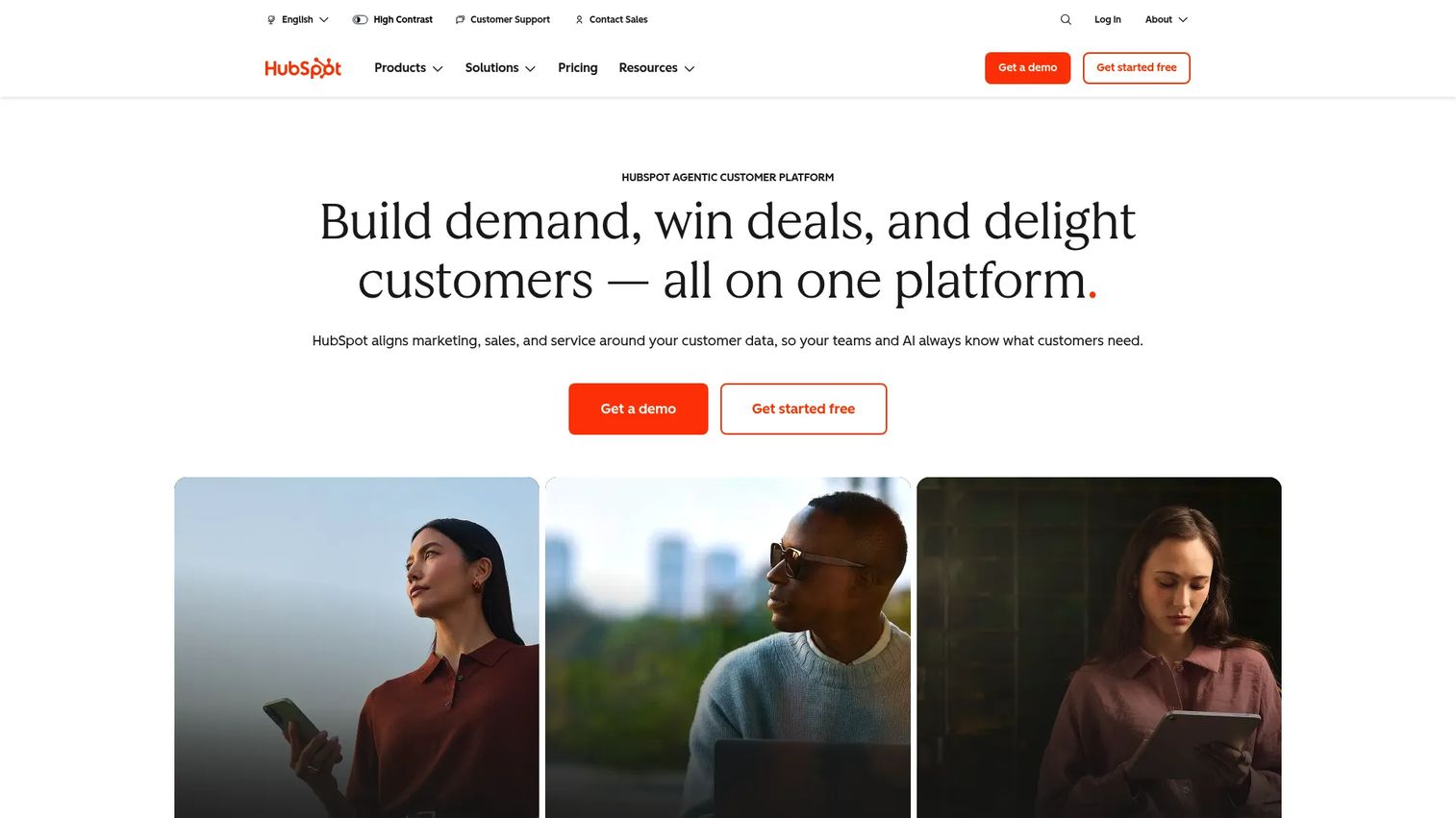
HubSpot AEO helps marketers monitor brand presence across ChatGPT, Gemini, and Perplexity. Its documented capabilities include competitive analysis and prioritized recommendations. HubSpot identifies the product as beta, which makes current behavior worth testing against your operational requirements.
Best for: Existing HubSpot customers evaluating AI visibility without immediately adding another vendor.
Key features
- Brand visibility dashboard
- Prompt tracking and suggestions
- Competitor analysis
- Citation analysis
- Prioritized recommendations
Why choose HubSpot AEO: It is a practical first evaluation for teams already paying for qualifying Marketing Hub plans. Its documented feature set centers on visibility and recommendations.
The package tracks 25 prompts daily across its supported engines and includes 2,500 answers monthly. Optional capacity packs add ten prompts and 1,000 answers.
Use the trial to assess whether those questions cover your most valuable buying situations. Include category discovery and comparisons, rather than filling the list with branded queries.
CRM attribution for AEO should remain a separate evaluation question. A product’s location within HubSpot does not establish which visibility events connect to a contact or deal.
Ask for a demonstration using your conversion definitions and reporting requirements. Identify where additional configuration or analysis would be necessary.
For an existing customer, first determine what your subscription already includes. Then compare the remaining gap against a standalone AEO platform, including any reporting work your team would retain.
HubSpot AEO pricing: $50/month, with a 28-day free trial. It is also included in Marketing Hub Professional and Enterprise.
G2 rating: 4.5/5
Considerations when choosing an AEO GEO software platform
AI engine coverage
List the answer surfaces your buyers use, then compare engine availability and refresh schedules. Include geographic coverage rather than assuming a global score represents every market.
Ask which features require additional payment. The cheapest package is useful only if it covers the questions your team needs answered.
Prompt methodology
Find out whether the AEO tracker uses custom questions, modeled queries, or research into user demand. Document the monitored set before comparing results over time.
Keep discovery prompts separate from branded questions. Changing the mix can alter your headline score without any underlying improvement.
Citation and source analysis
Inspect the answers behind the metrics and identify the pages receiving citations. Use that evidence to distinguish website work from external publishing opportunities.
Require clear share of voice definitions. Different denominators can produce reports that look comparable but measure different things.
Execution workflow
Choose monitoring, production support, or both according to the bottleneck. Test whether a recommendation reaches an accountable owner and becomes an approved change.
For enterprise GEO governance, assess permissions and security requirements before procurement. Request evidence for specific controls rather than accepting a broad enterprise label.
Attribution and integrations
Separate AI referral traffic from visibility and downstream conversions. Ask about AEO API access, exports, and CMS integration for AEO workflows.
Validate how data reaches your reporting stack. A native connector still needs agreed event definitions before it supports defensible pipeline claims.
Choose the platform that changes your next decision
The right shortlist starts with the work your team cannot complete today.
For dedicated AI visibility intelligence, compare Profound with focused monitoring options such as Peec AI or Otterly. Scrunch and AthenaHQ add different optimization workflows worth testing against your process.
If execution is the constraint, evaluate AirOps for production operations and MarketMuse for content strategy. AnswerThePublic serves a narrower research job.
Existing SEO customers should inspect Semrush, Ahrefs Brand Radar, or SE Ranking before expanding the vendor list. Enterprise teams can assess BrightEdge and Conductor against broader organic marketing requirements.
Adobe Brand Visibility belongs in an architecture-led discussion, while Lumar requires a clear distinction between enterprise website optimization and GEO Studio.
Goodie AI deserves consideration when optimization and revenue measurement are priorities. HubSpot customers should first check their existing AEO entitlement.
Shortlist three tools around one defined job. Give each the same evaluation brief, identify what it replaces, and require an actionable outcome before expanding the budget.
FAQs
AEO software helps teams understand and improve their presence in AI-generated answers through monitoring or execution capabilities. An AEO GEO software platform may track citations and brand mentions, or help teams prioritize content changes. Before buying, identify whether you need answer engine optimization tools for research, recurring measurement, publishing work, or a combination of those jobs.
SEO focuses on visibility in traditional search results, including rankings and organic website performance. AEO concentrates on answers, while GEO considers how generative systems discover sources and represent information. Because product labels overlap, compare the specific outputs you need, such as citation reports or technical audits, rather than assuming the acronym defines the capability.
No. AEO extends search work into AI answer surfaces, while traditional SEO continues to address website discoverability and organic performance. Maintain useful content and technical accessibility while adding measurement for generated answers. Evaluate both programs together, but preserve separate metrics so a change in AI visibility does not obscure a decline elsewhere.
Start with the answer surfaces relevant to your customers, commonly ChatGPT and Perplexity, alongside Google AI Overviews. Gemini, Claude, and Microsoft Copilot may also belong in the evaluation. Ask about regional coverage and refresh frequency, because an engine name alone says little about the scope of monitoring. Build the requirement from buyer behavior rather than the longest vendor coverage list.
Rank tracking measures page positions for selected keywords, while AEO tracking examines brand presence and cited sources within generated responses. An AEO tracker should help you inspect the answer supporting each result. For useful comparisons, hold the prompt set and reporting definitions consistent. Otherwise, a changing mix of questions can look like a performance shift.
AEO software pricing varies by monitored usage, engine coverage, and execution features, with enterprise contracts adding further requirements. Compare the monthly equivalent with the actual billing commitment, then calculate capacity for your planned reporting schedule. Cheap AEO tools for startups can support a narrow pilot, while affordable AEO tools for agencies must accommodate recurring client workloads.
Start by assessing the AI visibility capabilities available through your existing vendor. Compare them against a written requirement for custom prompts, source analysis, reporting history, and data access. Add a dedicated product only when it closes a meaningful gap. AEO software recommendations for SMEs should account for retained manual work as carefully as subscription price.
Track visibility through defined prompt coverage, brand mentions, citations, and competitive share of voice. Evaluate representation separately through answer accuracy and sentiment, then measure observable AI referral traffic and downstream conversions. Establish a baseline before making changes, and record what your team publishes. Report pipeline influence only when your measurement method supports that conclusion rather than inferring revenue from an improved visibility score.