

A rep opens a deal, searches for the right one-pager, finds three versions, picks the wrong one. The prospect sees outdated pricing. You find out two weeks later in a lost-deal review.
That is the real cost of scattered content. Not the messiness. The revenue.
Most enablement teams try to fix this with more assets. More decks, more battlecards, more training sessions. But adding content to a broken system just buries the good stuff deeper. The actual problem is that readiness, content, coaching, and measurement live in separate tools that never talk to each other. So sellers can't find the right asset, managers can't see whether training changed behavior, and you can't prove any of it moved a number.
Revenue enablement software exists to connect those pieces. And the category is scaling fast: the revenue enablement platforms market hit $3.7 billion in 2024 and is projected to reach $14.6 billion by 2033, a 16.5% CAGR, according to ResearchIntelo (2024). Adoption is nearly universal already, with 9 in 10 revenue professionals using enablement technology and 82% reporting daily usage, per Seismic's Value of Enablement report (2023).
This guide breaks down eight platforms so you can build a shortlist that fits your stack, your maturity, and your reporting needs.
What's inside
This guide covers eight revenue enablement software tools built for Sales Enablement Managers who need to support ramp, training, content governance, and execution consistency. We selected each platform on five criteria:
- Sales content management and governance depth
- Learning and coaching capability, including AI role-play and reinforcement
- Buyer engagement analytics and revenue attribution
- CRM integration and workflow fit
- Proof of revenue impact on ramp, win rate, and cycle time
No generic vendor praise. Each entry names who it fits and where it earns its place in your stack.
TL;DR
- Best for enterprise content governance: Seismic, if you need deep versioning, guided selling, and revenue workflow fit at scale.
- Best all-in-one adoption: Highspot, for unified content, learning, and coaching that reps actually use.
- Best for readiness and skill measurement: Mindtickle, if AI role-play and certification are your priority.
- Best for learning plus digital selling: Allego, which pairs conversation intelligence with digital sales rooms.
- Best for buyer-facing revenue effectiveness: Showpad, for governed AI and shared buyer spaces.
- Best for value selling: Mediafly, if ROI calculators and business-case tools move your deals.
- Best for enablement-team-led coaching: SalesHood, for training, coaching, and impact measurement.
- Best for field and complex selling: Pitcher, for mobile execution and guided selling in the field.
What is revenue enablement software?
Revenue enablement software is a category of platforms that connect seller readiness, sales content management, coaching, buyer engagement, and analytics into one system so revenue teams can improve win rate, shorten sales cycle, and lift forecast accuracy.
A revenue enablement platform is broader than a content library. It ties training and certification to real deals, distributes the right asset at the right stage, and measures whether any of it changed seller behavior or buyer engagement. Where a traditional sales enablement platform focused mostly on content, modern revenue effectiveness platforms fold in learning, coaching, and measurement across the full go-to-market motion.
Core capabilities to expect:
- Sales content management and governance: central library with versioning, ownership, approvals, and expiration so reps always find current, on-message assets.
- Learning, practice, and coaching: onboarding paths, certification, AI role-play, and coaching analytics that reinforce skills over time.
- Guided selling and seller workflows: plays mapped to ICP, persona, and funnel stage, delivered inside the tools reps already use.
- Buyer engagement analytics: digital sales rooms and content tracking that show what buyers open, share, and act on.
- CRM and workflow integrations: two-way sync with Salesforce, HubSpot, sales engagement, and conversation intelligence tools.
- Revenue impact measurement: analytics that connect enablement activity to ramp time, stage conversion, win rate, and pipeline.
The point is not more content. It is a governed, measurable system that connects what sellers know to what buyers do.
When to use revenue enablement software
When content chaos is hurting adoption
Scattered, duplicated, outdated content is the most common trigger. When reps waste selling time hunting for assets, or worse, send the wrong version, a centralized platform with governance and search fixes findability. Content governance, versioning, and expiration keep the library current so sellers trust it enough to use it.
When ramp time is too slow
Rapid headcount growth turns onboarding into a bottleneck. Learning paths, certification, and coaching reinforcement help new reps reach first meeting, first opp, and first close faster. AI role-play lets reps practice discovery and objection handling before they ever touch a live deal, which shortens ramp by cohort.
When leadership wants proof
When a VP asks whether enablement moved win rate, you need buyer engagement analytics and CRM-attributed data, not activity metrics. The right platform ties content usage, training completion, and coaching scores to stage conversion and revenue impact, so you can defend the program in a forecast review.
Comparison table
Use this to orient before the detailed sections. Every platform here handles core revenue enablement software jobs, so the differences are about depth, fit, and where each one shines. Public pricing is quote-based for most enterprise revenue enablement platforms, so treat pricing as a conversation, not a sticker.
| # | Product | Best for | Key differentiator | Pricing | G2 rating |
|---|---|---|---|---|---|
| 1 | Seismic | Enterprise content governance | Deep content management plus guided selling at scale | Custom / quote-based | 4.6/5 |
| 2 | Highspot | Unified adoption | Content, learning, and coaching in one platform | Custom / quote-based | 4.7/5 |
| 3 | Mindtickle | Readiness and skill measurement | AI role-play and certification | Custom / quote-based | 4.7/5 |
| 4 | Allego | Learning plus digital selling | Conversation intelligence and digital sales rooms | Custom / quote-based | 4.6/5 |
| 5 | Showpad | Buyer-facing effectiveness | Governed AI and shared buyer spaces | Custom / quote-based | 4.6/5 |
| 6 | Mediafly | Value selling | ROI calculators and business-case builders | Custom / quote-based | 4.4/5 |
| 7 | SalesHood | Enablement-team-led coaching | AI coaching plus digital sales rooms | Custom / quote-based | 4.6/5 |
| 8 | Pitcher | Field and complex selling | Mobile execution and guided selling | Custom / quote-based | 4.4/5 |
Best revenue enablement software for 2026
1. Seismic

Seismic is an enterprise sales enablement platform built for large go-to-market teams that need content, learning, coaching, and buyer engagement in one governed system. It is a common choice when content sprawl has grown past what a shared drive or wiki can manage, and when leadership wants enablement tied to revenue workflows. The platform leans hard into AI-powered content management and analytics.
Best for: Large go-to-market teams that need an enterprise-grade revenue enablement platform with deep governance.
Key strengths
- AI-powered sales content management with versioning and governance
- Learning and coaching for frontline sellers
- Digital sales rooms and buyer engagement tracking
- Guided selling mapped to stage and persona
Why choose Seismic: If your primary pain is content chaos at scale and you need approvals, ownership, and expiration to hold the line on messaging, Seismic gives enablement teams the governance depth to keep a large library current and on-message.
Seismic pricing: Seismic does not publish public pricing; plans are quote-based and scoped to your team size and requirements.
Best-fit use case: A Sales Enablement Manager consolidating scattered content into one governed source of truth, then connecting content usage and buyer engagement analytics back to pipeline in the CRM.
2. Highspot
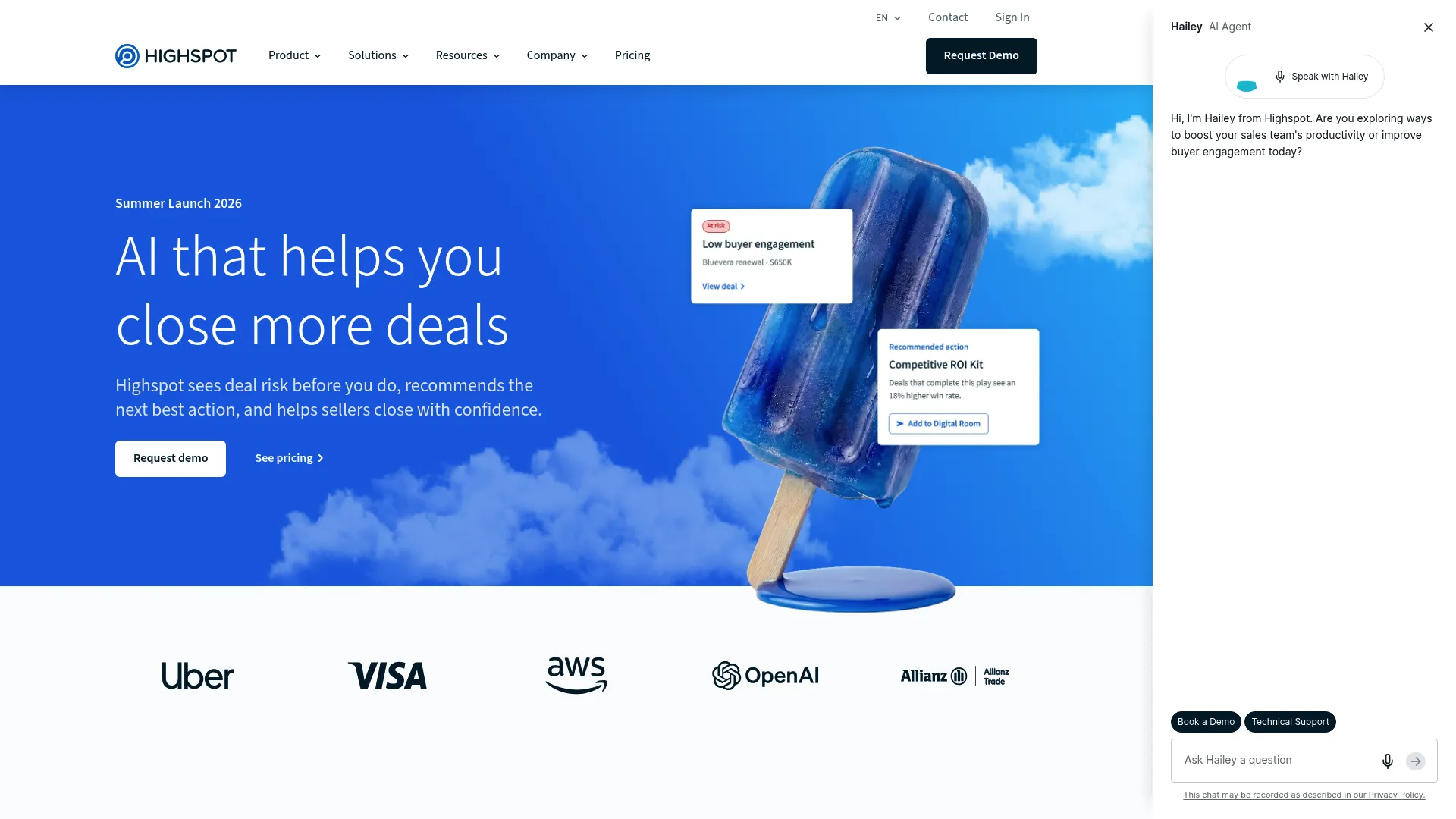
Highspot is an AI-powered go-to-market enablement platform that unifies sales content, training, coaching, and buyer engagement. Its reputation is adoption depth: reps actually use the content and plays because the platform surfaces the right asset in context. That matters when your biggest problem is not missing content but sellers ignoring what exists.
Best for: Enterprise GTM teams that want content, learning, and coaching in one platform reps adopt.
Key strengths
- AI-supported content organization and governance
- Sales plays and digital sales rooms
- Sales training, coaching, and analytics
- Guided selling delivered in workflow
Why choose Highspot: If low adoption is your real bottleneck, Highspot's in-context delivery and unified learning-plus-content model help enablement drive consistent execution without bolting together three separate tools.
Highspot pricing: Highspot lists plans by capability, including Equip and engage, Train and practice, and Coach and reinforce. Pricing is tailored to your capabilities, use cases, org size, and licenses, so you contact sales for a quote.
Best-fit use case: An enablement team rolling out new messaging and plays that need to stick, using adoption analytics to see which reps engage and which need coaching.
3. Mindtickle
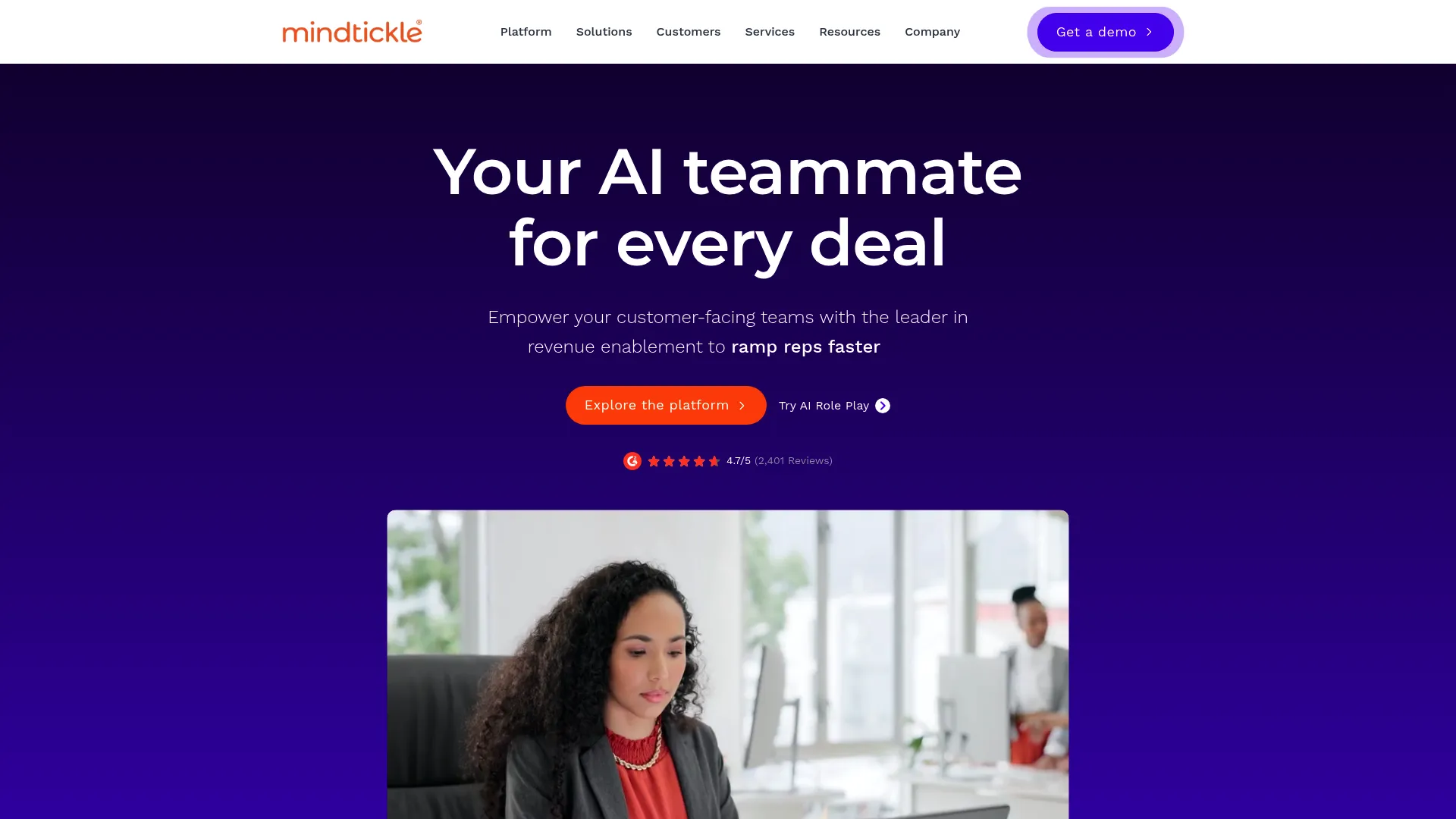
Mindtickle is an AI-powered revenue enablement platform centered on readiness: training, certification, coaching, and deal execution. Where some platforms lead with content, Mindtickle leads with skill. If you need to measure whether reps actually know the product and can run the motion, its AI role-play and certification tooling is the draw.
Best for: Enterprise revenue teams that need a unified enablement platform with strong readiness and coaching.
Key strengths
- AI role-play for discovery and objection handling
- Sales coaching and certification programs
- Digital sales rooms for buyer engagement
- Skill measurement tied to real deals
Why choose Mindtickle: If ramp time and skill consistency are your KPIs, Mindtickle's practice-and-certify model helps you prove that training changed behavior, not just that reps completed a course.
Mindtickle pricing: Mindtickle does not show public plan pricing and directs buyers to request a demo. A limited free trial is mentioned for a specific content package.
Best-fit use case: A Sales Enablement Manager building a certification-backed onboarding path and using AI role-play to shorten ramp by cohort before reps touch live pipeline.
4. Allego
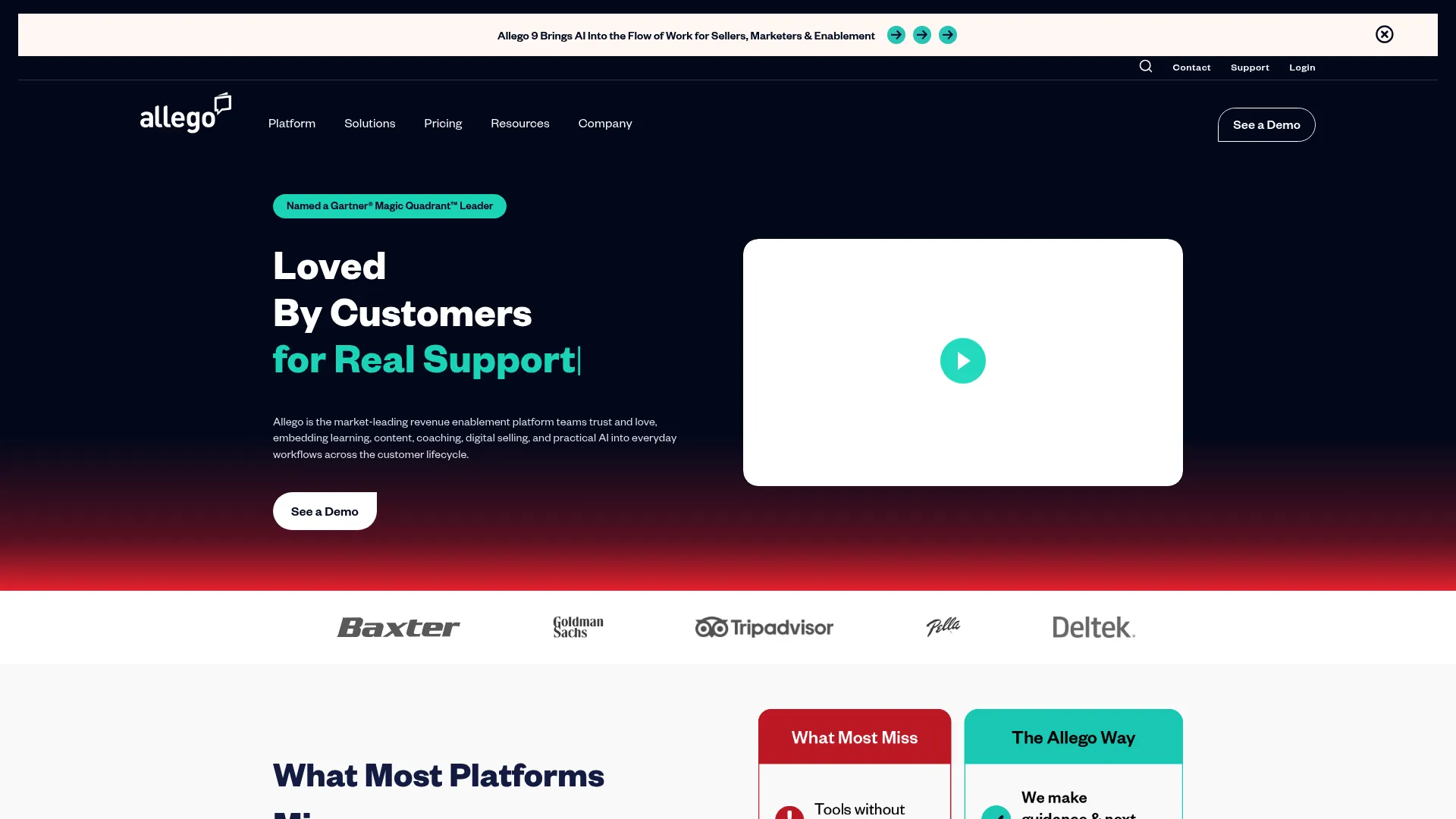
Allego is a revenue enablement platform that pairs modern learning with content management and digital selling. Its strength is combining conversation intelligence, AI role-play, and certification with digital sales rooms in one place, which appeals to teams looking to consolidate learning and buyer-facing tools under a single vendor.
Best for: Teams that want an all-in-one revenue enablement platform spanning learning and digital selling.
Key strengths
- Modern learning with conversation intelligence
- AI role-play, coaching, and certification
- Content management and digital sales rooms
- Reinforcement built into seller workflows
Why choose Allego: If you want coaching analytics and conversation intelligence living next to your content and buyer engagement tools, Allego's consolidation story reduces the number of platforms enablement has to maintain.
Allego pricing: Allego prices per user per month, billed annually upfront, and varies by seats, contract length, and user type. No public numeric price is listed, so you request a quote.
Best-fit use case: An enablement team using call recordings and conversation intelligence to drive training reinforcement, then sharing curated content with buyers through digital sales rooms.
5. Showpad
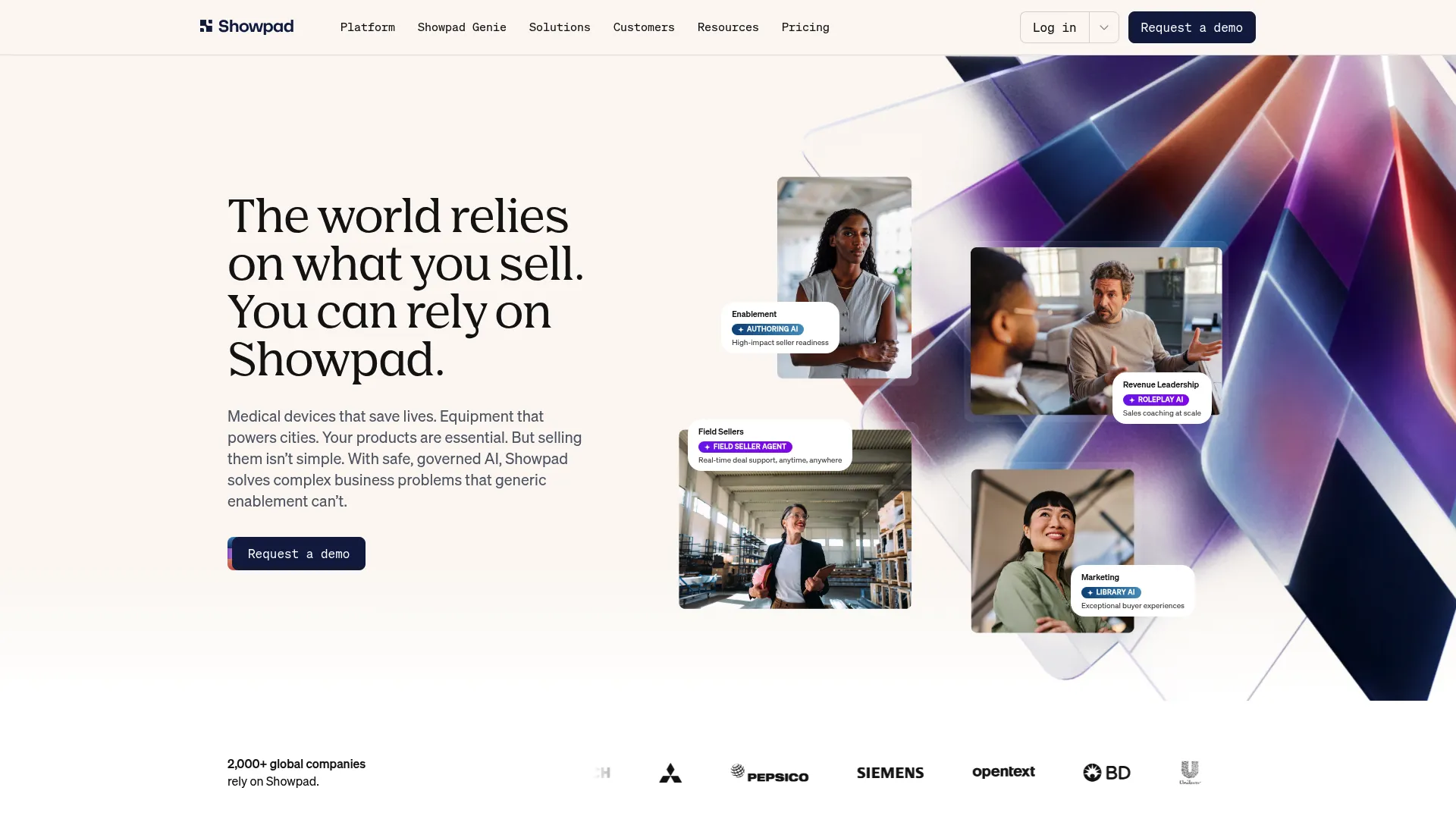
Showpad is an AI-native revenue effectiveness platform covering enablement, buyer engagement, coaching, and analytics. It frames enablement as a measurable operating system rather than a content library, with governed AI and shared buyer spaces at the center. Field-first teams tend to like how the buyer-facing experience is packaged.
Best for: Enterprise revenue teams needing governed content, seller readiness, and buyer-facing digital experiences.
Key strengths
- Content management and distribution with governance
- Sales readiness, training, and coaching
- Buyer engagement through shared spaces and interactive experiences
- Governed AI across enablement workflows
Why choose Showpad: If buyer engagement and field usability rank high, Showpad's shared buyer spaces and governed AI help reps deliver consistent, on-brand experiences while enablement keeps control of the content.
Showpad pricing: Showpad does not display public prices. Its pricing page shows Professional and Advanced packages, licensed per user and customized to your needs, so you request a quote.
Best-fit use case: A Sales Enablement Manager who wants governed content plus buyer-facing digital sales rooms, with analytics that tie buyer engagement to deal progression.
6. Mediafly
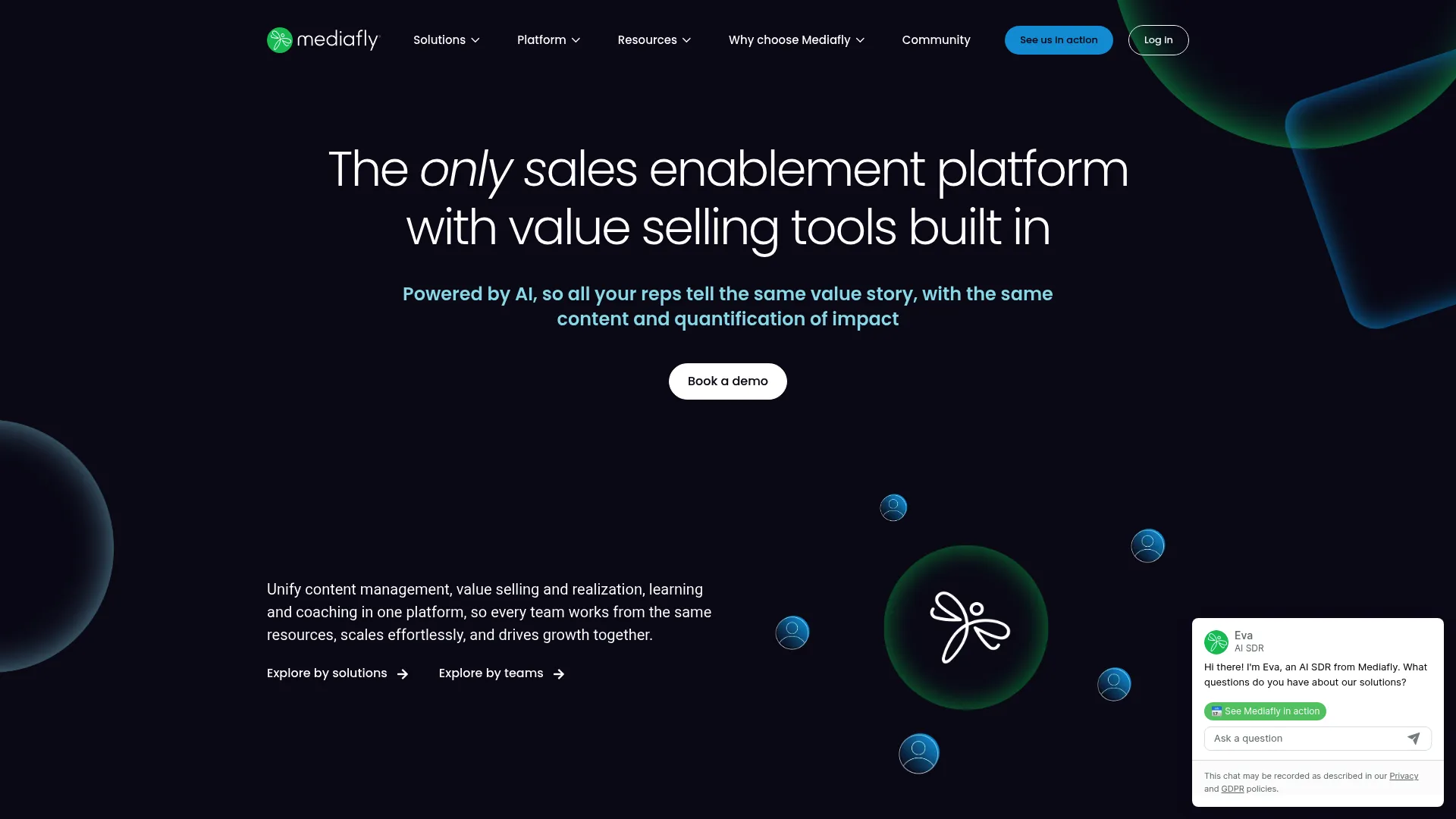
Mediafly is an enterprise revenue enablement platform that combines content management, value selling, and learning. What sets it apart is interactive value selling: ROI calculators and business-case builders that help reps quantify impact in the deal. For teams where economic justification decides the sale, that tooling is the reason to look.
Best for: Large enterprises needing a unified revenue enablement stack with strong value-selling tools.
Key strengths
- Sales content management and digital sales rooms
- Interactive value selling with ROI calculators and business-case builders
- Adaptive learning and coaching in seller workflows
- Guided selling tied to stage and buyer need
Why choose Mediafly: If your deals hinge on proving economic value, Mediafly's interactive ROI and business-case tools give sellers a way to co-build the justification with buyers, backed by content and coaching.
Mediafly pricing: Mediafly prices by modules, user counts, and integration requirements. There is no public price, so contact sales for a quote.
Best-fit use case: An enablement team supporting value-based selling motions, equipping reps with ROI calculators and governed content that map to each stage of a complex deal.
7. SalesHood
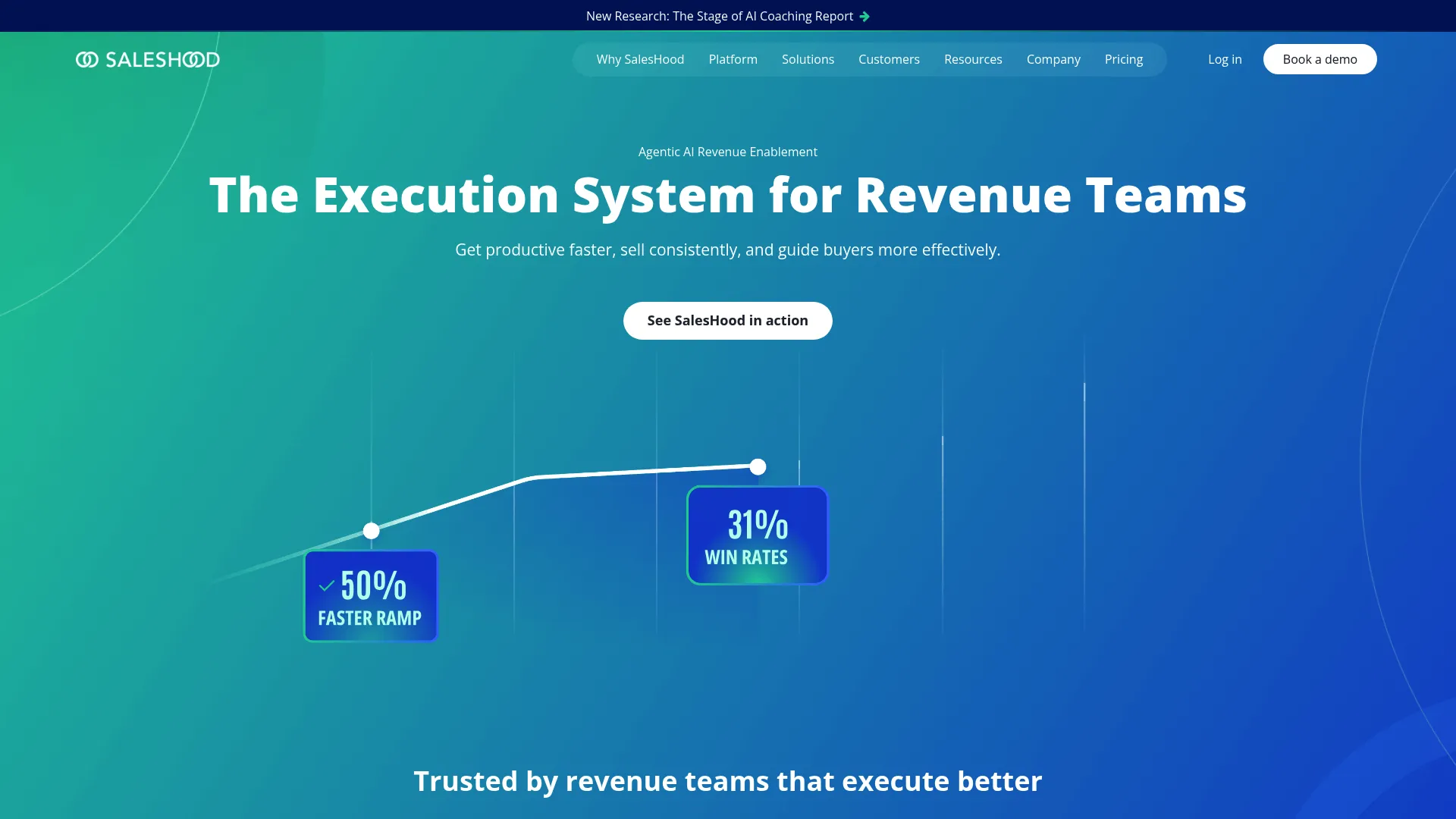
SalesHood is an AI sales enablement platform for training, coaching, content, and buyer engagement. It is often a fit for enablement teams that want to run training and coaching programs themselves without heavy admin overhead, with an AI Assistant spanning coaching, content, deals, and buying.
Best for: Revenue teams that want a single enablement platform for training, coaching, content, and digital sales rooms.
Key strengths
- AI Assistant across coaching, content, deals, and buying
- Digital Sales Rooms and Mutual Action Plans
- Content management, training, and analytics
- CRM and stack integrations
Why choose SalesHood: If your enablement function owns training and coaching directly and wants faster program setup, SalesHood's guided programs and AI coaching help small teams run consistent readiness at scale.
SalesHood pricing: SalesHood lists Essential, Pro, and Unlimited plans with visible feature differences, but no public prices. You talk to a pricing expert for a quote.
Best-fit use case: A lean enablement team running its own training and coaching programs, using Mutual Action Plans and digital sales rooms to keep deals and buyers aligned.
8. Pitcher
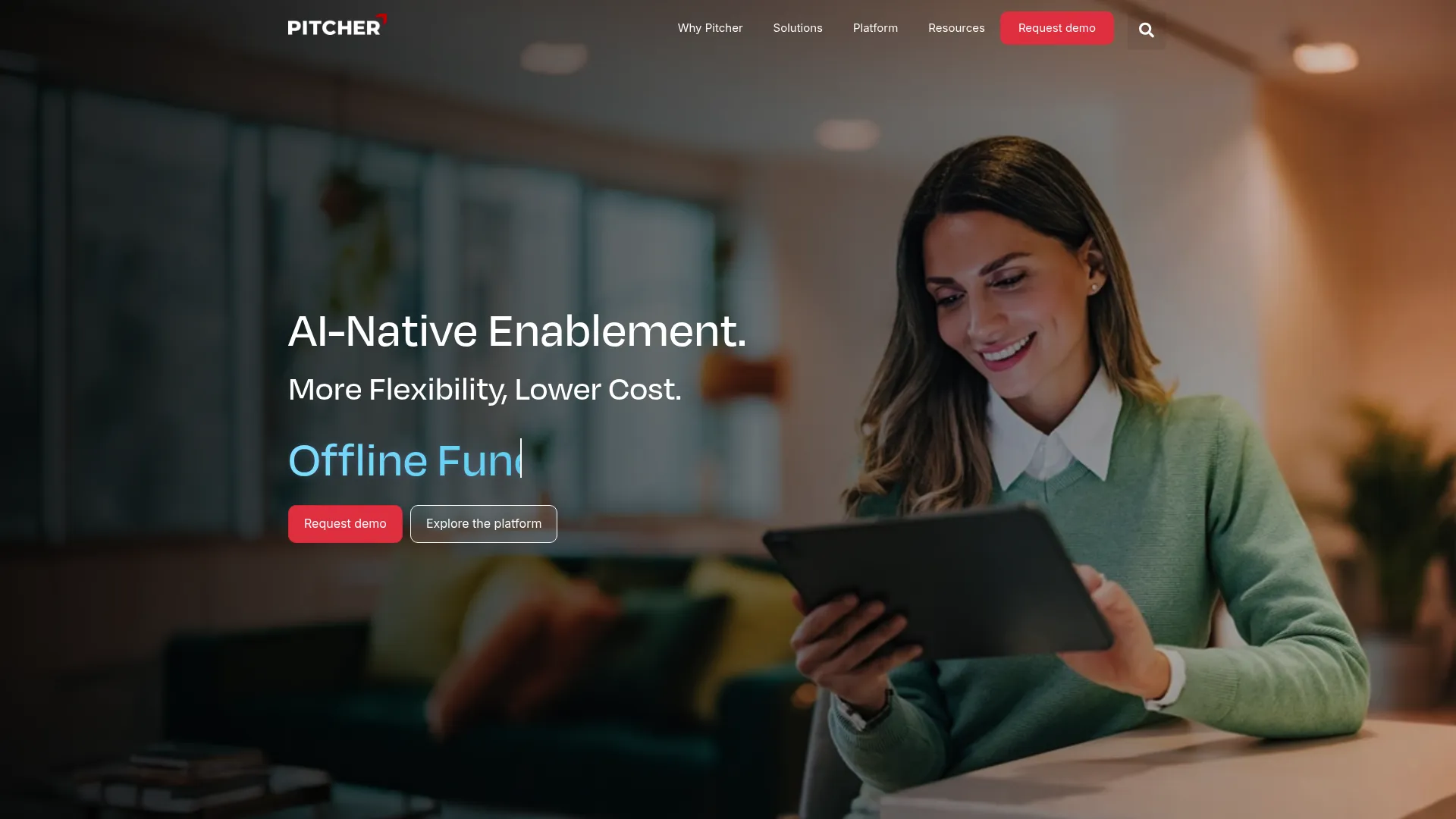
Pitcher is an AI-native sales enablement platform built for field reps and revenue teams. Its focus on mobile execution, guided selling, and complex selling motions makes it a fit for organizations where reps sell in person and need content, pricing, and order tools in one place.
Best for: Enterprise sales teams needing AI-assisted field selling and content-driven buyer engagement.
Key strengths
- AI-powered meeting prep, pitch decks, and follow-ups
- Content management and personalized customer presentations
- Guided selling for complex field motions
- Integrations for CRM, inventory, pricing, and order management
Why choose Pitcher: If your sellers work in the field and need guided selling plus operational tools like pricing and order management on a mobile device, Pitcher covers a motion that desk-bound enablement platforms don't.
Pitcher pricing: Pitcher does not expose public pricing; the site is demo-led, so you request pricing directly.
Best-fit use case: An enablement team supporting field reps who present in person, giving them personalized decks, guided selling, and CRM-connected tools that work on mobile.
Considerations before you buy
Content governance and versioning
Findability only works if the library stays current. Check how each platform handles versioning, ownership, approvals, and expiration. Ask whether outdated assets auto-archive and whether reps can tell at a glance which version is approved. Weak governance is how content chaos comes back.
Learning and coaching depth
Not every platform treats coaching the same way. Some lead with content and bolt on learning; others build around readiness. If ramp time and skill consistency are your KPIs, prioritize AI role-play, certification, and coaching analytics that measure behavior change, not just course completion.
CRM and sales stack integrations
A revenue enablement platform only proves impact when it connects to your CRM. Verify two-way sync with Salesforce or HubSpot, plus your sales engagement, conversation intelligence, and call recording tools. Shallow CRM integration means you will struggle to attribute enablement to pipeline.
Analytics and revenue attribution
Activity metrics are easy; revenue attribution is hard. Push each vendor on how they connect content usage, training completion, and buyer engagement analytics to stage conversion, win rate, and sales cycle. If they can only show engagement counts, you will not be able to defend the program to leadership.
Security, permissions, and maintenance
Enterprise buyers need SSO, granular permissions, and clear data handling. Also weigh maintenance overhead: how much admin time does the platform demand to keep content, users, and integrations healthy? A tool that needs constant upkeep quietly taxes your team.
Conclusion
The shortlist comes down to your maturity and your biggest gap. If content governance at enterprise scale is the pain, start with Seismic or Highspot. If readiness and skill measurement matter most, Mindtickle and Allego lead on coaching and AI role-play. Showpad and Mediafly stand out for buyer-facing effectiveness and value selling, while SalesHood suits lean enablement teams running their own programs and Pitcher owns the field-selling motion.
Pick two or three that match your stack, your governance needs, and your revenue reporting requirements, then run them against your real content, your CRM, and a live onboarding cohort. The right platform connects readiness, content, coaching, and measurement so you can prove enablement moved ramp time, win rate, and forecast accuracy.
One more angle worth testing during evaluation: how each platform handles buyer-facing product experiences. Interactive, self-serve formats like interactive demos let buyers experience your product at their own pace inside digital sales rooms, on landing pages, in follow-up emails, and across partner enablement. Formats that let you personalize the story and analyze engagement give enablement teams sharper intent signals to feed back into coaching and content, and they integrate with the CRM and marketing stack you already run. You can capture a product flow in a few clicks, edit it without engineering, use AI to polish steps and voiceovers, collaborate with your team, and share anywhere buyers show up.
Start your journey with Guideflow today!
FAQs
Revenue enablement software connects seller readiness, sales content management, coaching, buyer engagement, and analytics in one platform. It helps revenue teams find the right content, practice the right motion, and measure whether enablement moved win rate, sales cycle, and forecast accuracy. It is broader than a content library because it ties learning and measurement to real deals.
A sales enablement platform historically focused on organizing and distributing sales content. Revenue enablement software expands that scope to include learning, coaching, buyer engagement, and revenue impact measurement across the full go-to-market motion. In practice the terms overlap, and many vendors now use "revenue enablement" to signal that they connect enablement activity to revenue outcomes, not just content usage.
Prioritize content governance (versioning, approvals, expiration), learning and coaching depth including AI role-play, CRM integration, and buyer engagement analytics that tie activity to pipeline. Findability and adoption matter more than raw feature count, because sellers ignore tools that add friction. The best fit is the platform that reduces content chaos while proving revenue impact.
Connect enablement activity to outcomes, not just usage. Track ramp time by cohort, certification completion, content usage by stage, and coaching scores, then map those to stage conversion, win rate, sales cycle length, and forecast accuracy. Enablement ROI becomes defensible when content engagement and training completion correlate with faster ramp and higher win rates in the CRM.
Look for findability and speed, governance, relevance to your ICP and funnel stages, CRM and stack integrations, analytics, ease of maintenance, and change-management support. Evaluate whether the platform delivers content and coaching in-workflow, because adoption depends on reps not leaving the tools they already use. Security and permissions matter for enterprise buyers.
Usually not entirely. Revenue enablement platforms often include learning and coaching that can reduce reliance on a standalone LMS, especially for sales-specific readiness. They do not replace your CRM; they integrate with it. The CRM stays the system of record for pipeline, and the enablement platform feeds it content, training, and buyer engagement signals.
AI supports role-play for practicing discovery and objection handling, auto-organizes and tags content, drafts coaching feedback, and surfaces the right asset in context. AI role-play in particular lets reps practice before live deals, which shortens ramp. Governed AI also helps keep buyer-facing content on-message while giving enablement teams leverage without adding headcount.
Sales content management organizes, governs, and distributes assets so reps can find current, approved content. Revenue enablement is the broader system that wraps content management together with readiness, coaching, buyer engagement, and measurement. Content management answers "can reps find the right asset," while revenue enablement answers "did that asset, plus training and coaching, move the number."