Rent is late again. You text the tenant, dig through a spreadsheet to confirm the balance, then hunt for the lease PDF to check the late-fee clause. Meanwhile a maintenance request is buried in your email, and you still have not logged last month's repair receipt for taxes.
That is not a software problem. That is a system problem.
Most landlords do not struggle to find a tool. They struggle to pick one platform that removes the manual follow-up without piling on a new admin stack. The real question is not "which app has the most features," it is "which one collects rent, screens tenants, stores leases, and tracks money without me babysitting it."
The shift is already happening. According to Gitnux (2026), 72.4% of U.S. property managers had adopted cloud property management software by 2023, up from 55% in 2020. Small operators are moving too: Gitnux (2026) reports 58.3% of property firms under 100 units used property management software in 2023.
This guide ranks seven platforms built for self-managing landlords and small portfolios, so you can match one to how you actually run your rentals.
What's inside
This guide covers the best property management software for landlords in 2026, aimed at self-managing owners and small-to-mid portfolios. You will get a side-by-side comparison table, per-tool breakdowns, and a buyer's checklist.
We chose these seven platforms on four criteria that matter for rental property software:
- Workflow coverage: listings, screening, rent collection, leases, maintenance, and accounting
- Pricing transparency: clear published plans, including free tiers where they exist
- Ease of use: built for landlords, not enterprise property management firms
- Fit for self-managing landlords: less complexity, more done in one place
TL;DR
Short on time? Here is the quick read on landlord management software for 2026:
- Best overall for most DIY landlords: Avail
- Best for automation plus an optional managed service: TurboTenant
- Best rental accounting software and tax reporting: Landlord Studio
- Best for banking plus rent collection: Baselane
- Best for growing portfolios that need depth: Buildium
- Best for flexible operations and maintenance workflows: DoorLoop
- Best lightweight all-in-one for property management software for small landlords: TenantCloud
If you own a handful of units and want free core workflows, start with Avail, TurboTenant, or Baselane. If accounting visibility is your priority, look hard at Landlord Studio.
What is landlord software?
Landlord software is a property management platform for rental owners that centralizes tenant acquisition, screening, rent collection, lease handling, maintenance, and bookkeeping in one place. Instead of stitching together listing sites, payment apps, e-signature tools, and spreadsheets, you run the whole rental workflow from a single dashboard.
Most self-managing landlords adopt it to stop chasing rent, reduce back-and-forth with tenants, and keep a clean financial record for tax time.
Here are the core capabilities buyers expect in 2026:
- Rental listings: post and syndicate vacancies to major rental sites
- Tenant screening software: credit, background, and eviction reports from applicants
- Rent collection software: recurring online payments, automatic late fees, and receipts
- Lease management software: digital lease templates with e-signing and storage
- Maintenance tracking software: tenant-submitted repair requests and status tracking
- Rental accounting software: income and expense tracking, bank feeds, and tax reports
The market reflects this shift. Allied Market Research (2024) valued the global property management software market at USD 3.2 billion in 2023, projected to reach USD 7.8 billion by 2033. Cloud adoption leads the way: Dataintelo (2025) found 67.2% of the rental property management software market was cloud-based in 2025.
When to use landlord software
Manage rentals without spreadsheet drift
Spreadsheets work until you own more than a couple of units. Then the tabs multiply, the lease PDFs scatter across folders, and tenant texts live in three apps. Landlord software replaces scattered docs and manual reminders with one record of truth. Use it when you have stopped remembering who paid and who did not.
Collect rent and track balances automatically
Chasing rent is the tax on being a landlord. Rent collection software fixes the pattern with recurring auto-pay, automatic late fees, and instant receipts. That means fewer awkward reminder texts and less month-end reconciliation. Use it when late or partial payments are eating your evenings and your cash flow feels unpredictable.
Handle screening, leases, and maintenance in one workflow
The handoff gaps hurt most: an applicant approved in one tool, a lease signed in another, a repair request lost in email. One platform connects tenant screening software, lease management software, and maintenance tracking software so nothing falls through. Use it when you are managing turnover and repairs across more than one property.
Comparison table
Here is how the seven platforms stack up on landlord software search intent. Pricing and ratings reflect published values as of August 2026, and free tiers are noted where they exist.
| # | Product | Best for | Key differentiator | Pricing | G2 rating |
|---|---|---|---|---|---|
| 1 | Avail | DIY landlords wanting broad, easy workflow coverage | Free unlimited-unit plan with full core features | Free; Unlimited Plus $9/unit/mo | 4.0/5 |
| 2 | TurboTenant | Self-managing landlords wanting a free core plus optional managed help | Free plan with listing syndication and screening | Free; Essentials from $12.42/mo | 4.5/5 |
| 3 | Landlord Studio | Owners who prioritize bookkeeping and tax visibility | Accounting-forward with Schedule E reporting | Free for 3 units; Pro from $12/mo | Not published |
| 4 | Baselane | Landlords wanting banking plus rent collection | Property-specific banking with AI bookkeeping | Free; Smart $20/mo | Not published |
| 5 | Buildium | Growing portfolios needing operational depth | All-in-one leasing, accounting, and maintenance | Essential from $62/mo | Not published |
| 6 | DoorLoop | Landlords wanting flexible ops with room to scale | Full rental operations with high user ratings | Starter from $69/mo | 4.8/5 |
| 7 | TenantCloud | Small landlords wanting lightweight all-in-one basics | Core workflows without heavy complexity | Starter from $15/mo | 4.4/5 |
Best landlord software for 2026
1. Avail
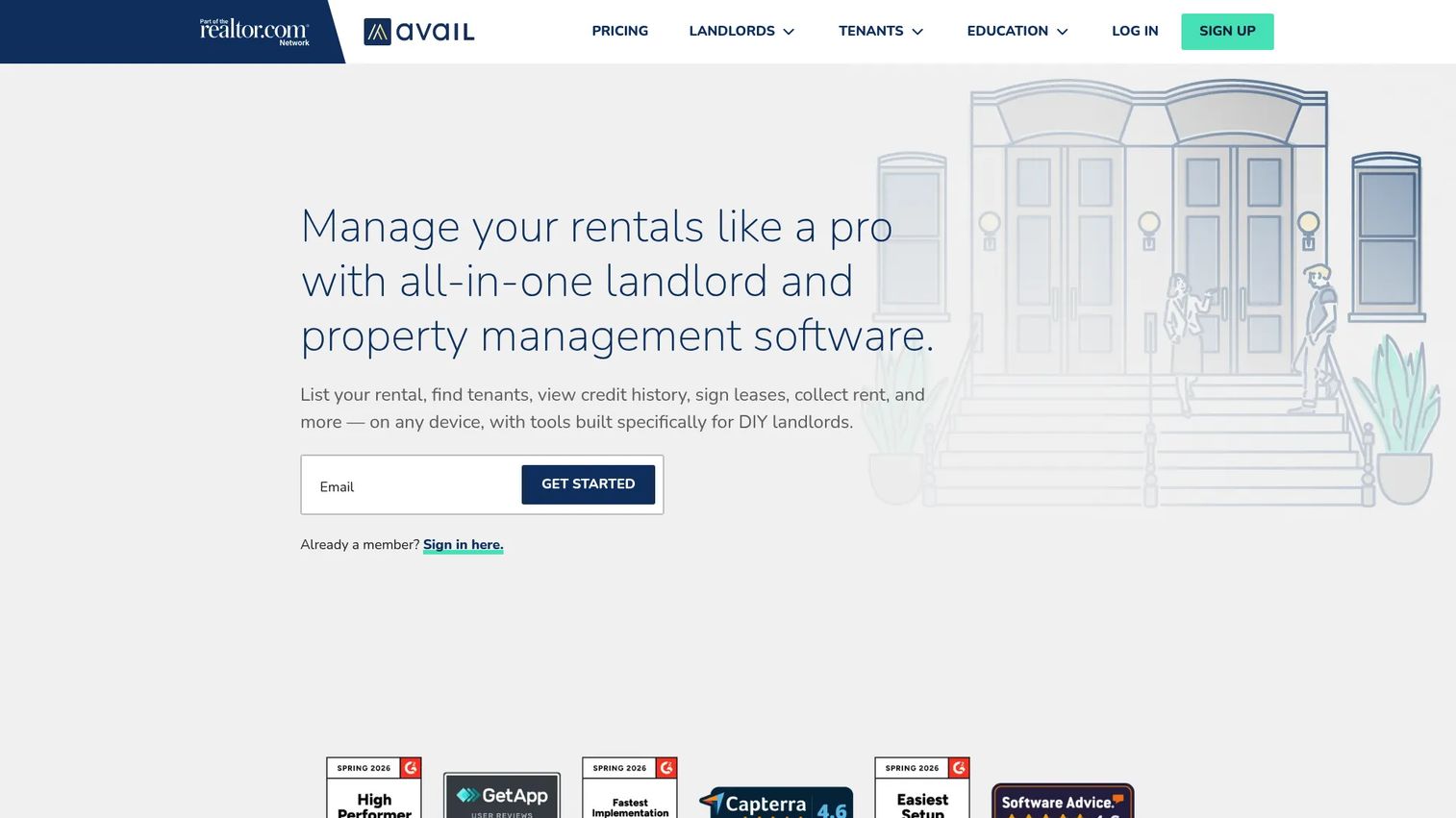
Avail is built for do-it-yourself landlords who want broad workflow coverage without an enterprise price tag. It handles rental listings, tenant screening, digital leases, and online rent collection in one place. The free plan covers unlimited units, which is rare in this category and a big reason self-managing owners land here first.
Best for: Independent landlords managing rental listings, screening, leases, and rent collection.
Key strengths
- Tenant screening with credit and background reports
- Digital leases with e-signing
- Online rent collection with recurring payments
- Free plan across unlimited units
Why choose Avail: If you want one easy platform that covers the full rental cycle and you do not want to pay per unit to get started, Avail fits most DIY landlords. A very small portfolio may never need the paid tier at all.
Avail pricing: The Unlimited plan is free across unlimited units. Unlimited Plus is $9/unit per month for faster payments and more customization.
Avail holds a 4.0/5 rating on G2.
2. TurboTenant
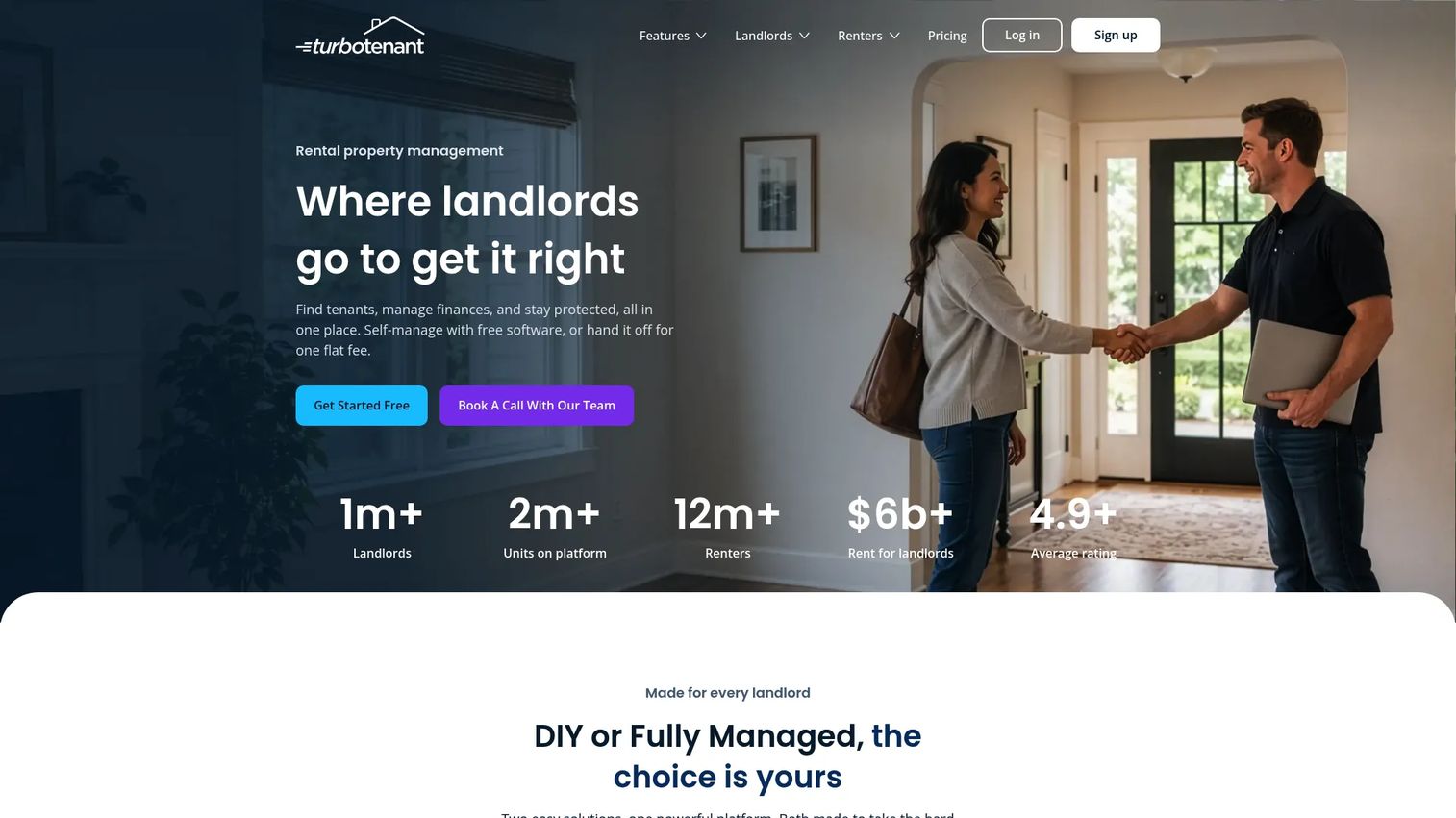
TurboTenant gives self-managing landlords a free core workflow, then lets them add paid upgrades as needs grow. It covers rental advertising with listing syndication, tenant applications and screening, rent collection, maintenance requests, leases, and accounting. The dual angle is what stands out: you can run everything yourself, or lean on more managed help later without switching tools.
Best for: Self-managing landlords who want a free core workflow with optional paid upgrades.
Key strengths
- Rental advertising and listing syndication
- Tenant applications and screening
- Rent collection, maintenance, leases, and accounting
- Free plan with premium tiers when you scale
Why choose TurboTenant: Choose it if you want a genuinely usable free plan now with a clear upgrade path later. It suits landlords who expect to grow or eventually outsource more of the work.
TurboTenant pricing: The Free plan is $0/mo. Essentials starts at $12.42/mo and Pro at $16.58/mo, both billed annually.
TurboTenant holds a 4.5/5 rating on G2.
3. Landlord Studio
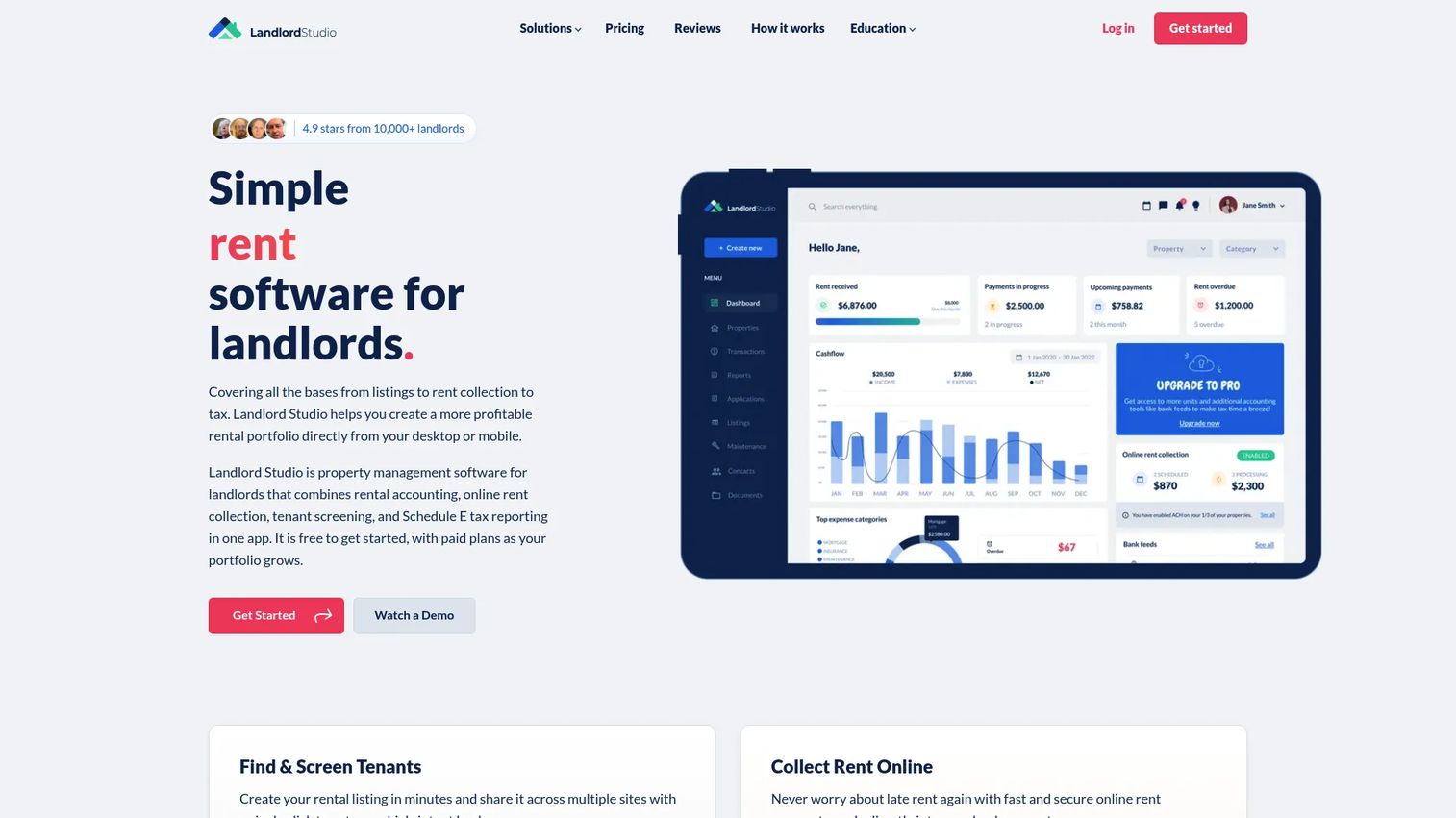
Landlord Studio is the accounting-forward pick for owners who care most about bookkeeping visibility. It combines listings, rent collection, tenant screening, and reporting, with a real focus on rental accounting software and tax prep. If you dread tax season because your numbers live in a shoebox, this is the tool that pulls them into order.
Best for: Independent landlords managing a small-to-mid rental portfolio who want clean books.
Key strengths
- Free Go plan for up to 3 units
- Online rent collection
- Tenant screening with TransUnion reports
- Income, expense, and Schedule E tax reporting
Why choose Landlord Studio: Pick it when accounting for rental properties is your top priority, not an afterthought. It rewards owners who want to see profit per property and hand clean records to an accountant.
Landlord Studio pricing: Go is free for up to 3 units. Pro starts at $12/mo (or $144/year) and Pro Plus at $28/mo (or $366/year). Pro includes a 14-day free trial.
4. Baselane
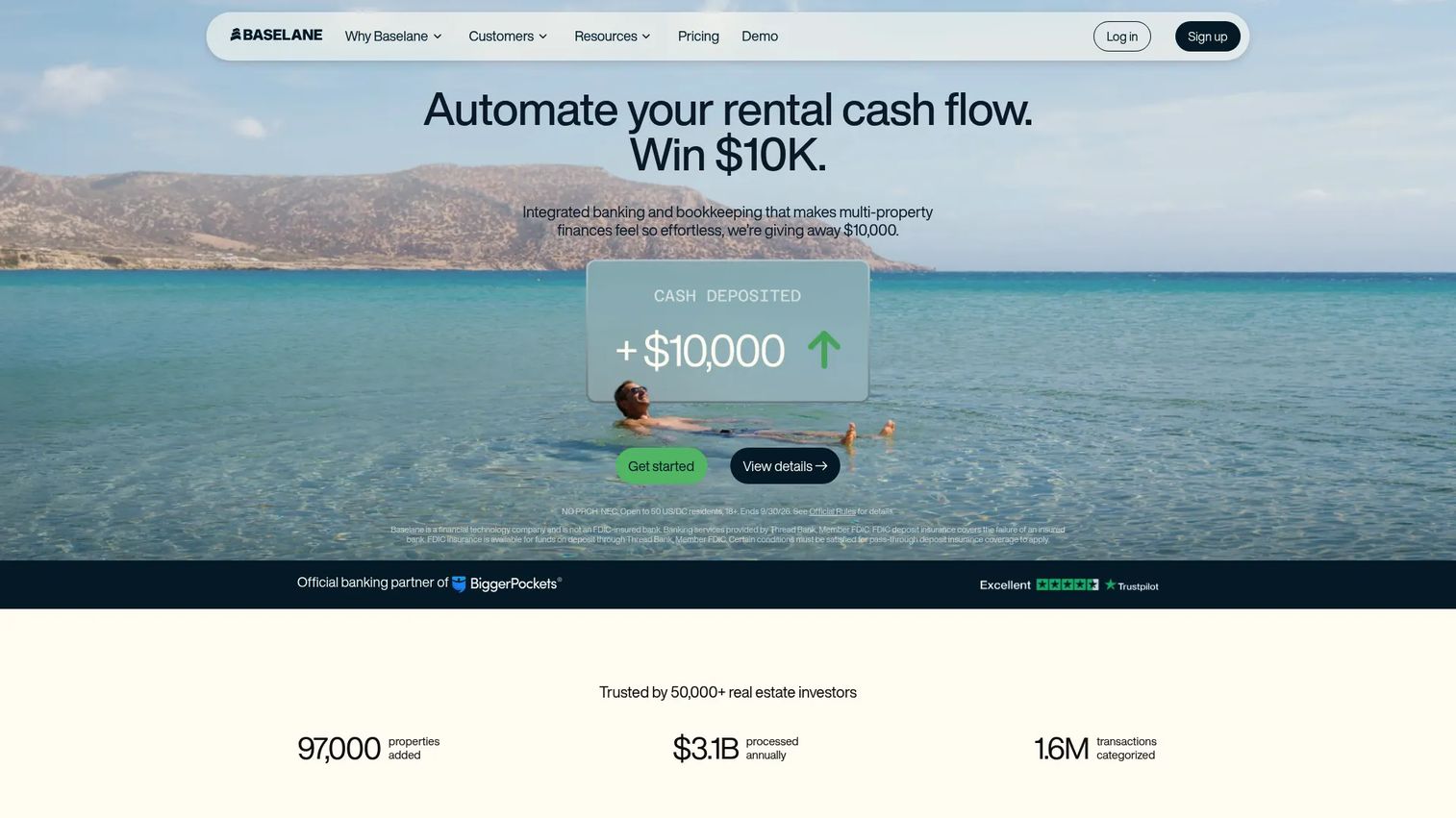
Baselane blends banking, bookkeeping, and rent collection into one platform for landlords and real estate investors. You get property-specific checking and savings accounts, AI transaction tagging, and rent collection with reminders and late fees. That banking-first angle makes it a strong fit for owners who want tighter money management across each property.
Best for: Independent landlords and investors who want banking, accounting, and rent collection together.
Key strengths
- Unlimited property-specific checking and savings accounts
- AI transaction tagging and bookkeeping
- Rent collection with reminders and late fees
- Free Core plan
Why choose Baselane: Choose it when you want your rental banking and books in the same place instead of reconciling across a personal bank and a spreadsheet. It fits investors who think in per-property cash flow.
Baselane pricing: Core is free and includes banking and bookkeeping essentials. Smart is $20/mo and adds 2-day rent deposits, auto-tagging rules, receipt matching, shared access, and priority support.
5. Buildium
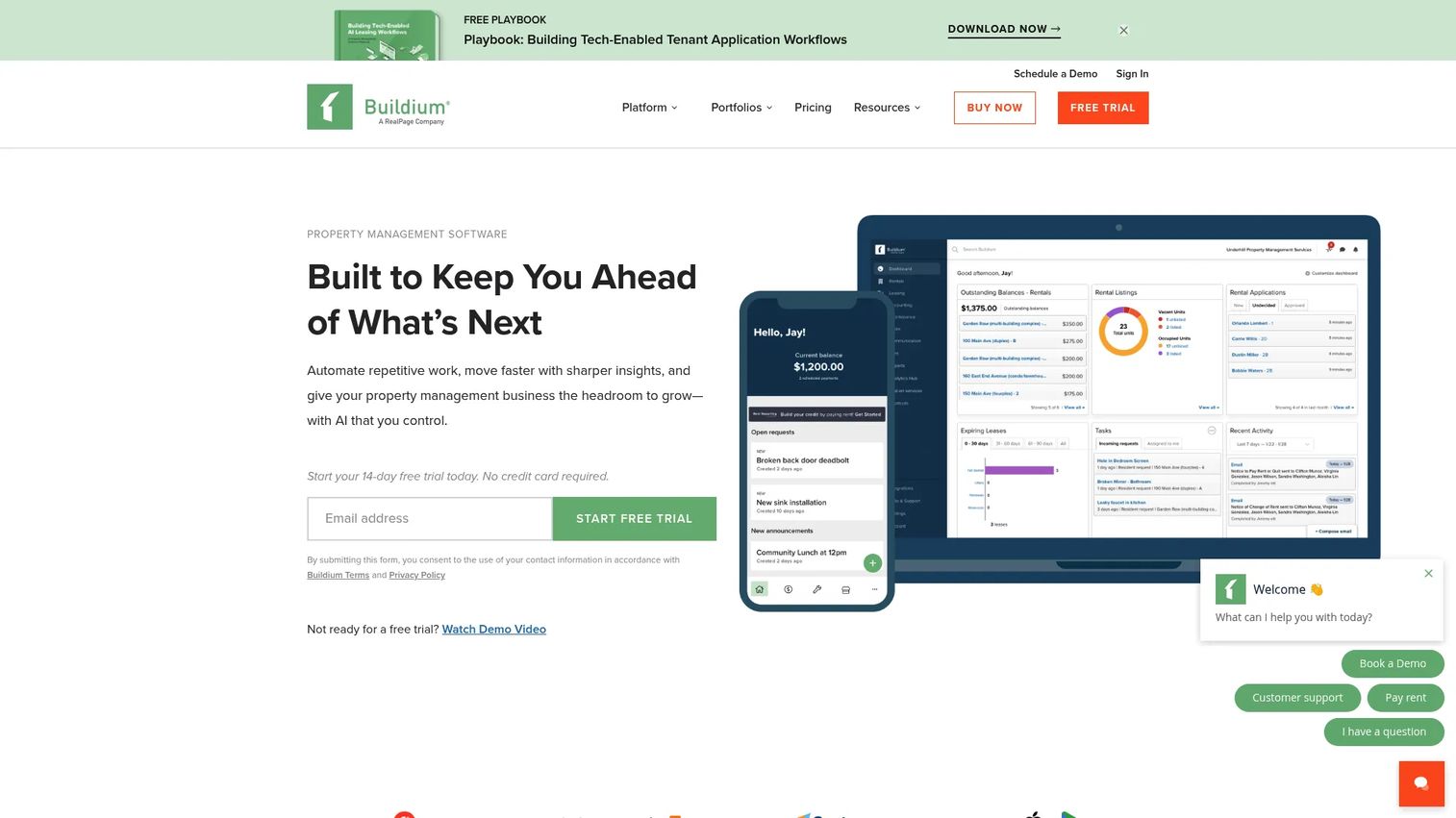
Buildium is the broader property management option for landlords whose portfolios have outgrown lightweight tools. It covers rental listings, tenant screening, online leasing, rent collection, accounting, maintenance, and tenant communications. Where the smaller tools stay lean, Buildium leans into operational depth for owners managing more doors and more moving parts.
Best for: Property managers needing an all-in-one platform for leasing, accounting, and maintenance.
Key strengths
- Rental listings and tenant screening
- Lease management and online leasing
- Rent collection and full accounting
- Maintenance and tenant communications
Why choose Buildium: Pick it when your portfolio and your accounting have grown complex enough that a free landlord app no longer keeps up. It fits owners who need reporting and workflows closer to a professional property management operation.
Buildium pricing: There is no free tier. Essential is $62/month, Growth is $192/month, and Premium is $400/month.
6. DoorLoop
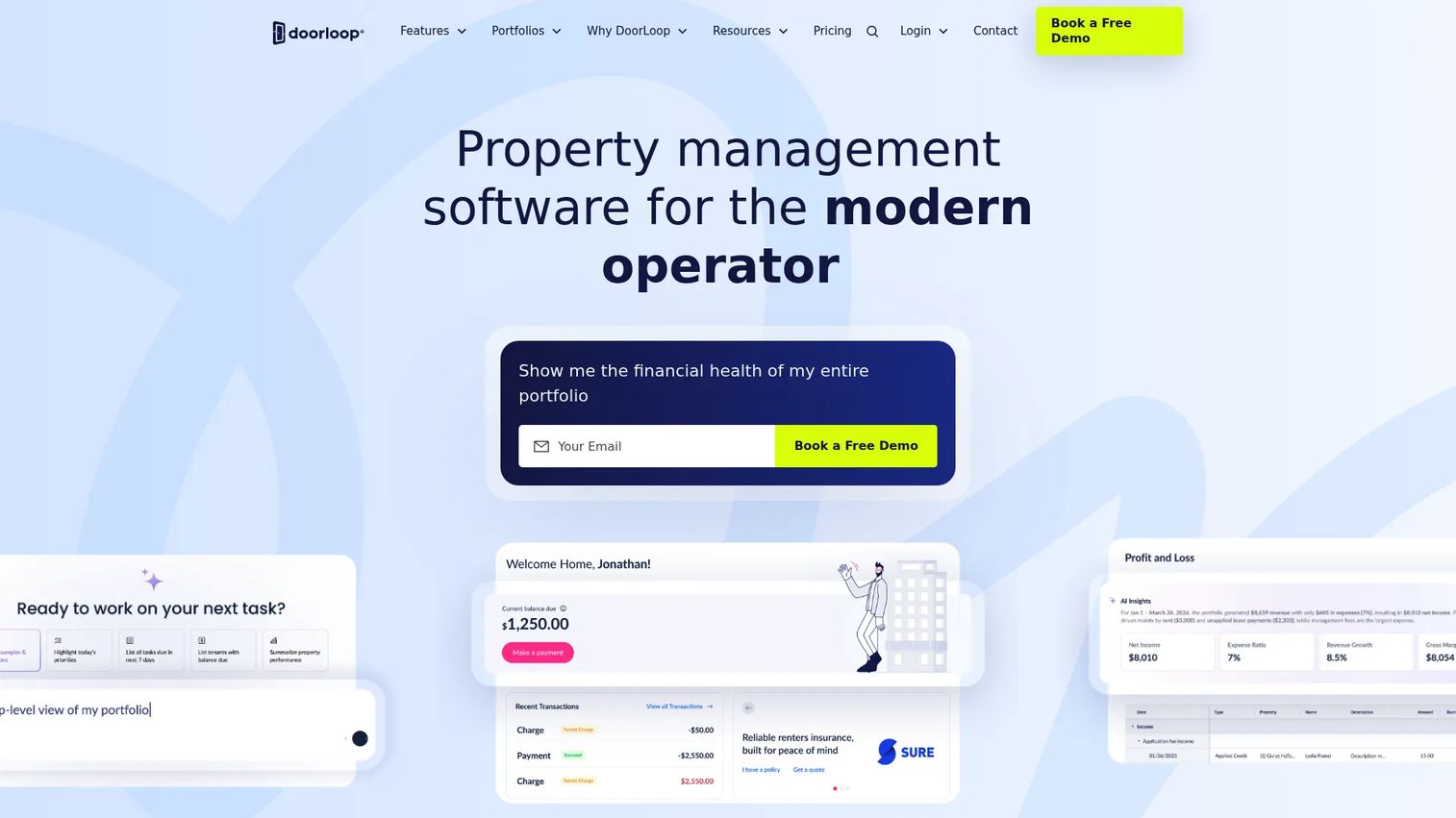
DoorLoop is a flexible property management system with broad workflow depth and strong user ratings. It handles online rent and fee payments, a tenant portal, maintenance, two-way communication, accounting, tenant screening, lease management, listings, an owner portal, and a mobile app. For landlords who want room to scale without hitting a ceiling, it covers a lot.
Best for: Landlords and property managers needing an all-in-one rental operations platform.
Key strengths
- Online rent and fee payments plus tenant portal
- Maintenance management and two-way communication
- Accounting, reporting, and tenant screening
- Lease management, listings, and a mobile app
Why choose DoorLoop: Choose it when you want deep functionality and a highly rated experience, with headroom to grow your portfolio. It suits owners who value a broad feature set and a mobile-first workflow.
DoorLoop pricing: There is no free tier. Starter is $69/month for the first 10 units, Pro is $149/month, and Premium is $209/month, with annual billing options available.
DoorLoop holds a 4.8/5 rating on G2.
7. TenantCloud
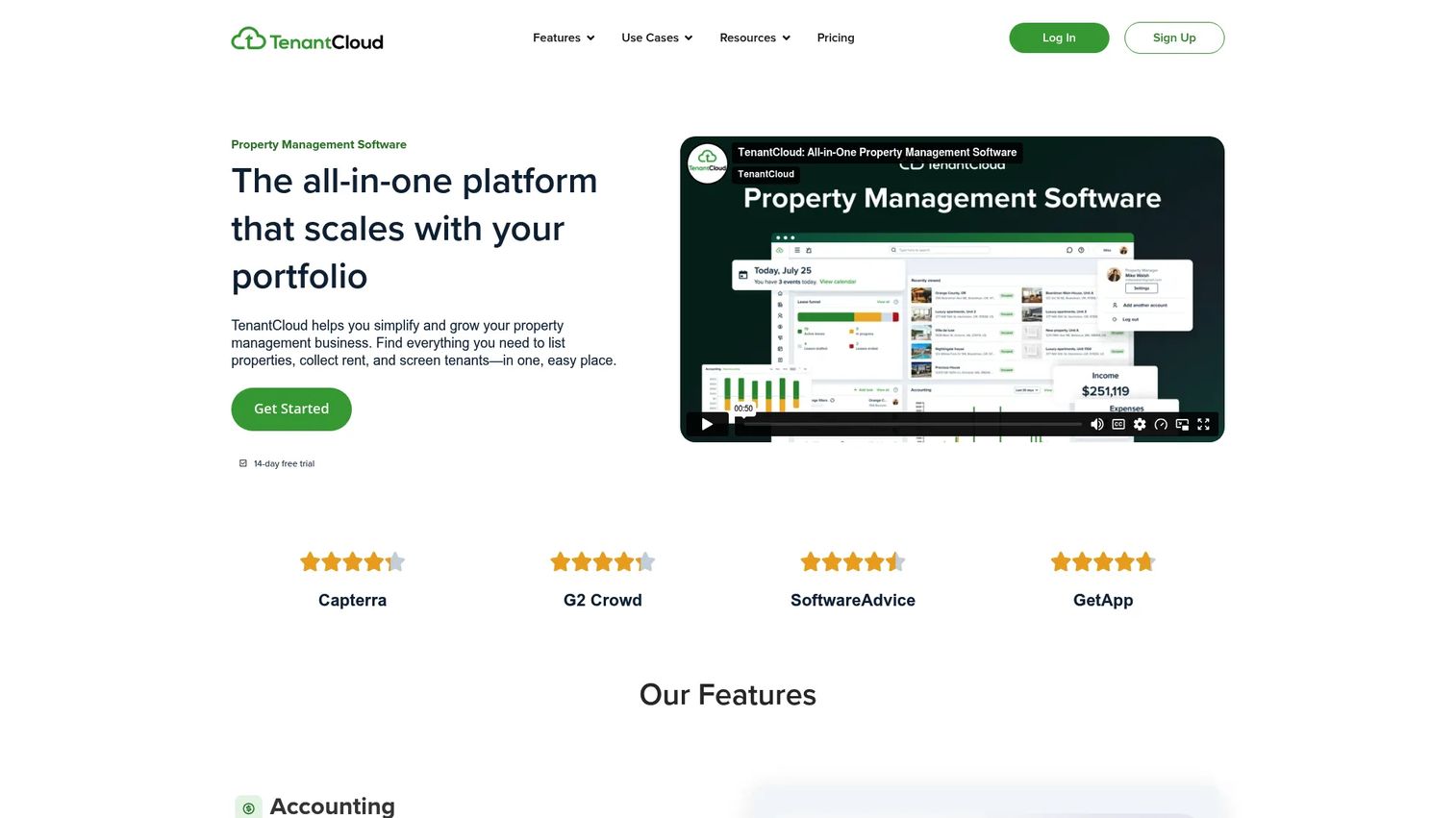
TenantCloud is the lightweight all-in-one for landlords who want core workflows without heavy complexity. It covers online rent payments, tenant screening and rental applications, maintenance management, and accounting and reports. For smaller portfolios, it is a practical entry point that still connects the main pieces of tenant communication and rent handling.
Best for: Landlords and small-to-mid property managers who want an all-in-one platform.
Key strengths
- Online rent payments
- Tenant screening and rental applications
- Maintenance management
- Accounting and reports
Why choose TenantCloud: Pick it when you want the essentials in one place without the price or learning curve of a full property management suite. It fits smaller portfolios that value simplicity.
TenantCloud pricing: Starter is $18/mo ($15/mo billed annually), Growth is $35/mo, Pro is $60/mo, and Business starts at $100/mo. A 14-day free trial is available.
TenantCloud holds a 4.4/5 rating on G2.
Considerations
Before you commit, run each option through this checklist. The right landlord software is the one that fits your portfolio size and your biggest pain, not the one with the longest feature list.
Match the platform to portfolio size
A free landlord app that handles unlimited units is ideal for a few doors. A larger portfolio may need the reporting and workflows of Buildium or DoorLoop. Be honest about where you are and where you will be in two years.
Check whether accounting is basic or tax-ready
Some tools track income and expenses at a surface level. Others, like Landlord Studio, produce Schedule E reports built for taxes. If clean books matter to you, confirm the accounting depth before you buy.
Verify rent collection and fee handling
Look for recurring auto-pay, automatic late fees, partial-payment handling, and instant receipts. Check payout timing too, since some plans deposit rent faster than others.
Confirm tenant screening depth and reporting
Screening quality varies. Confirm which reports you get, credit, background, eviction history, and who pays for them. TransUnion-backed reports, like those in Landlord Studio, are a common benchmark.
Look for lease and maintenance workflow quality
Digital leases with e-signing and a clear maintenance request flow save real time. Check that leases store cleanly and that tenants can submit and track repairs without emailing you.
Conclusion
The best landlord software depends on your portfolio and your priorities, not a universal winner. For most DIY landlords who want broad coverage on a free plan, Avail is the strongest starting point. If you want a free core with an optional managed path later, TurboTenant fits. When bookkeeping and taxes drive your decision, Landlord Studio leads, while Baselane wins for owners who want banking and rent collection in one place.
For growing portfolios, Buildium and DoorLoop bring the operational depth that lightweight tools cannot. And if you just want simple, practical property management software for small landlords, TenantCloud covers the essentials.
Your next step is simple: pick the one pain that costs you the most time right now, whether that is chasing rent, screening tenants, or tax prep, and start a free plan or trial with the tool that solves it best. Run one property through it for a month before you commit the whole portfolio.
FAQs
For small portfolios, Avail and TurboTenant lead because both offer genuinely usable free plans covering listings, screening, leases, and rent collection. Landlord Studio is a strong pick if you own three units or fewer and want free accounting-forward tools. The best choice depends on whether your priority is broad workflow coverage or clean books.
Some is. Avail offers a free plan across unlimited units, TurboTenant has a free core plan, Baselane's Core plan is free, and Landlord Studio is free for up to three units. The best free property management software for small landlords usually covers rent collection and screening, then charges for faster payouts or advanced features. Larger platforms like Buildium and DoorLoop are paid-only.
Reputable landlord platforms use bank-level encryption and secure payment processing, and screening reports come from established bureaus like TransUnion. Rent moves through regulated payment rails rather than personal transfer apps. Always confirm the provider's security practices and read how they handle tenant data before you collect sensitive information.
Yes, these are core features across every tool on this list. Tenant screening software pulls credit, background, and eviction reports from applicants, while rent collection software automates recurring payments, late fees, and receipts. Combining both in one platform means an approved applicant flows straight into online rent payments without re-entering data.
Yes. Lease management software stores digital leases with e-signing, and the tenant record links directly to that lease, rent balance, and maintenance history. That connection is the point: you see who signed what, who owes what, and what needs fixing from one tenant profile instead of three separate tools.
Start with one property, not your whole portfolio. Enter the unit, add the tenant, upload the current lease, and set up recurring rent collection. Once that flows for a month, migrate the rest. Most platforms let you import tenant and lease details, and DIY landlord tools are built for exactly this kind of low-friction move off spreadsheets.
Rental accounting software tracks income and expenses per property, often with bank feeds that auto-categorize transactions. The strongest tools, like Landlord Studio and Baselane, generate tax-ready reports such as Schedule E summaries. That turns accounting for rental properties from a year-end scramble into a running record you can hand to an accountant with confidence.