If you're evaluating Folloze alternatives, you're probably asking a sharper question than "what else does content boards." The real question is what job you need done next: Organizing account experiences, targeting in-market buyers, letting prospects click through the product, or keeping Sales using the right story.
This guide covers 15 Folloze alternatives spanning demo automation, ABM orchestration, content experience platforms, sales enablement, video, website personalization, and digital sales rooms. For product marketing teams that want buyers to explore the product before a call, Guideflow is the top pick. For ABM orchestration, Demandbase and 6sense lead. For content hubs, PathFactory and Uberflip cover the field. Vidyard handles video. Dock takes the buyer room slot.
The list spans two categories: Tools that organize and personalize content experiences, and tools that change what the buyer interacts with inside those experiences. That distinction is what most Folloze competitors pages skip entirely.
TL;DR
- Best interactive demo platform: Guideflow, the demo automation platform that replaces static content tiles with clickable product experiences. Plans start free; paid plans from $35/user/month (annual).
- Best for content experience replacement: PathFactory (4.3/5 on G2) for content intelligence and journeys, Uberflip (4.2/5) for hub publishing.
- Best for ABM orchestration: Demandbase (4.4/5) for account engagement and advertising, 6sense (4.1/5) for predictive buying-stage signals.
- Best for video engagement: Vidyard (4.5/5), with a free plan and Starter from $59/seat/month (annual).
- Best for sales enablement: Seismic (4.7/5) or Highspot (4.7/5) for enterprise field adoption and content governance.
- Best for deal rooms: Dock (4.6/5), with a free plan and Standard from $350/month.
- The 15 tools span demo automation, ABM platforms, content hubs, video, sales enablement, website personalization, and buyer rooms.
What's inside
- What Folloze does and where teams hit its limits.
- Why PMMs look for Folloze alternatives by job category.
- A 15-tool comparison table with category labels, G2 ratings, free-plan status, and starting prices.
- Per-tool cards covering features, shortfalls, and how each compares to Folloze.
- Use-case routing by job: Interactive demos, content experiences, ABM, sales enablement, video, and buyer rooms.
- A "stay with Folloze if" section and a Guideflow recommendation section.
What is Folloze?
Folloze is a B2B buyer experience and ABM content platform for creating personalized content destinations, campaign boards, and account-based engagement journeys. Marketing and sales teams use it to build no-code microsites and landing pages tailored to specific accounts, personas, or campaigns, pulling in first-party engagement signals to measure what content moves buyers forward.
Its core strengths are account- and persona-level personalization, engagement tracking, and integrations with Salesforce, Marketo, Outreach, 6sense, and Demandbase. Product marketing teams use Folloze to run launch campaigns, build sales follow-up destinations, and serve buying committees with curated content.
The G2 rating sits at 4.7/5. Pricing is not publicly displayed; Folloze directs prospective buyers to contact sales.
Why teams look for Folloze alternatives
Teams typically start comparing Folloze alternatives when a specific job outgrows what a buyer-experience content board does well.
Buyers need to experience the product, not just open more content
A well-built Folloze board organizes assets effectively. The gap shows up when the next action on the board is another PDF or static slide. According to Demand Gen Report (2025), 71% of B2B practitioners use an ABM strategy, and 91% of B2B buyers say personalized content is very important during research (Mixology Digital, 2025). The question for PMMs is whether personalized content is enough, or whether buyers need to click through the product itself to form a real opinion. G2 reviewers cite this gap when describing why they supplement or move away from Folloze.
Account orchestration needs go beyond content boards
Teams running full ABM programs often need account scoring, intent activation, advertising coordination, buying-group signals, and sales alerts, capabilities that live outside a content experience platform. When orchestration is the primary job, Folloze's strengths in content personalization become secondary.
Content hub publishing fits a different workflow
Some marketing teams want recommendation engines, binge-style content journeys, content consumption analytics at the asset level, or a simpler self-serve destination. Those are content intelligence and hub publishing jobs, and they fit differently than account-based buyer experiences.
Field enablement requires its own infrastructure
Sales teams often need content governance, rep training and certification, coaching, and adoption analytics that measure whether sellers use approved assets. That is a sales enablement job. G2 reviewers note that Folloze's focus on buyer-facing destinations means it handles rep-side governance and training less fully than a dedicated enablement platform.
Deal rooms serve a later-stage collaboration need
After a prospect is active, the job shifts to shared next steps, stakeholder alignment, file sharing, and mutual action plans. That is a buyer room job, and it fits a different point in the sales cycle than account-level content destinations.
How we picked these Folloze alternatives
We selected tools based on capability overlap with Folloze's core jobs, pricing transparency or available pricing context, G2 ratings from named review pages, integration fit with common CRM and marketing automation stacks, and usefulness for product marketing and revenue teams running B2B buyer journeys.
The list spans two distinct categories: Account-based experience, content, and engagement platforms on one side, and interactive demo automation on the other. Every tool is labeled so you can tell a category swap from an adjacent upgrade. Tools that serve narrow specializations, such as video, website personalization, or digital sales rooms, are included where the buyer's job makes them a genuine Folloze alternative.
Folloze alternatives at a glance
Guideflow leads as the top pick for interactive product experiences. The field splits clearly: A cluster of content experience and ABM platforms for account-level orchestration, a video option, three sales enablement platforms, and a buyer room tool rounding out the list.
| # | Tool | Category | Best for | G2 rating | Free plan | Starting price |
|---|---|---|---|---|---|---|
| 1 | Guideflow | Demo automation platform | Interactive product demos inside buyer journeys | 5.0/5 | Yes | $0 (paid from $35/user/month, annual) |
| 2 | Folloze | Buyer experience and ABM content platform | Personalized content boards and account journeys | 4.7/5 | No | Contact sales |
| 3 | PathFactory | Content intelligence and experience platform | Bingeable content journeys and engagement analytics | 4.3/5 | No | Contact sales |
| 4 | Uberflip | Content experience platform | Branded content hubs and campaign destinations | 4.2/5 | No | Contact sales |
| 5 | Hushly | Content experience and conversion platform | Personalized content recommendations and lead capture | 4.8/5 | Yes | $0 (paid from $99/month) |
| 6 | Demandbase | Account-based marketing platform | Account targeting, orchestration, and advertising | 4.4/5 | No | Contact sales |
| 7 | 6sense | Revenue AI and ABM platform | Predictive account intelligence and buying-stage signals | 4.1/5 | No | Contact sales |
| 8 | Vidyard | Video platform | Personalized sales and marketing video | 4.5/5 | Yes | $0 (paid from $59/seat/month, annual) |
| 9 | ON24 Engagement Hub | Webinar and content engagement platform | Webinar-led content hubs and engagement data | 4.3/5 | No | Contact sales |
| 10 | Showpad | Sales enablement platform | Seller content, training, and guided selling | 4.6/5 | No | Contact sales |
| 11 | Seismic | Sales enablement platform | Enterprise content governance and enablement analytics | 4.7/5 | No | Contact sales |
| 12 | Highspot | Sales enablement platform | Sales content adoption and rep guidance | 4.7/5 | No | Contact sales |
| 13 | Mutiny | Website personalization platform | Segment-based website and landing page personalization | 2.5/5 | Yes (limited) | Contact sales |
| 14 | Userled | ABM and personalized campaign platform | Personalized account pages and ABM campaigns | 4.7/5 | No | Contact sales |
| 15 | Dock | Digital sales room and client portal platform | Deal rooms, mutual action plans, and buyer collaboration | 4.6/5 | Yes | $0 (paid from $350/month) |
The best Folloze alternatives in 2026
1. Guideflow (demo automation platform)
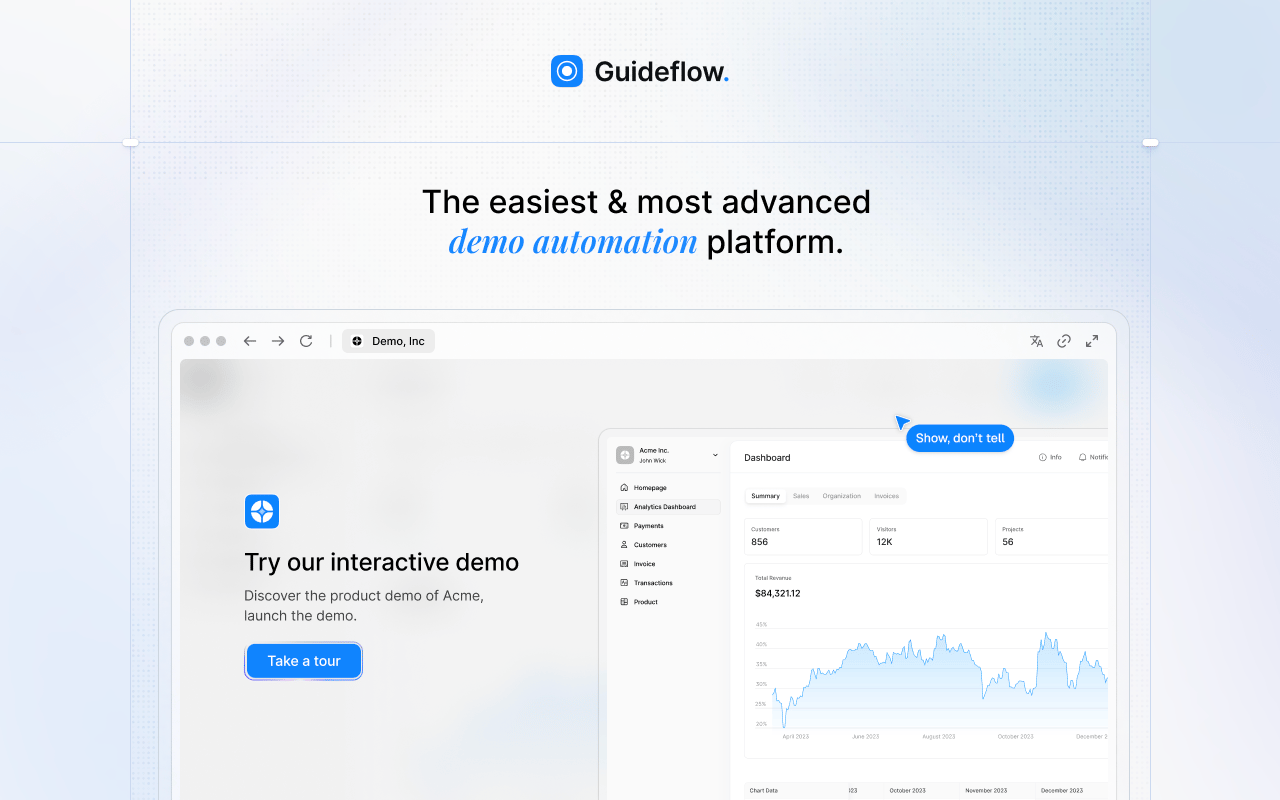
Guideflow earns the top spot for PMMs who want buyers to click through the product instead of opening another static asset. Where Folloze organizes personalized content destinations, Guideflow changes the asset inside the destination: Buyers navigate a live product experience, submit in-demo forms, and leave intent signals the team can act on.
Best for: Product marketing and demand gen teams building interactive product experiences for landing pages, account pages, emails, sales follow-up, and campaign destinations.
What it is: Guideflow is a demo automation platform for creating, personalizing, sharing, and analyzing interactive demos. It supports six demo formats: Interactive demos, demo pages, demo centers, sandboxes, live demos, and mobile demos. Capture runs through the Chrome extension or the native app, using screenshot, HTML, or video modes. Step content and CTAs are written automatically.
Key features:
- Capture through the Chrome extension or native app
- Editor supports text, images, graphs, and branching
- Personalization of content per lead at scale
- In-demo forms and personalized links for identified engagement
- Step-level analytics: Completion, drop-off, and viewer flow
- Integrations with HubSpot, Salesforce, Pipedrive, Zoho, and Marketo
Where Guideflow falls short: Look elsewhere if your primary need is full ABM advertising, account scoring, or buying-group orchestration across a full GTM stack. Teams whose main job is running a static content library may also find a content hub a more direct fit.
Pricing: Free plan available. Solo: $35/user/month (annual). Growth: $499/month (annual). Advanced: $1,499/month (annual). Enterprise: From $2,999/month (annual), adding SSO, advanced governance, and enterprise security.
G2 rating: 5.0/5
How it compares to Folloze: Folloze helps teams organize personalized content destinations. Guideflow changes the asset inside that destination: Buyers click through the product, submit forms, and leave intent signals the team can act on.
2. Folloze (buyer experience and ABM content platform)
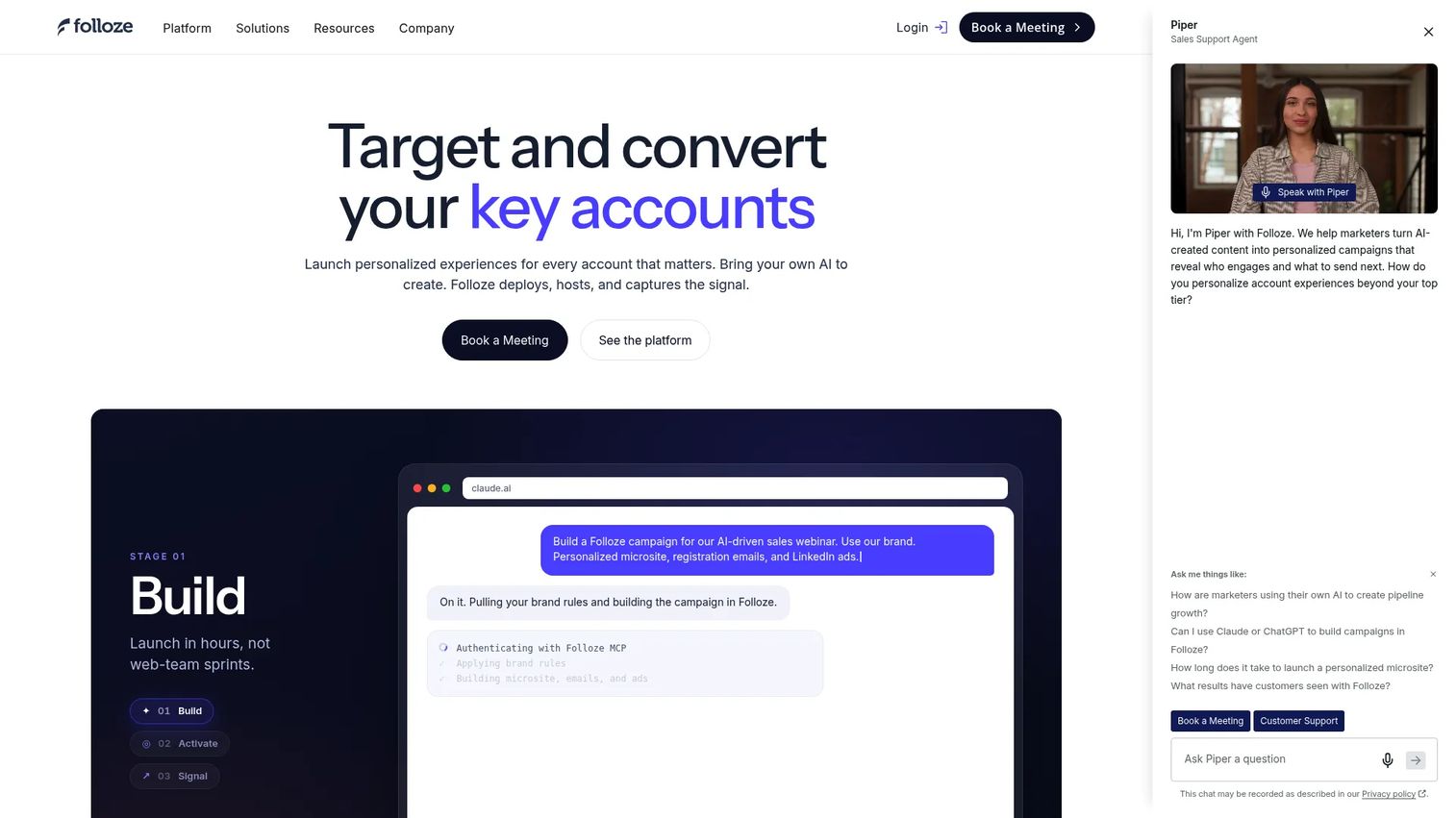
Folloze is included here because readers comparing alternatives need a fair baseline. Its strength is building personalized buyer experiences without engineering work, which is why PMMs use it for launches, account campaigns, and sales follow-up destinations.
Best for: Enterprise B2B marketing and sales teams running account-based, personalized buyer-engagement programs.
What it is: Folloze is an AI-powered buyer experience and ABM content platform. Teams create no-code personalized microsites and campaign boards tailored by account, persona, or campaign, using first-party engagement tracking to measure content influence. It integrates with Salesforce, Marketo, Outreach, 6sense, and Demandbase.
Key features:
- No-code personalized microsite and board designer
- Account- and persona-level content personalization
- First-party engagement tracking and analytics
- CRM, MAP, and ABM platform integrations
- MCP and API connectivity for AI-powered campaign deployment
Where Folloze falls short: G2 reviewers with 4.7/5 on the platform cite setup complexity and the learning curve around content governance as friction points. Some describe the administrative effort needed to keep boards current across a large asset library. Pricing is entirely contact-sales, which creates friction for teams evaluating budget fit before a conversation.
Pricing: Contact sales.
G2 rating: 4.7/5
How it compares to Folloze: This is the baseline. The alternatives below cover the jobs where a different tool category fits the buyer's situation better.
3. PathFactory (content intelligence and experience platform)
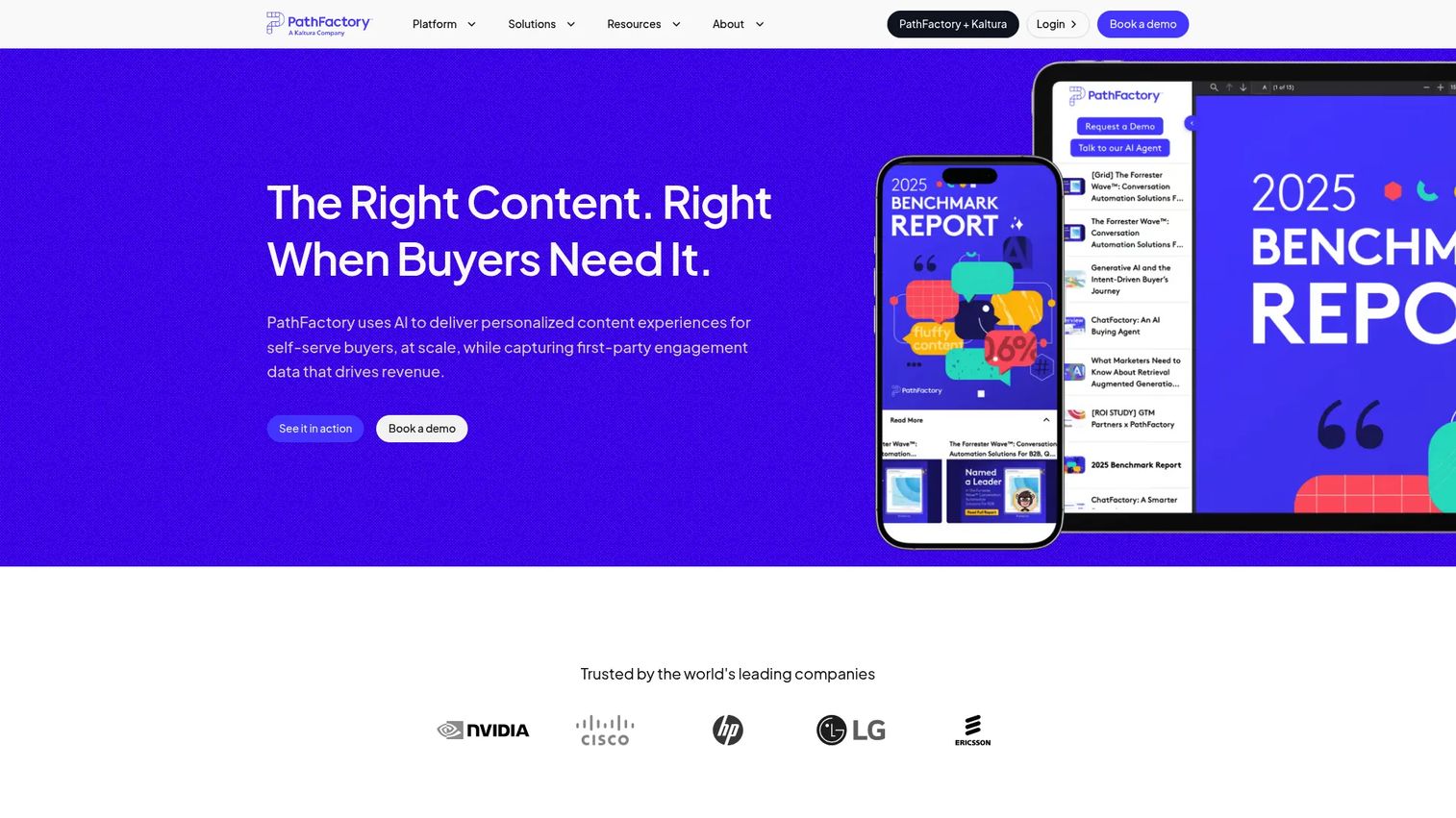
PathFactory is built around content intelligence: Tracking what buyers consume, surfacing related content automatically, and translating engagement signals into account-level intent data. It fits teams whose primary job is content journey optimization rather than account-board personalization.
Best for: Demand gen and content marketing teams that want bingeable content journeys and content-to-revenue analytics.
What it is: PathFactory is a B2B content intelligence and experience platform for personalized buyer journeys. It offers AI-powered content recommendations through its ChatFactory feature, account-level engagement tracking, and deep integrations with CRM and MAP systems. G2 rates it 4.3/5.
Key features:
- Personalized content playlists and templated journey experiences
- AI-powered buyer recommendations via ChatFactory
- Account-level engagement and journey tracking
- Content consumption analytics and CRM/MAP integrations
- Content intelligence connecting asset performance to revenue
Where PathFactory falls short: G2 reviewers note the platform carries a meaningful implementation effort for smaller teams. Content taxonomy setup and ongoing maintenance require sustained attention. Some reviewers describe the reporting UI as having a steep learning curve, and mid-market teams mention pricing fit as a consideration.
Pricing: Contact sales.
G2 rating: 4.3/5
How it compares to Folloze: PathFactory focuses on content journey optimization and content intelligence. Folloze focuses on account-board creation and buyer-experience destinations. Teams that need to understand content consumption patterns across a large library may find PathFactory a more direct fit.
4. Uberflip (content experience platform)
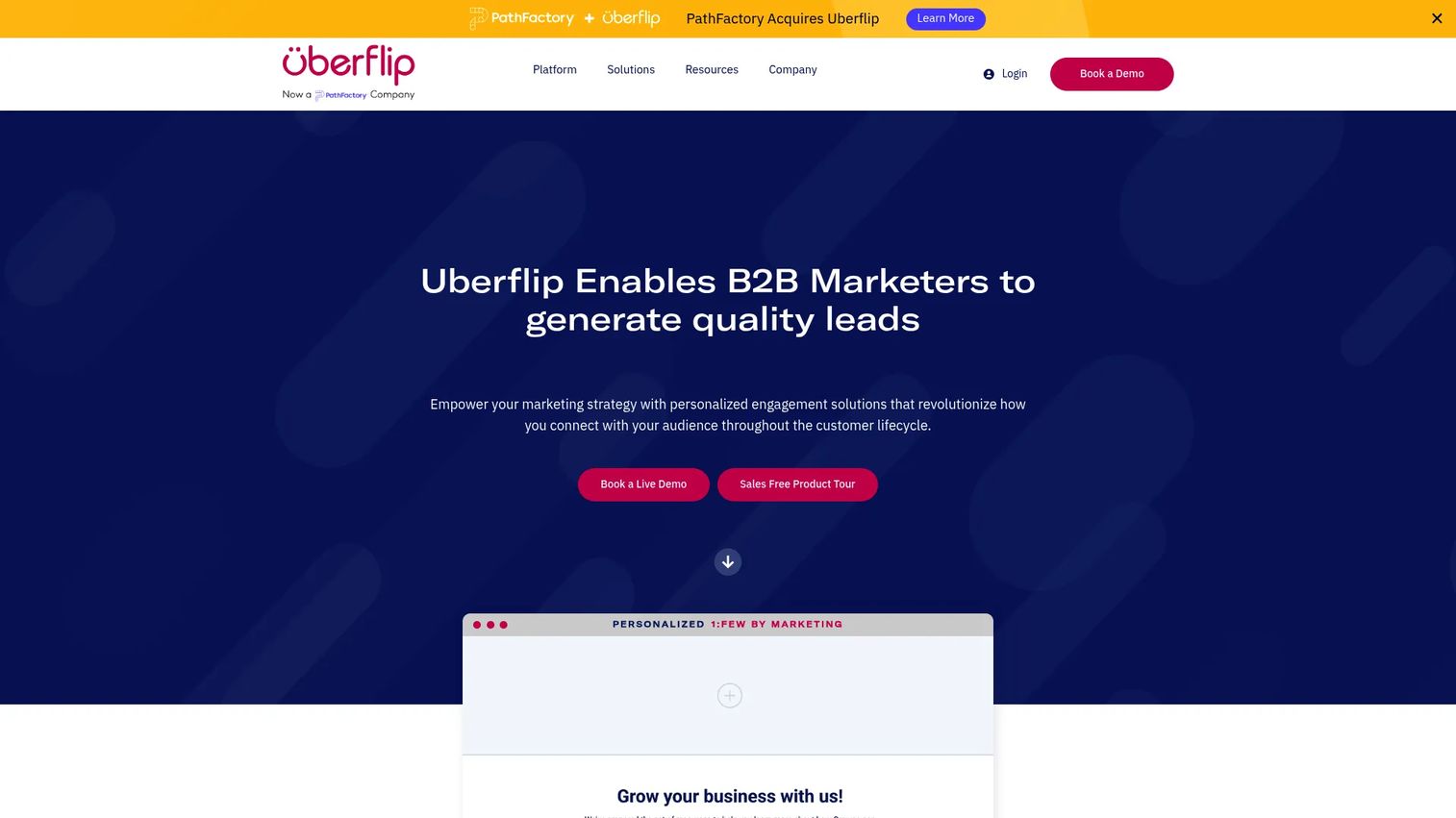
Uberflip is built for marketing teams that want to organize large content libraries into branded hubs and campaign destinations. It sits closest to the content hub category, with a focus on bringing together existing content rather than building account-specific boards from scratch.
Best for: Mid-market and enterprise marketing teams building branded content hubs, campaign destinations, and content streams.
What it is: Uberflip is a content experience platform for personalizing and delivering marketing content across hubs, streams, and campaign pages. It includes content recommendations using AI and machine learning, digital sales rooms, and integrations with marketing automation and CRM tools. G2 rates it 4.2/5.
Key features:
- Branded content hubs and campaign destination pages
- AI-powered content recommendations
- CTA tiles and in-stream lead capture
- Digital sales rooms for sales content distribution
- CRM and marketing automation integrations
Where Uberflip falls short: G2 reviewers mention template flexibility constraints for teams with specific design needs. Some describe setup time and content organization overhead as significant for initial launch. Reporting depth and admin maintenance effort come up consistently, especially as libraries grow.
Pricing: Contact sales.
G2 rating: 4.2/5
How it compares to Folloze: Uberflip fits content hub publishing and content stream organization. Folloze fits account-based buyer destinations and personalized campaign experiences where the goal is an ABM-style engagement journey.
5. Hushly (content experience and conversion platform)
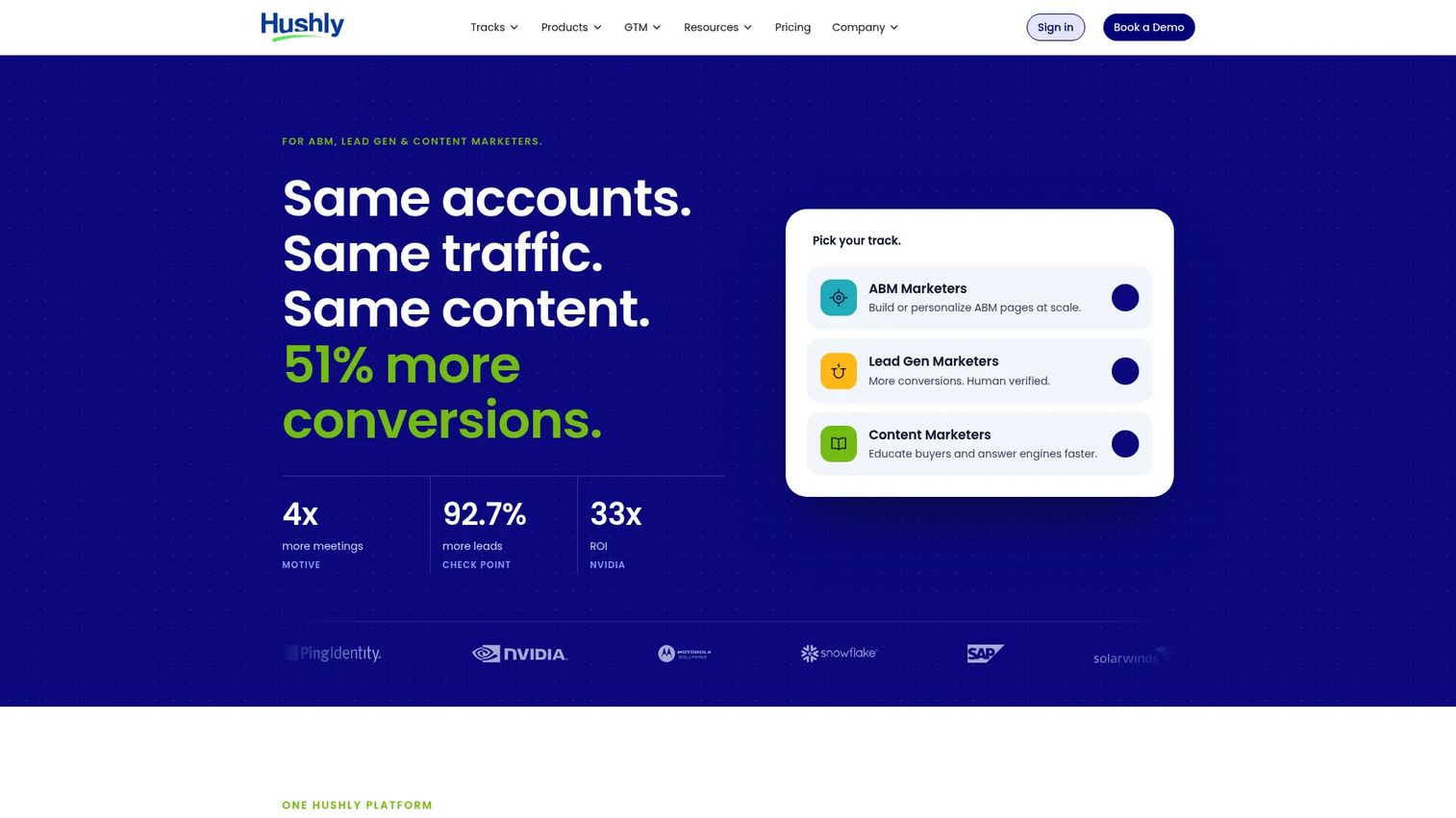
Hushly is the content experience option with the clearest public pricing in this category, making it a practical consideration for teams comparing cost before entering a sales cycle. Its focus is conversion: Personalized content recommendations designed to move visitors further into the funnel.
Best for: Demand gen teams that want personalized content recommendations, account-focused microsites, and lead conversion on existing traffic.
What it is: Hushly is an AI-powered B2B conversion platform combining ABM personalization, content recommendations, and lead generation across microsites, landing pages, resource centers, and content hubs. G2 rates it 4.8/5.
Key features:
- Account-focused microsites and ABM personalization
- Self-nurturing landing pages with single-field lead forms
- Adaptive resource centers with AI-powered content recommendations
- Content hubs organized by topic or persona
- Engagement analytics and CRM integrations
Where Hushly falls short: G2 reviewers describe configuration requirements for getting personalization rules to work precisely. Some note the learning curve around setting up content rules and integration workflows. Teams running more complex ABM orchestration alongside content experience work may find integration setup effort significant.
Pricing: Free plan available. Starter: $99/month. Enterprise: From $24,000/year, bundling all four modules.
G2 rating: 4.8/5
How it compares to Folloze: Hushly is a closer content-experience alternative for teams prioritizing content conversion and recommendation-led journeys. Folloze has deeper account-board capabilities and more established buyer-experience orchestration for enterprise ABM programs.
6. Demandbase (account-based marketing platform)
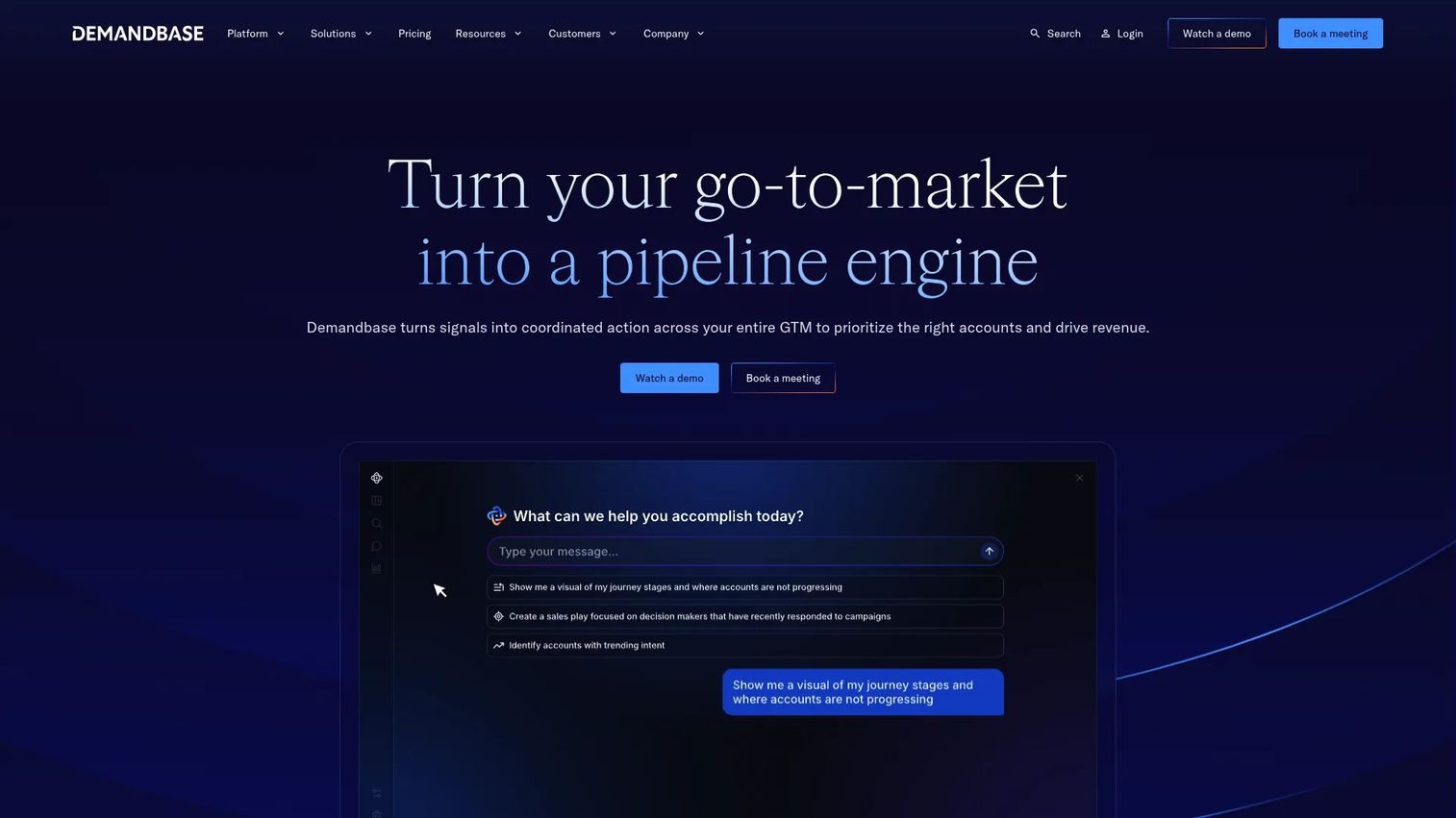
Demandbase is the right call when the primary job is account orchestration, not content experience. It identifies, targets, engages, and measures accounts across the full GTM motion, covering advertising, website personalization, sales intelligence, and buying-group identification.
Best for: Enterprise B2B sales and marketing teams running full account-based go-to-market programs.
What it is: Demandbase is an AI-powered ABM platform coordinating sales, marketing, advertising, data, and revenue workflows. It surfaces account intelligence and intent signals, enables account-based advertising with AI-powered bidding, and provides buying-group engagement data with CRM and MAP integrations. G2 rates it 4.4/5.
Key features:
- Account intelligence and intent signals
- Buying-group identification and engagement tracking
- Account-based advertising with AI bidding
- Website personalization and form enrichment
- Audience orchestration and automated actions
Where Demandbase falls short: G2 reviewers consistently cite cost as a significant factor for teams outside enterprise budgets. Implementation complexity and the time required to configure data integrations come up frequently. Some describe data accuracy issues for smaller accounts or less-covered markets.
Pricing: Contact sales. Demandbase uses customized pricing with a platform fee plus per-user pricing.
G2 rating: 4.4/5
How it compares to Folloze: Demandbase is stronger for account orchestration, intent data, and advertising. Folloze is stronger for personalized buyer content destinations once you know which accounts to engage.
7. 6sense (revenue AI and ABM platform)
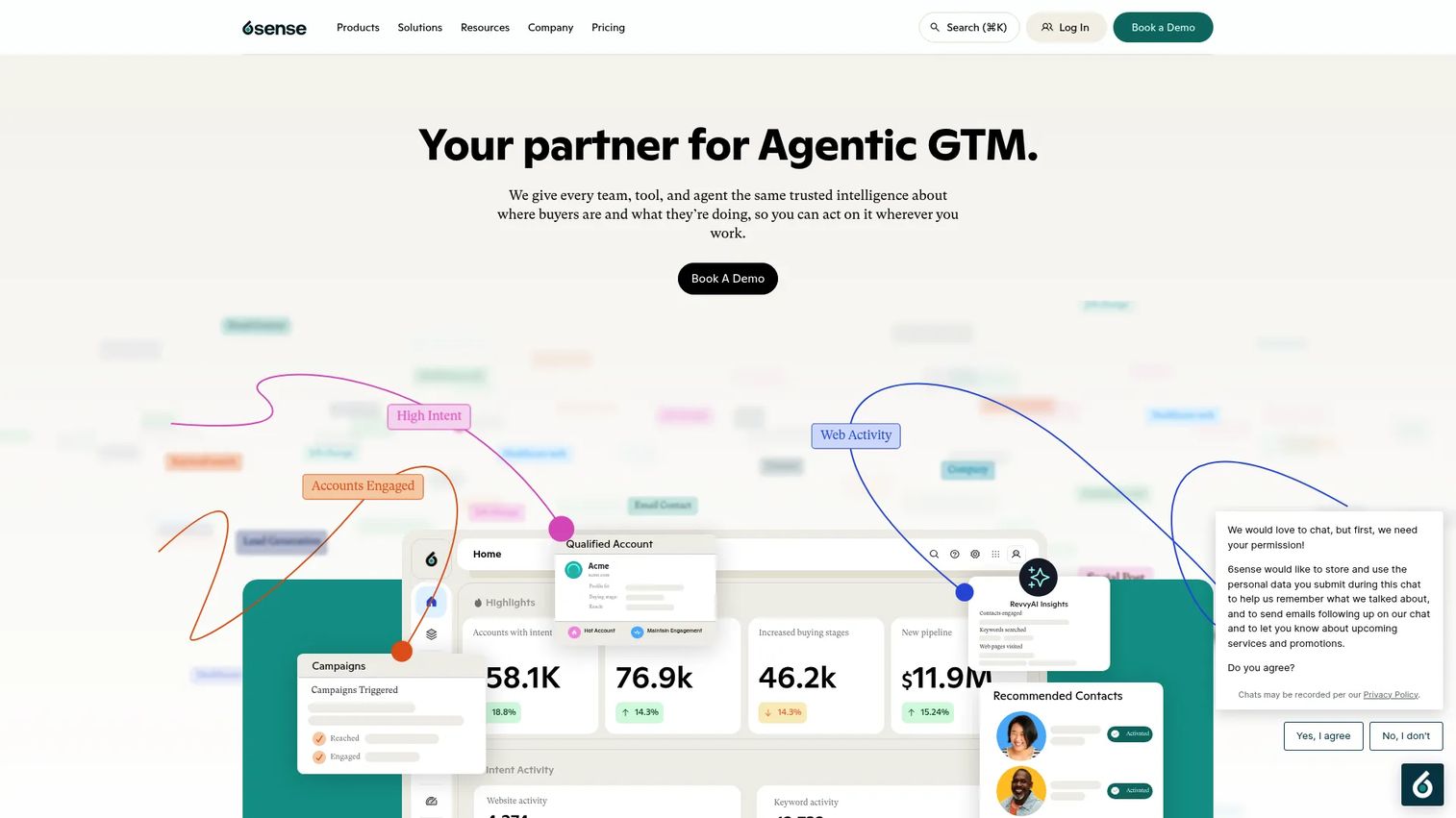
6sense sits at the intelligence end of the ABM spectrum. Its primary contribution is telling you which accounts are in-market, what buying stage they're at, and which contacts within those accounts are showing intent, so your team engages at the right moment.
Best for: Revenue teams that need predictive account intelligence and buying-stage modeling to prioritize outreach and campaigns.
What it is: 6sense is a B2B go-to-market intelligence platform combining company data, behavioral intent signals, predictive scoring, account-based advertising, and AI-powered workflows. It surfaces buying-stage models and account alerts for sales and marketing coordination. G2 rates it 4.1/5.
Key features:
- Predictive intent and buying-stage models
- Account scoring and AI-powered prioritization
- Account-based advertising activation
- Sales alerts and intelligent workflow triggers
- CRM and MAP integrations with API and MCP connectivity
Where 6sense falls short: G2 reviewers describe cost as the primary barrier, particularly for mid-market teams. Data interpretation and dashboard configuration carry a learning curve. Sales adoption requires change management work that some reviewers note is underestimated during onboarding.
Pricing: Contact sales. Pricing is customized across Revenue Marketing, Sales Intelligence, and 6sense Intelligence packages.
G2 rating: 4.1/5
How it compares to Folloze: 6sense helps decide which accounts to pursue and at what moment. Folloze helps present personalized content experiences to those accounts. Many teams use both together.
8. Vidyard (video platform)
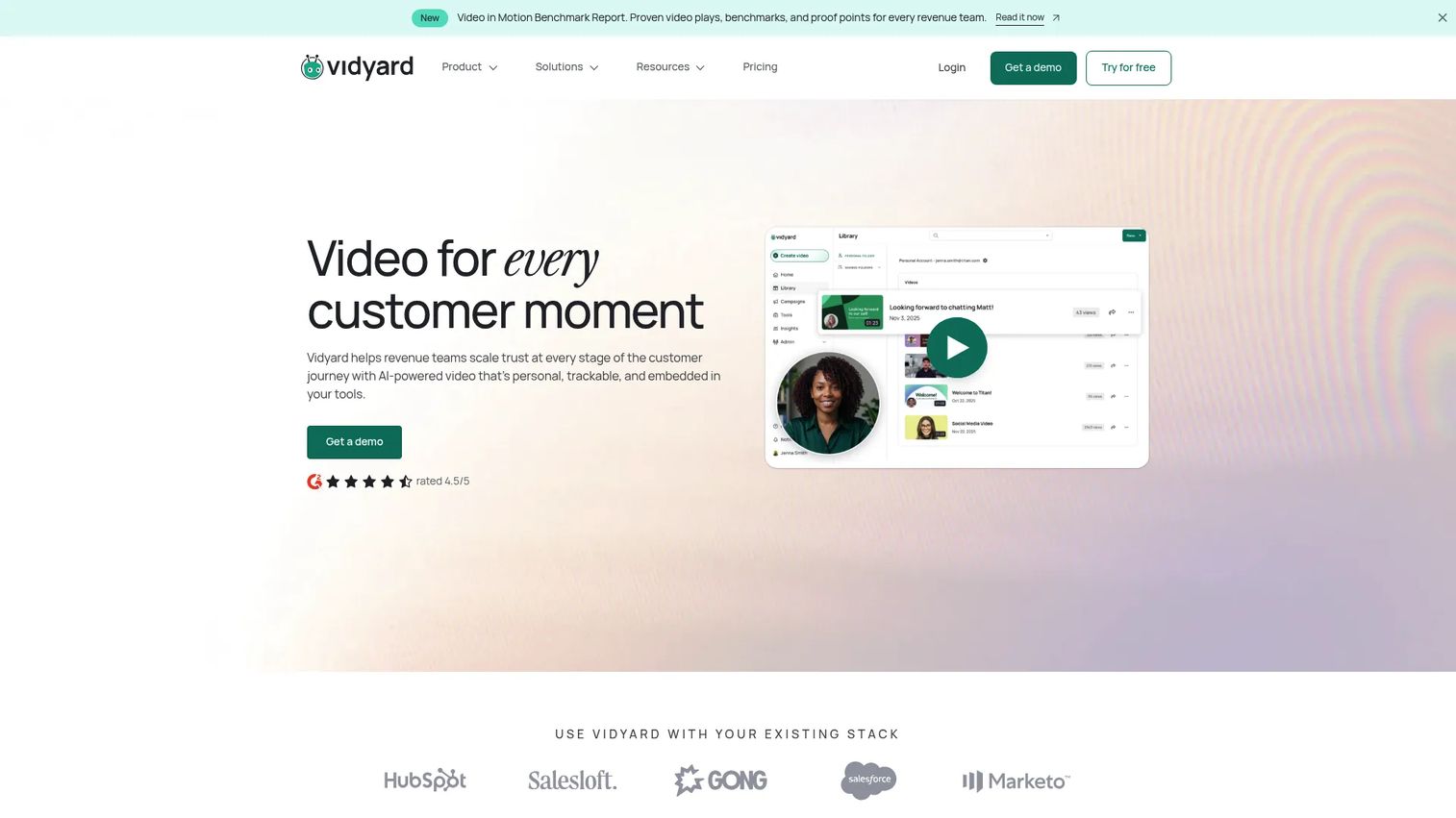
Vidyard is the best Folloze alternative for teams whose specific gap is personalized, measurable video. It hosts, records, shares, and measures video engagement with integrations into CRM and sales tools, covering the jobs that neither a content board nor a demo platform addresses.
Best for: B2B sales, marketing, and customer success teams using personalized, automated, and trackable video engagement.
What it is: Vidyard is an AI-powered video platform for creating, hosting, sharing, automating, and analyzing business video. It covers webcam and screen recording, AI avatars, automated video workflows, video hosting with branded pages, and viewer-level analytics. G2 rates it 4.5/5.
Key features:
- Webcam and screen recording with AI avatars
- Video Agent for trigger-based automated video delivery
- Video hosting with branded sharing pages
- Video analytics, viewer insights, and CTA overlays
- CRM and marketing automation integrations
Where Vidyard falls short: G2 reviewers note that advanced features, including deeper CRM integrations, custom branded pages, and analytics, are gated to paid tiers. Some describe video management at scale as requiring organizational discipline. The Teams and Enterprise tiers carry custom pricing.
Pricing: Free plan available. Starter: $59/seat/month (annual) or $89/seat/month (monthly). Teams and Enterprise: Custom pricing.
G2 rating: 4.5/5
How it compares to Folloze: Vidyard is the right tool when the asset needs to be watched: A personalized sales video, a product announcement with on-camera narration, or an async walkthrough. It does not replace account-based content boards, but it can supply high-engagement video assets inside them.
9. ON24 Engagement Hub (webinar and content engagement platform)
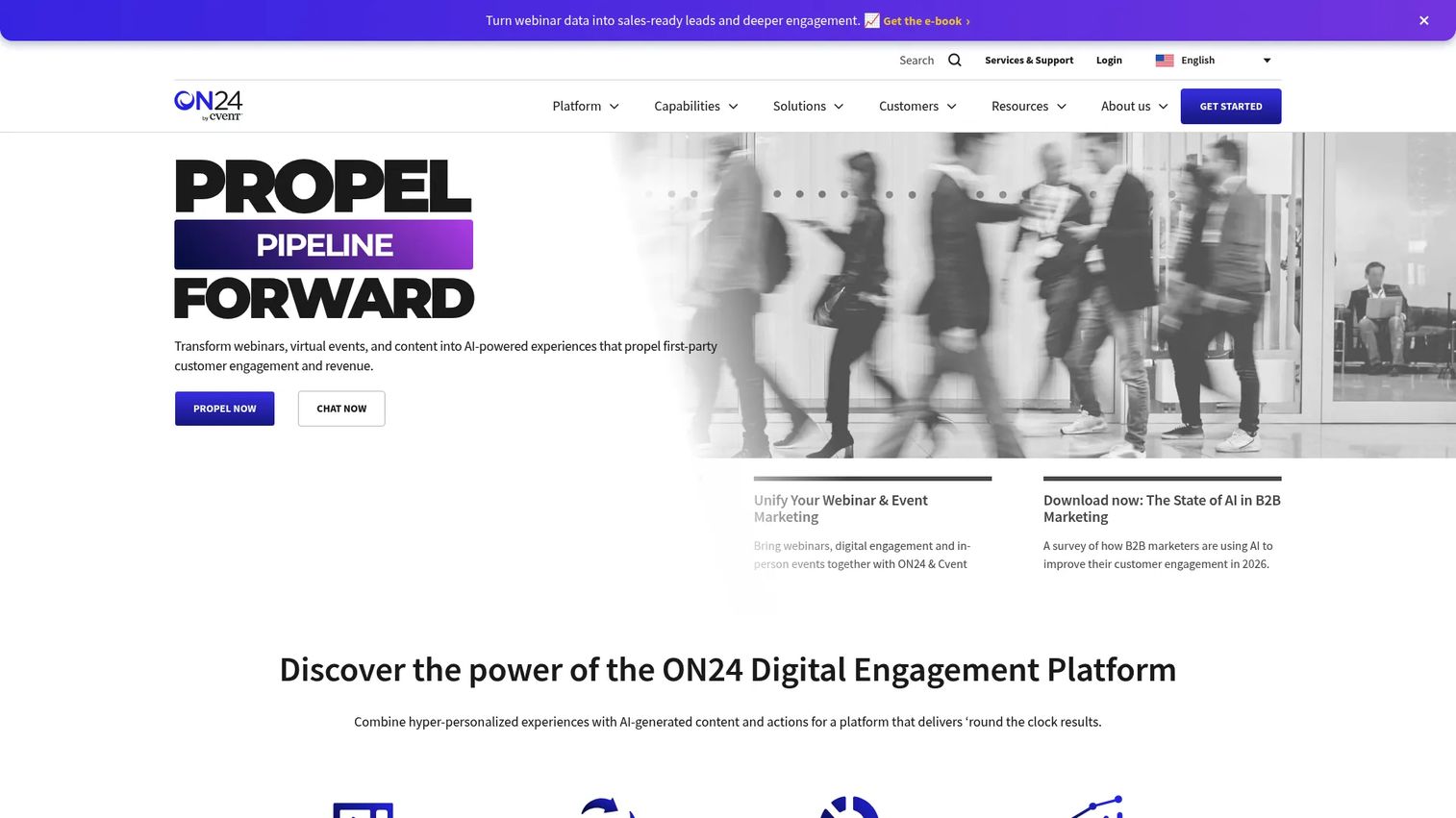
ON24 Engagement Hub makes the most sense for teams whose buyer engagement strategy is built around webinars and virtual events. It extends that event content into always-on engagement destinations.
Best for: Enterprise marketing teams building branded content experiences anchored to webinar libraries and digital assets.
What it is: ON24 Engagement Hub is a branded, searchable content hub for hosting webinars and multimedia assets. It supports standalone or embedded hubs, built-in search and filtering, personalization using registration data, and ON24 Intelligence engagement analytics. G2 rates it 4.3/5.
Key features:
- Libraries of live and on-demand webinars with multimedia asset support
- Built-in search, filters, categories, and content management
- Personalization using attendee registration data
- ON24 Intelligence engagement analytics
- SEO support and marketing tool integrations
Where ON24 Engagement Hub falls short: G2 reviewers describe cost as a factor that limits fit for smaller teams. The event-production learning curve is significant for teams new to the platform. Some note template flexibility constraints and complexity around reporting configuration.
Pricing: Contact sales. ON24 lists Essentials, Standard, and Advanced packages without public pricing.
G2 rating: 4.3/5
How it compares to Folloze: ON24 fits webinar-led content engagement and event content libraries. Folloze fits account-personalized content destinations across campaigns and sales motions. If webinars are the center of your buyer engagement strategy, ON24 is the more direct option.
10. Showpad (sales enablement platform)
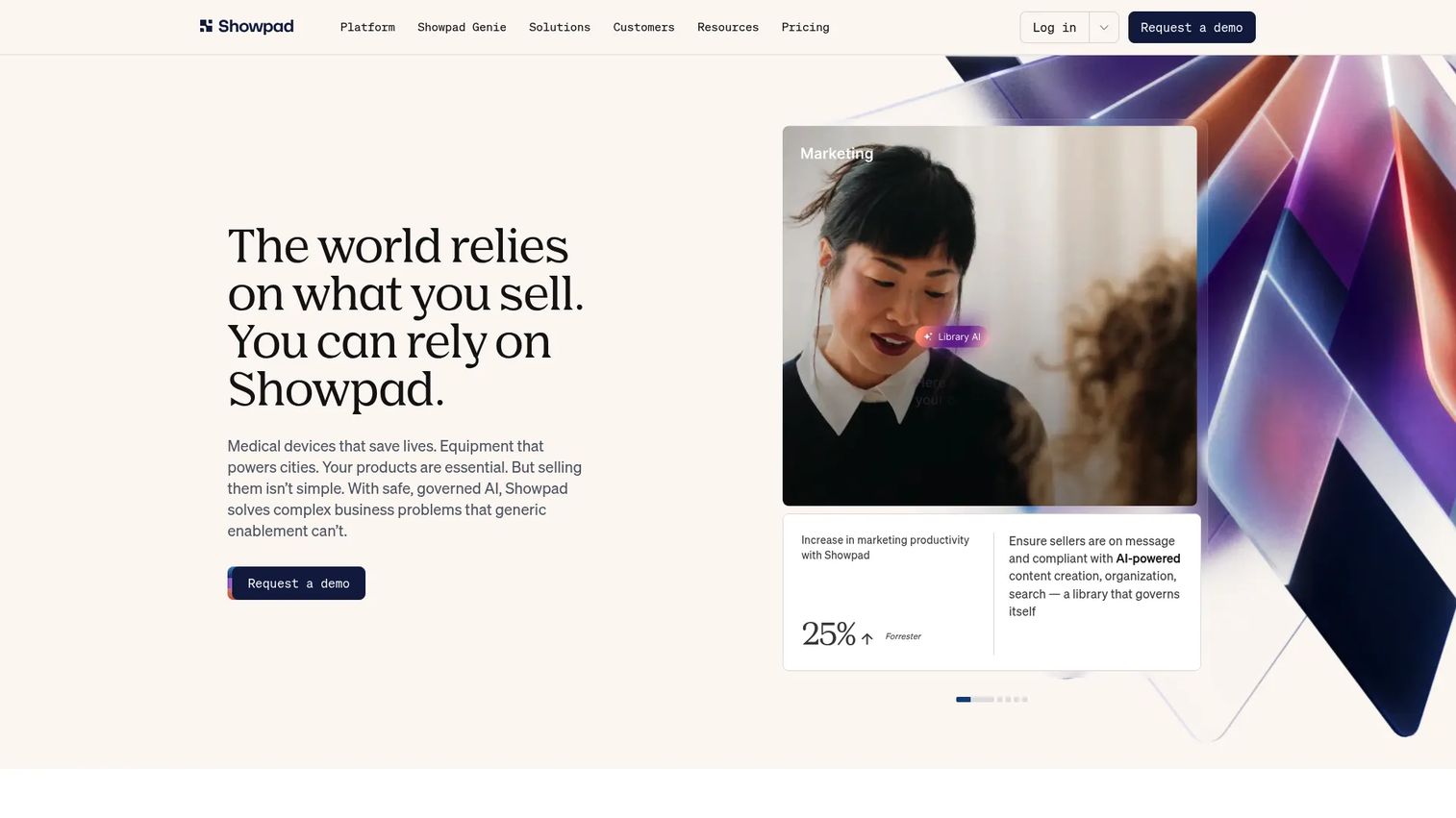
Showpad addresses the field-enablement side of the job: Making sure sellers have approved content, know how to use it, and can share it with buyers through a governed workflow. That is a different problem from building buyer-facing account destinations.
Best for: Mid-market and enterprise field-sales organizations that need unified content management, seller readiness, and buyer engagement in one platform.
What it is: Showpad is an AI-native revenue effectiveness platform covering content management, seller training, buyer engagement through Shared Spaces, and analytics with report and dashboard builders. G2 rates it 4.6/5.
Key features:
- Content libraries, pages, and advanced experience management
- Training libraries, Roleplay AI, and seller certifications
- Buyer engagement through Shared Spaces
- Genie Assistant and AI agents for content search and guidance
- CRM, email, and marketing automation integrations
Where Showpad falls short: G2 reviewers mention admin complexity as an ongoing challenge for content governance at scale. Some describe difficulty with content search and findability within large libraries. Setup time for training and certification programs comes up as a consideration for teams with lean enablement resources.
Pricing: Contact sales.
G2 rating: 4.6/5
How it compares to Folloze: Showpad is stronger for seller enablement, training, and rep-side content governance. Folloze is stronger for buyer-facing account content experiences driven by marketing.
11. Seismic (sales enablement platform)
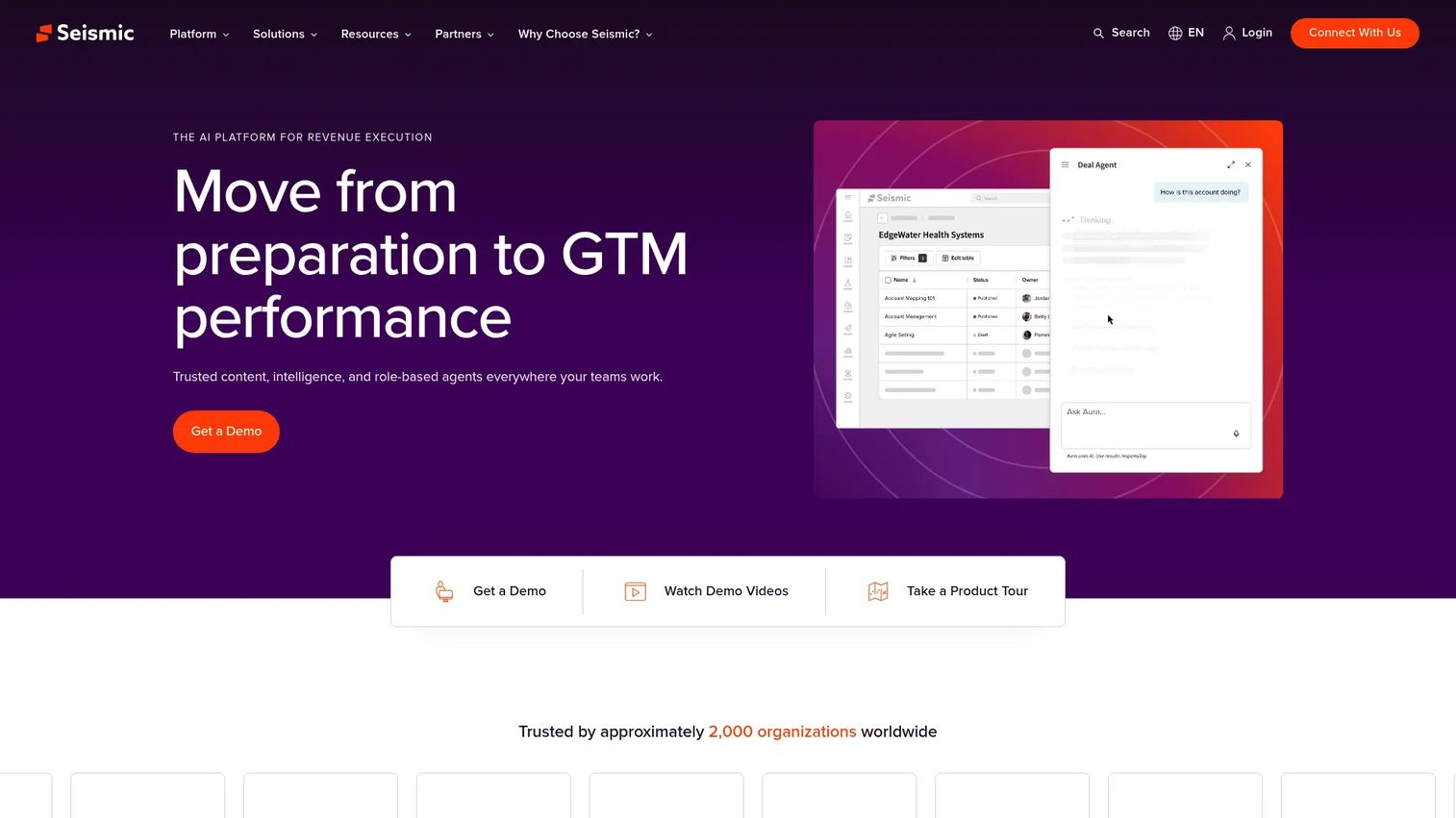
For PMMs who need to solve the "Sales won't use the right content" problem at enterprise scale, Seismic is built around content governance, enablement analytics, and rep adoption metrics.
Best for: Large organizations that need a unified platform for content governance, learning, coaching, buyer engagement, and enablement analytics.
What it is: Seismic is an AI-powered sales enablement platform for equipping customer-facing teams with content, training, coaching, workflows, and revenue-impact insights. It covers content personalization and sharing, learning and onboarding, and analytics tying content usage to revenue outcomes. G2 rates it 4.7/5.
Key features:
- Content management with personalized content sharing
- Learning, onboarding, coaching, and role-play modules
- Enablement programs with revenue-impact analytics
- CRM integration and large-team governance
Where Seismic falls short: G2 reviewers consistently describe implementation time and admin overhead as significant commitments. The platform's breadth can create a steep learning curve for sales managers and reps. Pricing is handled entirely through sales conversations, with no public starting figures.
Pricing: Contact sales.
G2 rating: 4.7/5
How it compares to Folloze: Seismic controls what sellers use and measures enablement adoption. Folloze creates the personalized buyer-facing destinations where approved content lives.
12. Highspot (sales enablement platform)
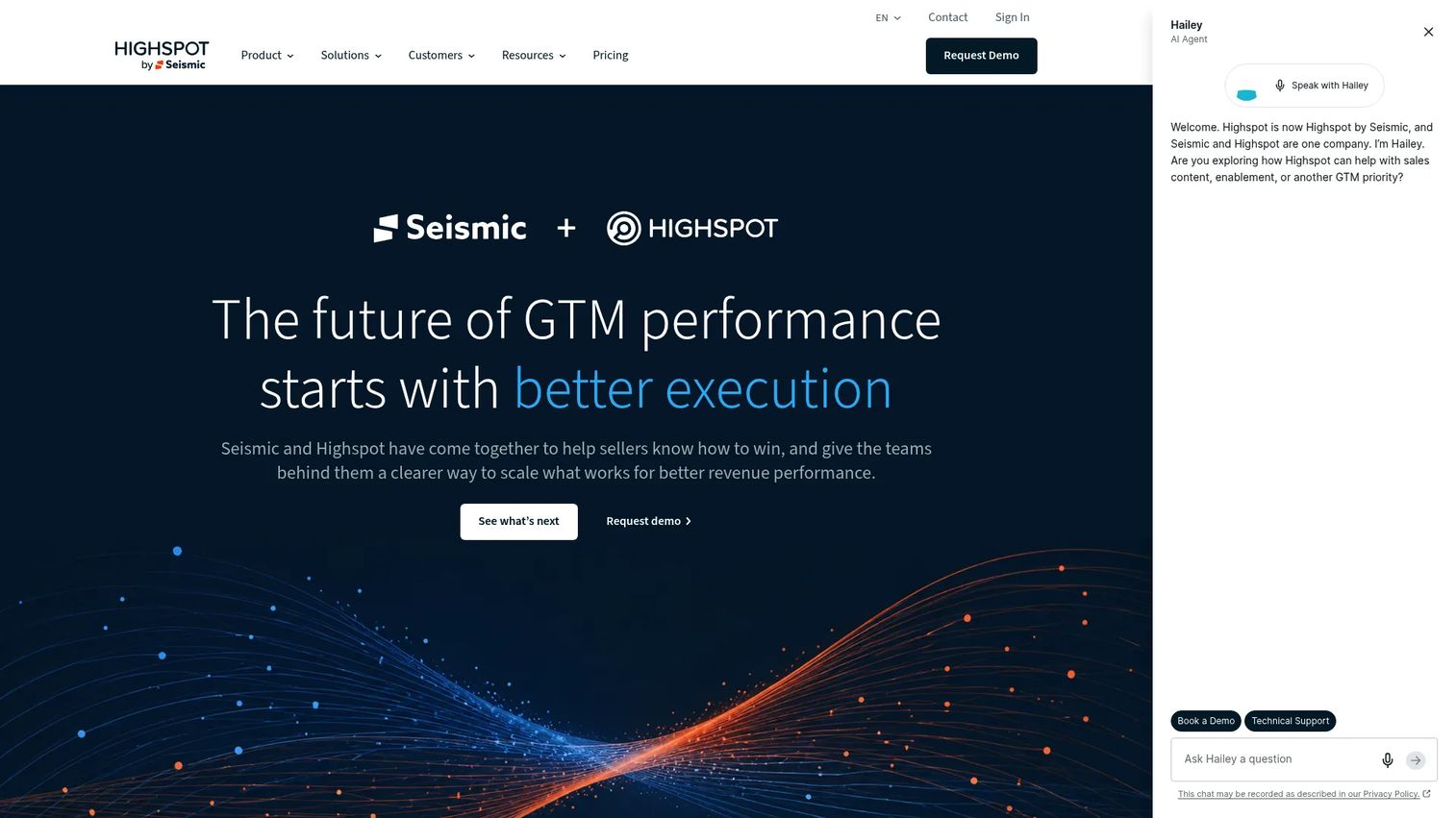
Highspot is built around content findability and rep adoption. If the PMM problem is that Sales cannot find the right asset at the right deal stage, Highspot's plays and AI search are the direct solution.
Best for: Enterprise go-to-market teams where rep adoption of sales content and guided selling are the primary performance levers.
What it is: Highspot is an AI-powered go-to-market platform for content management, sales plays, training, coaching, deal guidance, and buyer engagement analytics. G2 rates it 4.7/5.
Key features:
- AI-powered content organization, search, and recommendations
- Sales Plays and Digital Sales Rooms
- Training, adaptive learning, Role Play, and AI coaching feedback
- Deal guidance, Meeting Intelligence, and revenue analytics
- Integrations with Salesforce, Microsoft, Slack, and other GTM tools
Where Highspot falls short: G2 reviewers describe admin setup and ongoing content maintenance as demanding, particularly for large libraries with many contributors. Search relevance issues for specialized terminology surface in reviews. Reporting configuration requires dedicated enablement operations attention.
Pricing: Contact sales.
G2 rating: 4.7/5
How it compares to Folloze: Highspot is field-enablement first, focused on what sellers access and use. Folloze is buyer-experience first, focused on what accounts see when marketing sends them to a destination.
13. Mutiny (website personalization platform)
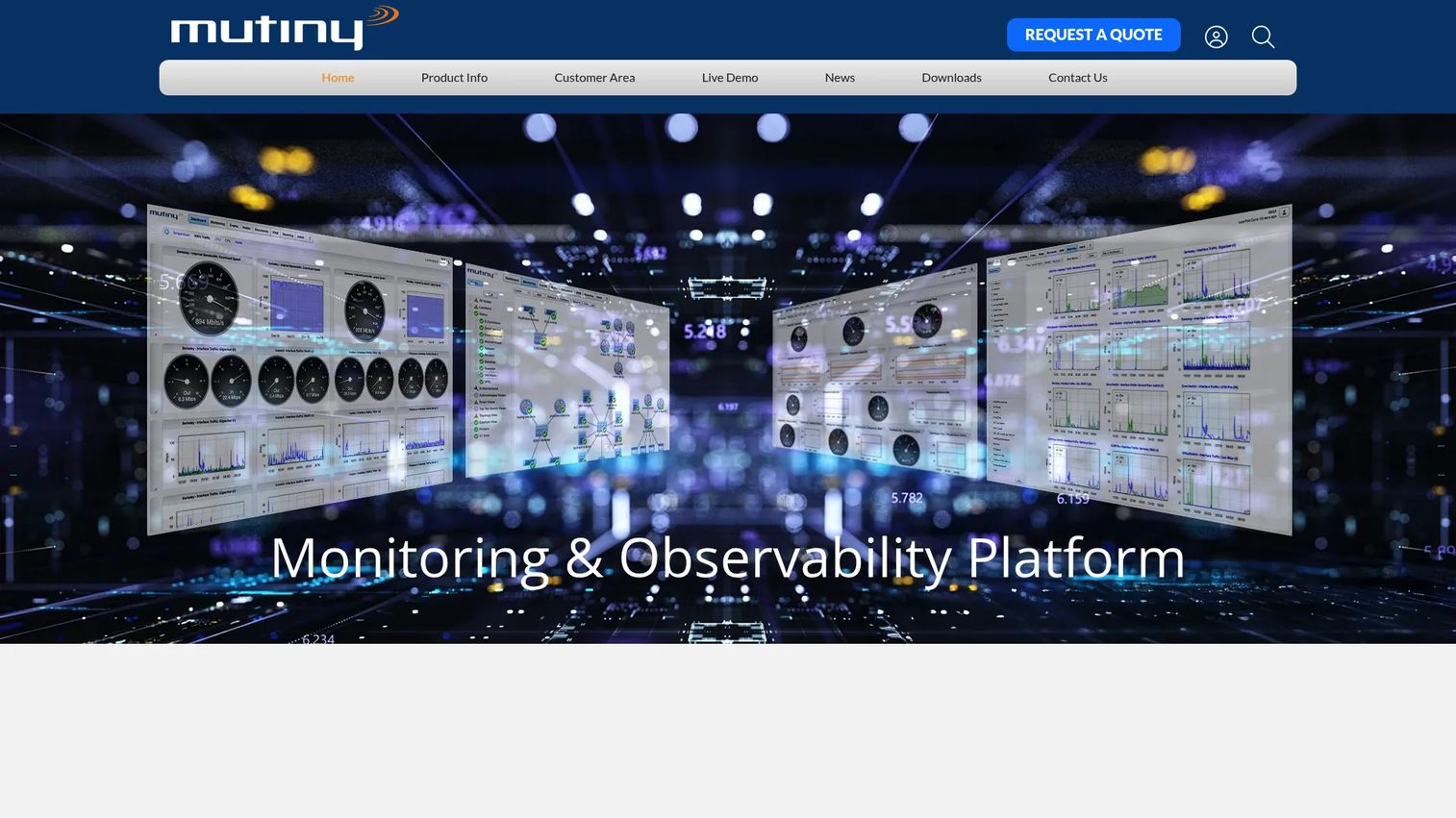
Mutiny is the website personalization option: Changing what site visitors see based on their company, industry, or segment without touching the underlying codebase. The job is distinct from building standalone buyer experience destinations.
Best for: Marketing teams that want segment-based or account-level website and landing page personalization without engineering work.
What it is: Mutiny is a B2B website personalization platform for creating page variants by segment, account, industry, or campaign. It supports no-code page changes and experimentation.
Key features:
- Segment-based and account-level website personalization
- No-code page variants without engineering involvement
- Experimentation and personalization analytics
- Campaign and audience targeting
Where Mutiny falls short: Personalization experimentation requires meaningful traffic volumes to reach statistical significance. Teams without established segment definitions and clear ICP targeting may find setup effort front-loaded. The platform's scope is the website experience; it does not address standalone content destinations or interactive product experiences.
Pricing: Contact sales for commercial plans. A Community Edition exists for limited device monitoring use cases unrelated to web personalization.
G2: 2.5/5
How it compares to Folloze: Mutiny personalizes website pages for different visitors. Folloze creates standalone personalized content destinations and buyer boards separate from the main site.
14. Userled (ABM and personalized campaign platform)
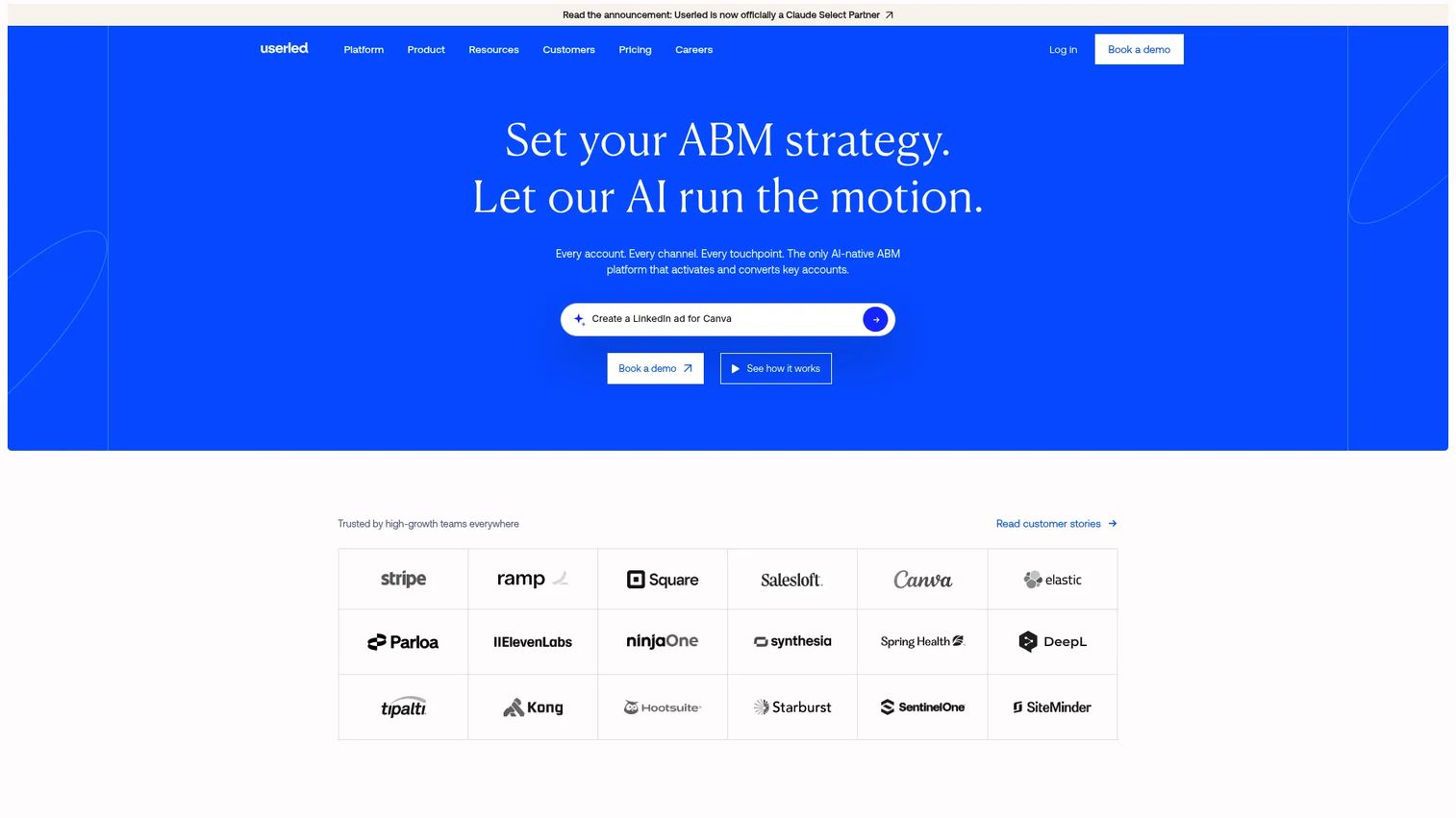
Userled is a newer entrant in the ABM personalization space, built for teams that want to create personalized account pages and campaign experiences without engineering work. G2 rates it 4.7/5.
Best for: Marketing and sales teams running personalized ABM campaigns at scale, particularly where LinkedIn ads and account microsites are the activation channels.
What it is: Userled is an AI-native ABM platform for creating personalized campaigns across LinkedIn ads, microsites, sales plugins, and events. It includes AI agents for campaign management, content, bidding, and insights.
Key features:
- LinkedIn ABM ads with personalization
- Personalized microsites for account campaigns
- Sales plugin for ABM content sharing and engagement tracking
- Event invite capabilities
- AI agents for campaign management and insights
Where Userled falls short: G2 review volume is lower than established platforms, which limits the depth of sourced user feedback. No public pricing is displayed. Teams evaluating enterprise maturity for large-scale deployments should ask about integration breadth and admin capabilities during the sales process.
Pricing: Contact sales.
G2 rating: 4.7/5
How it compares to Folloze: Userled is a campaign-focused alternative for personalized ABM pages and LinkedIn activation. Folloze has stronger category recognition for buyer experience and content board orchestration across a full GTM program.
15. Dock (digital sales room and client portal platform)
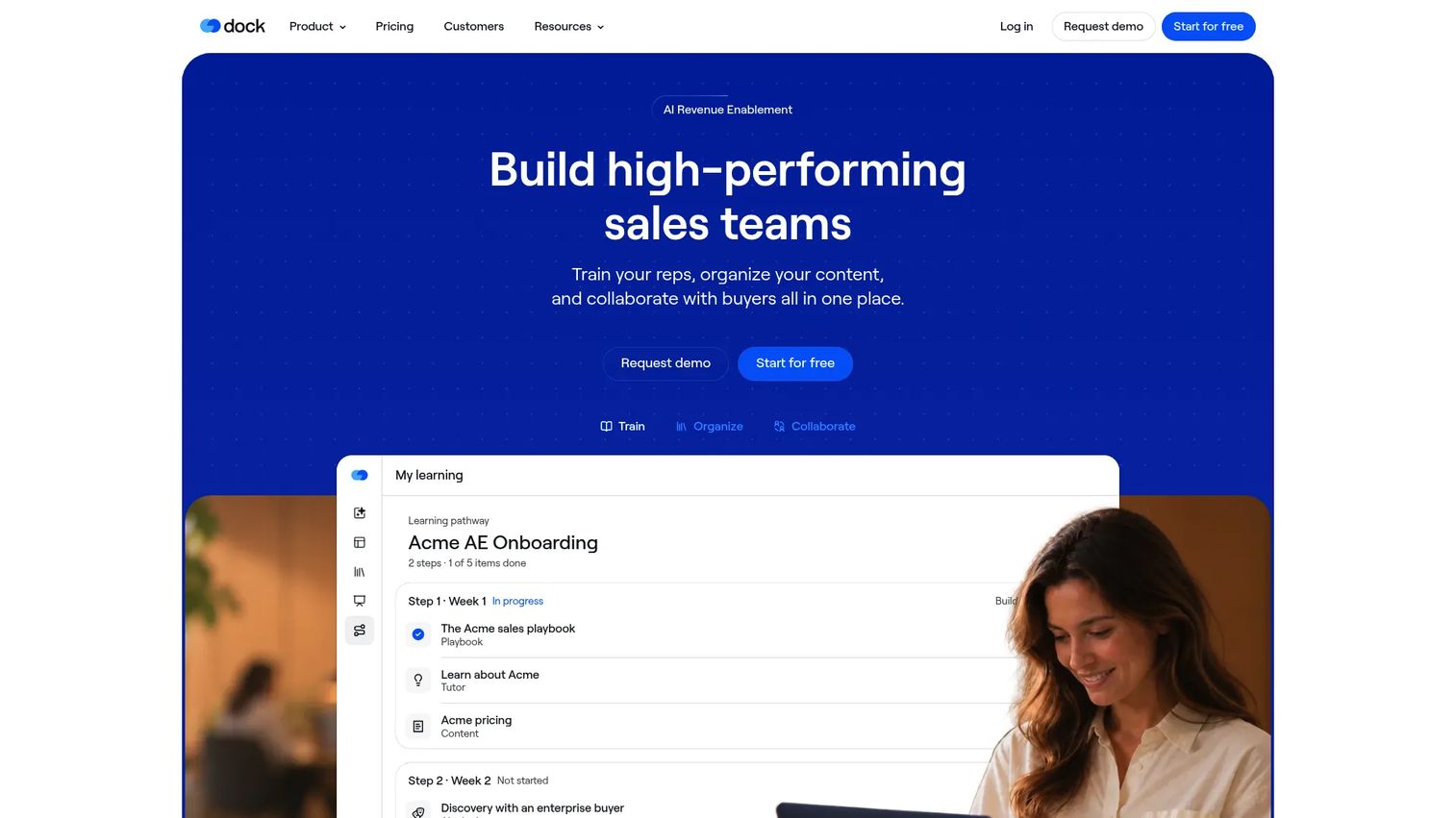
Dock addresses the late-stage job: Once a prospect is active, keeping deal-specific resources, stakeholders, and next steps organized in a shared buyer workspace.
Best for: Revenue teams that need buyer workspaces, mutual action plans, sales content, and onboarding portals in one place.
What it is: Dock is an AI revenue enablement platform for creating buyer workspaces, managing sales content, training teams, and running AI agents. It covers digital sales rooms, quotes, CPQ, learning management, and engagement analytics. G2 rates it 4.6/5.
Key features:
- AI-powered buyer workspaces and digital sales rooms
- Content library with AI search and management
- Playbooks, courses, and learning management
- Sales quotes and CPQ with order forms
- Buyer engagement analytics and Salesforce/HubSpot integrations
Where Dock falls short: G2 reviewers note that advanced customization for specific workflow requirements can require additional configuration. Reporting depth and certain workflow integrations are gated to Premium and Enterprise tiers. Teams scaling beyond the Standard plan's included user count move into higher pricing bands.
Pricing: Free plan available. Standard: $350/month (up to 5 users). Premium: $1,000/month billed annually (up to 10 users). Enterprise: Custom pricing with annual contract.
G2 rating: 4.6/5
How it compares to Folloze: Dock serves deal-specific collaboration after a prospect is active. Folloze serves marketing-led account content experiences and campaign destinations earlier in the journey.
What is the best Folloze alternative for interactive product demos?
Guideflow. For PMMs who need buyers to experience the product, Guideflow is purpose-built for that job. It replaces static content tiles with clickable product experiences that capture impressions, completion rates, drop-off data, and leads through in-demo forms or personalized links. The marketer builds an interactive demo once, personalizes content per lead, and distributes it across landing pages, emails, sales follow-up, and event destinations. ABM boards still matter for account-level orchestration. Guideflow changes what the buyer clicks inside those journeys.
Which Folloze alternative is best for content experiences?
PathFactory, Uberflip, or Hushly, depending on the content motion. PathFactory fits teams that need content intelligence, binge-style journeys, and account-level content consumption data tied to pipeline. Uberflip fits teams building branded content hubs and organizing large marketing content libraries into campaign destinations. Hushly fits demand gen teams focused on content-led conversion, with the clearest self-serve pricing in the category and strong content recommendation capabilities.
Which Folloze competitor is best for ABM orchestration?
Demandbase or 6sense, depending on where the gap sits. Demandbase covers the full account engagement motion: Identification, advertising, website personalization, buying-group signals, and CRM-connected orchestration. 6sense focuses on predictive intelligence, telling you which accounts are in-market and at what buying stage, then activating campaigns and sales alerts from those signals. Neither is a content hub replacement in the narrow sense. Both are tools for deciding which accounts to prioritize and when to engage.
What is the best Folloze alternative for sales enablement?
Seismic, Highspot, or Showpad. Seismic fits enterprise teams that need content governance at scale, training and coaching infrastructure, and analytics connecting enablement activity to revenue. Highspot fits teams where rep adoption and content findability are the primary lever, with strong AI search and guided selling plays. Showpad fits mid-market and enterprise field teams that want unified content management, seller training, and buyer-facing Shared Spaces. For PMMs, the resonating framing here is that enablement adoption is the metric: If Sales does not use the asset, the launch did not happen.
Which Folloze alternative is best for video and webinar engagement?
Vidyard for video, ON24 for webinar-led content. Vidyard is the right choice when the asset needs to be watched: Personalized sales video, product announcements with on-camera delivery, or async video for outreach. Its free plan and Starter tier from $59/seat/month make it one of the more accessible options in this list. ON24 Engagement Hub fits teams whose buyer engagement strategy centers on webinars and event content, extending that content into always-on searchable hubs. Neither replaces interactive product experiences when the buyer's job is evaluating the product itself.
Which Folloze alternative is best for deal rooms?
Dock. It handles the late-stage collaboration job: Shared buyer workspaces with mutual action plans, file sharing, next steps, quotes, and onboarding portals. The free plan lets teams start without a commitment, and Standard at $350/month covers small deal-room deployments. Dock is not a top-of-funnel ABM content hub, but for PMMs supporting sales with deal-specific resources and customer handoff portals, it covers that job clearly.
When should you stay with Folloze?
Folloze is the right call when account-based content destinations are already working and the team has built the operations to keep them current.
If Sales uses existing boards regularly, campaigns tie to measurable engagement outcomes, and the integration stack with Salesforce, Marketo, or Demandbase is already operational, switching creates migration work without proportional gain. Folloze's strength is exactly that use case: Personalized buyer experiences at the account level, delivered without engineering work.
The fit gets tighter when the team needs to serve a buying committee across multiple roles with different content needs, run personalized campaigns at scale, and track engagement back to pipeline. Those are jobs Folloze was built for.
Why teams switch from Folloze to Guideflow
The gap PMMs describe most often is proof. Folloze boards organize content well. When the buyer's remaining question is "does this product actually work for our use case," another asset rarely answers it. Clicking through the product does.
Guideflow closes that gap. A PMM captures the product flow through the Chrome extension or native app, edits text, images, graphs, and branching logic per persona, and publishes an interactive demo in about two and a half minutes. Visitor identification works at the company level. CRM records are created when a viewer submits an in-demo form or arrives through a personalized link, so the engagement signal moves into HubSpot, Salesforce, Pipedrive, Zoho, or Marketo automatically.
The distribution layer covers every surface where the demo needs to live: Landing pages, email sequences, sales follow-up, LinkedIn campaigns, event kiosks, and demo centers that organize multiple demos in a branded hub. Translation into more than 30 languages makes it practical for international GTM.
The limitation worth naming: Guideflow is not an ABM orchestration platform. It does not handle account scoring, advertising activation, or buying-group signals across the full GTM stack. For teams whose primary job is account-level orchestration, a Demandbase or 6sense investment covers that layer. Guideflow performs best when the job is product proof and buyer self-education.
Start your journey with Guideflow today!
FAQs
Guideflow for interactive product experiences, PathFactory or Uberflip for content hubs, and Demandbase or 6sense for ABM orchestration. The right answer depends on which job is the actual bottleneck: Proof (interactive demos), content organization (content hubs), or account prioritization (ABM). PMMs who need all three often use a combination across the funnel.
Folloze creates personalized buyer content destinations and campaign boards organized around accounts and personas. Guideflow creates interactive product demos that buyers navigate themselves. Folloze organizes the board; Guideflow gives buyers a clickable product experience inside or alongside that board.
Demandbase and 6sense for ABM orchestration, intent data, and advertising. For personalized campaign experiences, Folloze, Userled, Hushly, or Mutiny cover different slices of that job. Guideflow fits when ABM teams need a product-led engagement asset inside their account programs, replacing static content with something buyers can explore.
PathFactory, Uberflip, and Hushly are the main options. PathFactory fits teams that need content intelligence and journey optimization. Uberflip fits teams publishing large marketing content libraries into organized hubs. Hushly fits conversion-focused content experiences with the most transparent pricing of the three.
Seismic, Highspot, and Showpad each address a different slice. Seismic fits enterprise teams focused on governance and revenue-impact analytics. Highspot fits teams where rep adoption and content findability are the leading concerns. Showpad fits mid-market and enterprise organizations that want content management, seller training, and buyer engagement in one platform.
Several alternatives publish self-serve pricing. Hushly starts at $99/month. Vidyard has a free plan with Starter from $59/seat/month. Dock has a free plan with Standard at $350/month. Guideflow has a free plan with paid plans from $35/user/month. ABM platforms like Demandbase, 6sense, and sales enablement platforms like Seismic, Highspot, and Showpad price by quote. When comparing cost, the meaningful drivers are the number of users, integration requirements, implementation effort, and whether the tool replaces existing spend or adds to the stack.
No, not for every job. Interactive demos replace or upgrade specific product-focused assets inside the buyer journey. Content hubs still matter for organizing large asset libraries, routing visitors by persona or use case, and supporting campaigns that span many content types. The two serve different functions and work well together: The hub organizes the destination, the interactive demo provides the product-proof asset inside it.
Choose a content hub when the job is organizing and recommending content across a large library for self-serve buyer education. Choose an ABM platform when the job is identifying in-market accounts, targeting them with advertising, and coordinating sales and marketing engagement. Choose a demo automation platform when the job is giving buyers a clickable product experience that captures intent signals and moves them toward a conversation.