Broken link building sounds straightforward: Find a dead page, offer a replacement, earn a backlink. The operational reality is messier. You need to find dead URLs, judge whether the referring domains are worth targeting, locate the right contact, write a pitch that does not read like spam, follow up without damaging your sender reputation, and track whether the link actually went live.
That is six distinct workflow stages, and most tools only solve one or two of them well. According to Ahrefs (cited by SeoProfy, 2025), 66.5% of links from the past nine years no longer work, which means the opportunity pool is enormous. But size alone does not create a campaign. A 2025 AdviceScout survey found 35% of SEO experts named broken link building and resource replacement among their most successful strategies, putting it among the top-performing white-hat approaches.
The gap between opportunity and results comes down to workflow coverage. This guide maps 16 tools to the stages where they actually help, so you can build a stack that covers your bottleneck without adding tools you do not need.
What's inside
This guide compares 16 broken link building tools selected for their relevance to at least one of the following workflow stages: Dead-URL discovery, backlink opportunity analysis, contact finding, outreach management, and link monitoring.
- Who it is for: Growth marketers, SEO managers, and agency link builders who want a tighter workflow without duplicating costs
- Selection criteria: Workflow-stage coverage, pricing, verified G2 ratings, and fit for teams ranging from solo marketers to agencies
- Pricing and ratings: Verified against vendor pricing pages and live G2 listings
TL;DR
- Best for backlink opportunity research: Ahrefs gives you the deepest dead-page and referring-domain data for qualifying broken link prospects
- Best all-in-one SEO suite: Semrush covers backlink analysis, site auditing, and competitive research in one subscription
- Best free starting point: Google Search Console plus Check My Links covers link reclamation and page-level discovery at no cost
- Best for outreach management: BuzzStream or Pitchbox handles contacts, sequences, follow-ups, and team collaboration at scale
- Best for contact finding: Hunter.io is the fastest way to get verified email addresses once you have your prospect list
- Best WordPress option: Broken Link Checker (BLC) monitors site-level links on a schedule, so broken outbound links do not go unnoticed
What are broken link building tools?
Broken link building tools help SEO and marketing teams find dead URLs, evaluate the backlinks pointing to them, identify relevant replacement content, contact site owners, and monitor whether replacement links go live.
The strategy works because a dead resource with existing backlinks proves prior demand. Publishers already cited that topic once. Your job is to build a better replacement and make the editor's job easy by pointing them to it.
Core jobs broken link building tools handle
- Find dead URLs: Crawl pages or detect 404 responses
- Measure link value: Check referring domains and authority signals
- Qualify relevance: Match broken resources to your content
- Find contacts: Identify editors, site owners, or content managers
- Run outreach: Send personalized replacement pitches
- Track results: Monitor replies, placements, and lost links
Broken link discovery vs. broken link building
These are not the same thing. Broken link discovery means finding a dead URL. Broken link building means finding a dead URL that already has backlinks, judging whether those links come from domains worth having, creating or matching a useful replacement, and pitching the right person at the right site.
A browser extension can flag a dead link in seconds. A complete campaign needs backlink data to judge opportunity quality, plus outreach management to run the pitch and follow-up at scale.
When to use broken link building tools
Find link opportunities with proven demand
Dead pages with existing backlinks already proved that someone wanted to reference that topic. The referring sites chose to link to that resource once, and many have not removed the link since the page died. Build a better replacement and you are offering editors a low-effort fix to an existing problem.
Reclaim links you already earned
Lost backlinks are often the fastest win in a link building workflow. A URL change, a deleted page, or a failed redirect can quietly drain link equity over months. Identifying those gaps and reaching back out to publishers often yields responses faster than cold broken link pitches, because the relationship or citation already existed.
Clean up site errors before outreach
Before asking other site owners for links, audit your own site for 404s, broken outbound links, and redirect chains. A site with crawl errors signals sloppiness to editors who check before accepting a pitch. Fixing your own house first improves campaign credibility and reduces rejection.
Broken link building tools comparison
The table below maps each tool to its primary workflow stage, pricing, and G2 rating. Tools cover different parts of the funnel, so most teams need at least two: One for discovery or analysis, and one for outreach or monitoring.
| # | Product | Best for | Key differentiator | Pricing | G2 rating |
|---|---|---|---|---|---|
| 1 | Ahrefs | Backlink opportunity discovery | Large backlink database for dead-page research | From $29/mo | 4.5/5 |
| 2 | Semrush | All-in-one SEO teams | Backlink analytics inside a broader SEO suite | From $117.33/mo | N/A |
| 3 | Majestic | Link graph analysis | Trust Flow and Citation Flow metrics | From £39.99/mo | 4.3/5 |
| 4 | Moz Pro | Authority-based prospect qualification | Domain Authority and link research workflow | From $49/mo | 4.3/5 |
| 5 | Screaming Frog | Technical crawling | Finds 404s, redirects, and crawl issues | Free / £199/yr | 4.7/5 |
| 6 | Check My Links | Fast page-level checks | Browser-based broken link highlighting | Free | N/A |
| 7 | Broken Link Checker (BLC) | WordPress broken link monitoring | Scheduled scans and site-level link fixes | Verify live | N/A |
| 8 | Google Search Console | Free link reclamation | Finds crawl errors and indexed URL issues | Free | 4.7/5 |
| 9 | Linkody | Backlink monitoring | Lost-link alerts and backlink tracking | From €13.90/mo | N/A |
| 10 | BuzzStream | Relationship-based outreach | CRM-style outreach and follow-up tracking | From $49/mo | 4.2/5 |
| 11 | Pitchbox | Scaled outreach campaigns | Prospecting and workflow automation for teams | From $210/mo | 4.7/5 |
| 12 | Respona | Managed link placements | Done-for-you outreach and editorial placements | From $100/placement | 4.8/5 |
| 13 | Hunter.io | Email discovery | Contact finding and email verification | Free / from $34/mo | 4.4/5 |
| 14 | JustReachOut | PR-led broken link outreach | Journalist and publisher outreach support | From $98/mo | N/A |
| 15 | SE Ranking | Budget-conscious SEO teams | Backlink checking plus rank and site audits | From $103.20/mo | 4.7/5 |
| 16 | LinkMiner | Lightweight backlink research | Quick backlink previews inside Mangools suite | From $37.70/mo | N/A |
Best 16 broken link building tools for 2026
1. Ahrefs
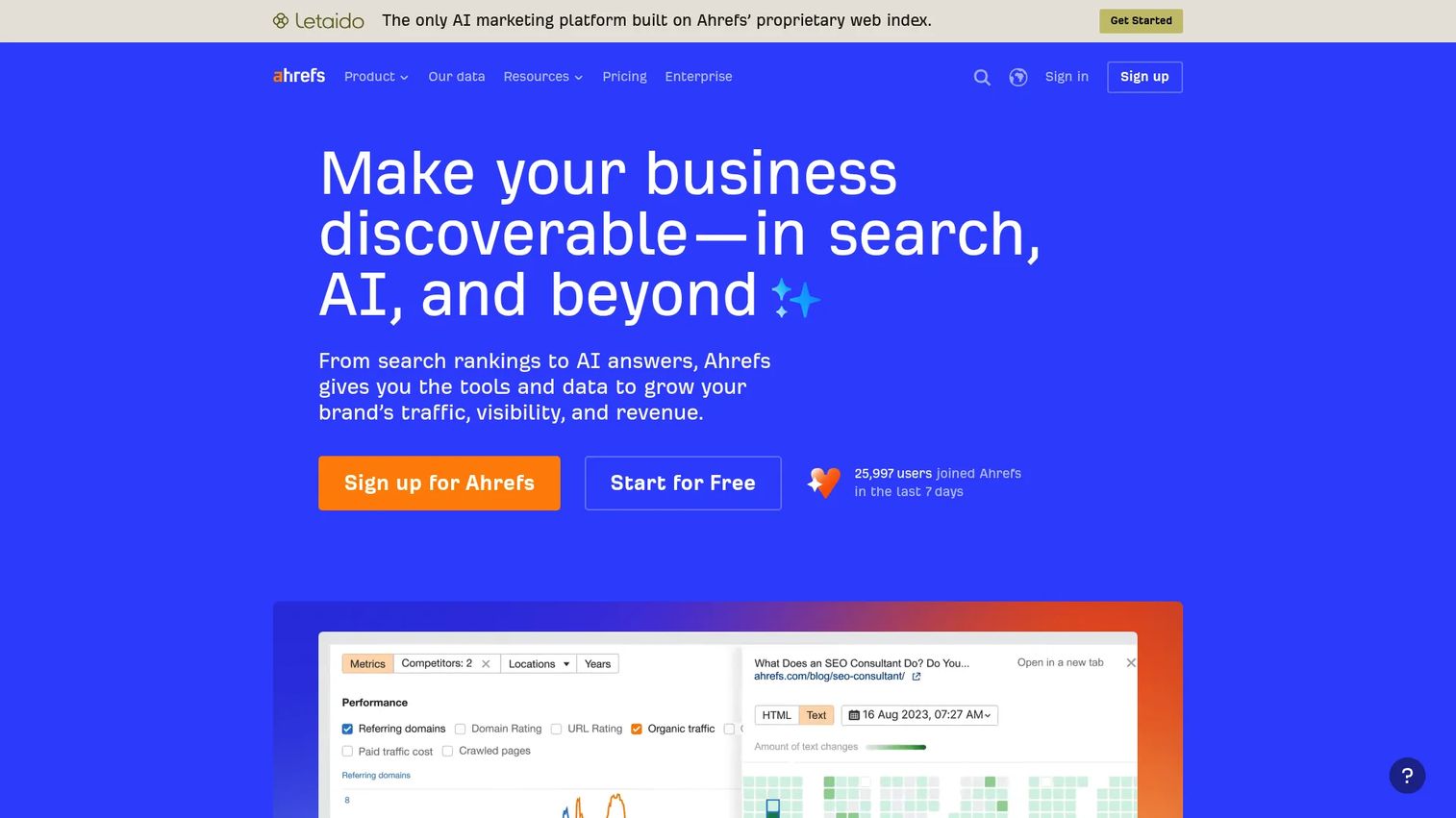
Ahrefs is an AI-powered marketing platform built around one of the largest crawled backlink indexes available. For broken link building, the most useful entry points are Site Explorer and Content Explorer: Site Explorer shows all backlinks pointing to a URL, including those pointing to dead pages, while Content Explorer helps you find published resources in your niche that have since gone offline.
Best for: SEO teams that need to identify broken competitor pages with strong referring-domain profiles.
Key features
- Site Explorer with broken backlink reports
- Content Explorer for dead-resource discovery
- Referring domain analysis with authority data
- Lost backlink tracking and alerts
- Rank Tracker and Site Audit for broader SEO context
Why choose Ahrefs: This is the right tool when opportunity quality matters more than cost. The backlink database depth lets you filter for dead pages with ten or more referring domains before spending any time on outreach.
Ahrefs pricing: Plans start at $29/month for the Starter tier. The Lite plan is $129/month and Standard is $249/month, both billed monthly. Annual billing saves up to 17%. A free version with limited access is also available.
G2 rating: 4.5/5
2. Semrush
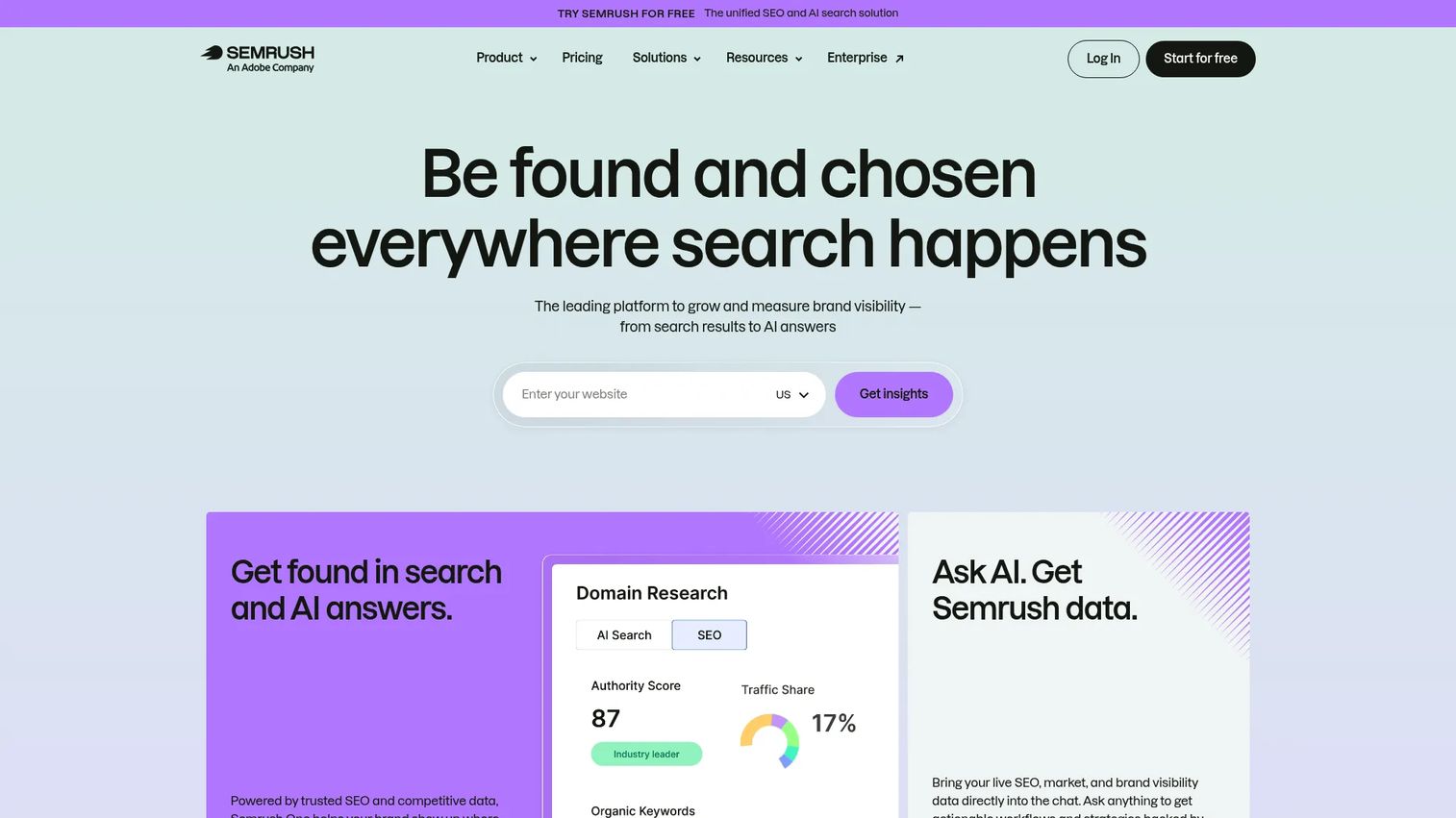
Semrush is a brand-visibility platform that covers SEO, content, competitive analysis, and backlink research in one subscription. For broken link building, Backlink Analytics and Site Audit are the most relevant modules: Backlink Analytics identifies referring domains and backlink profiles for any URL, and Site Audit surfaces crawl issues and broken links across a target site.
Best for: Growth marketers who want backlink analysis, keyword research, and site auditing without managing separate subscriptions.
Key features
- Backlink Analytics with referring domain data
- Site Audit for crawl errors and broken link detection
- Competitor backlink gap analysis
- Toxic link review and disavow support
- Rank Tracker and Content creation tools
Why choose Semrush: The case for Semrush is consolidation. If your team already pays for rank tracking and site auditing, adding a broken link workflow inside the same platform avoids a separate backlink tool subscription. It is a strong choice for mid-market SEO teams managing multiple SEO functions.
Semrush pricing: Paid plans start at $117.33/month for the SEO plan, billed annually. Monthly billing is available at higher rates. A free tier with one demo project and limited reports is included.
3. Majestic
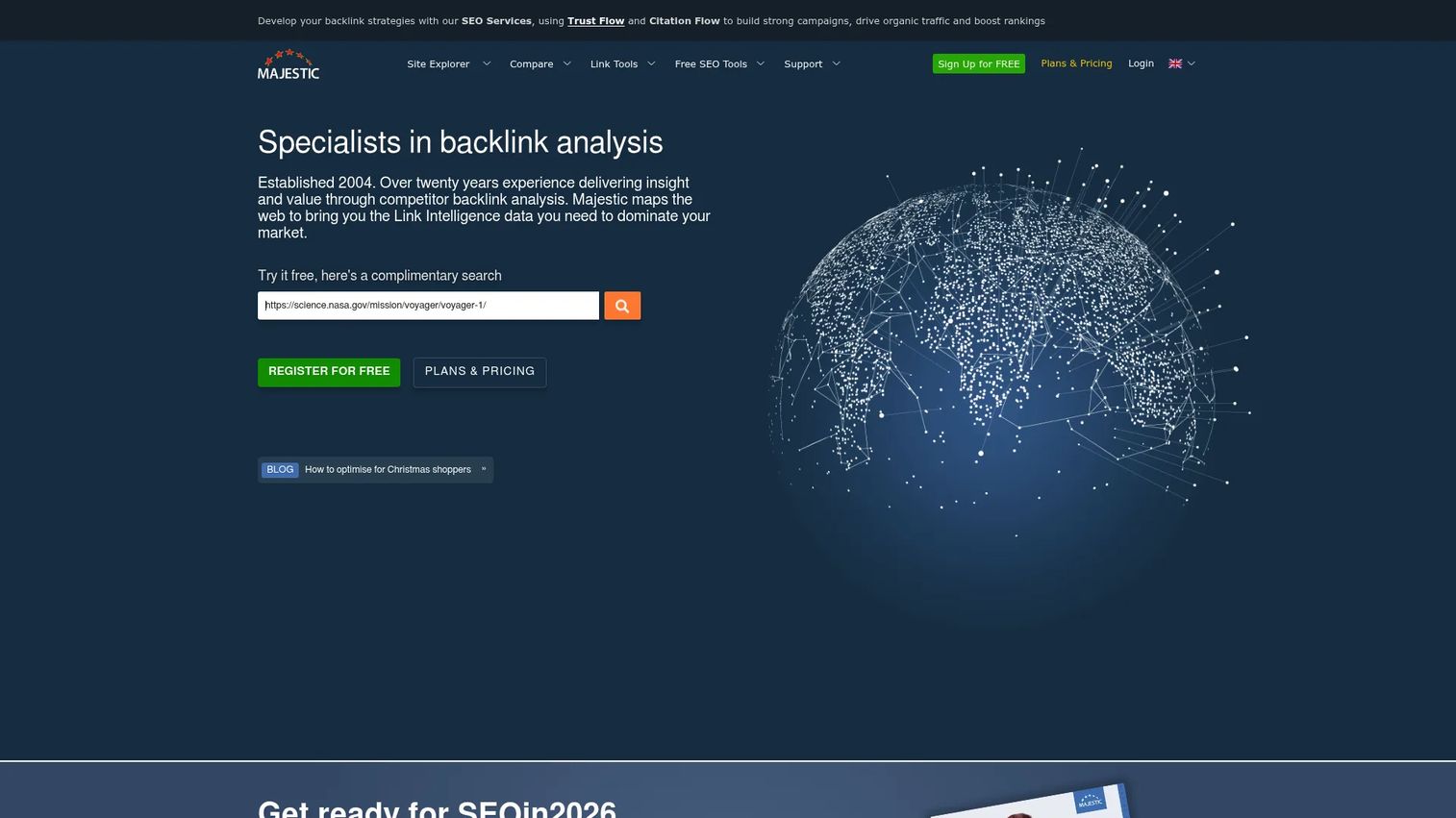
Majestic is a backlink intelligence platform built around proprietary link metrics. Its Fresh Index and Historic Index give you two distinct views of a site's backlink history, which matters for broken link building: A URL that lost links recently shows active referring pages worth targeting, while the Historic Index surfaces long-dead resources that still carry residual equity.
Best for: Link builders who want proprietary authority metrics like Trust Flow and Citation Flow to prioritize which broken pages are worth targeting.
Key features
- Trust Flow and Topical Trust Flow metrics
- Fresh Index and Historic Index backlink data
- Site Explorer and bulk backlink checker
- Link Graph and Link Context for deeper analysis
- Competitor comparison tools
Why choose Majestic: Use Majestic when you need to decide whether a broken page is worth rebuilding. Trust Flow gives you a faster qualifier than raw referring-domain counts, especially when evaluating link graphs in niche industries.
Majestic pricing: Plans start at £39.99/month for the Lite tier, billed monthly. Pro is £79.99/month and the API plan is £319.99/month. Annual billing reduces the equivalent monthly cost. Free registration with limited access is available. Prices exclude VAT.
G2 rating: 4.3/5
4. Moz Pro
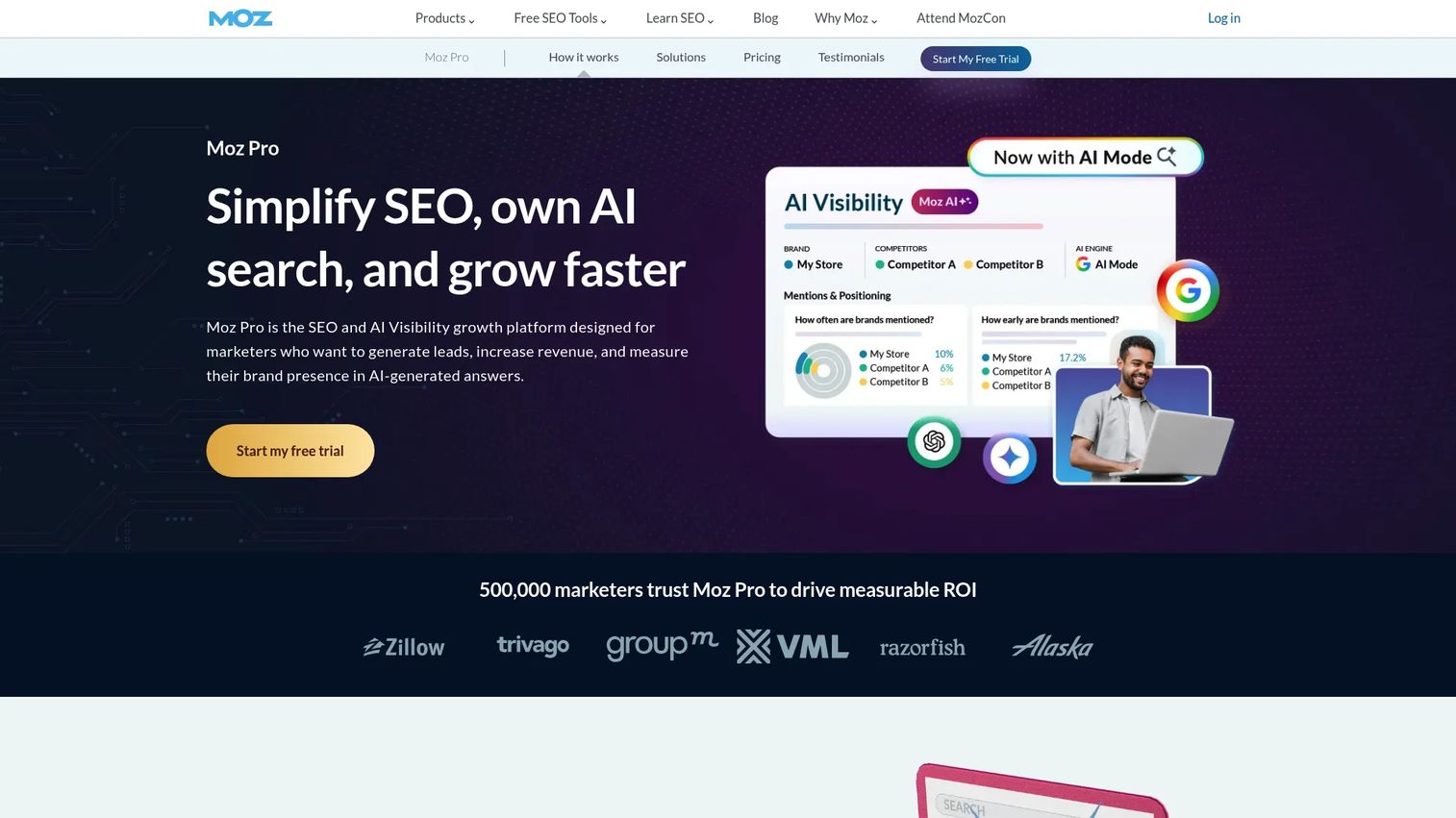
Moz Pro is an SEO platform built around keyword research, rank tracking, site crawling, and backlink analysis. Its Link Explorer shows the full backlink profile for any URL, including lost and recently acquired links. Domain Authority and Spam Score give teams a quick way to filter low-quality referring domains before investing time in outreach.
Best for: Teams that already use authority metrics to qualify link targets and want backlink research inside a familiar SEO interface.
Key features
- Link Explorer with lost and new link tracking
- Domain Authority scoring
- Spam Score for link quality filtering
- Site Crawl for technical SEO issues
- Keyword Explorer for content gap research
Why choose Moz Pro: Moz Pro fits teams who want accessible backlink research without committing to a heavier platform. Domain Authority is widely understood across marketing and SEO teams, which makes prospect qualification conversations easier when multiple people are involved.
Moz Pro pricing: The Starter plan is $49/month. Standard is $99/month, Medium is $179/month, and Large is $299/month, all billed monthly. Yearly billing provides a 20% discount. A free trial and a free community account with limited tool access are available.
G2 rating: 4.3/5
5. Screaming Frog
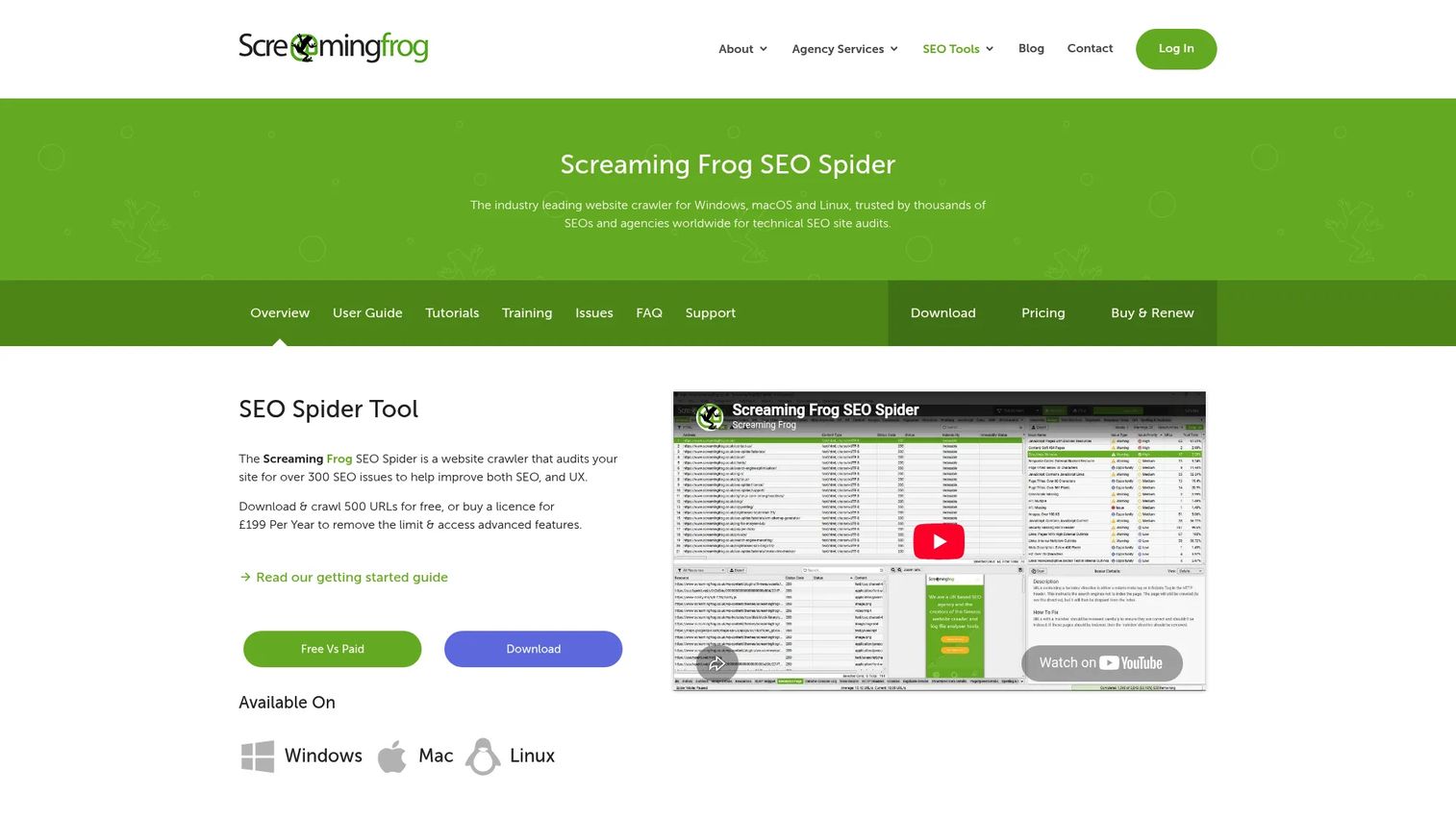
Screaming Frog SEO Spider is a desktop website crawler that audits sites for over 300 technical SEO issues. For broken link building, it is most useful at two moments: Auditing your own site before a campaign, and crawling a target site to identify broken outbound links you could pitch against.
Best for: Technical SEOs and marketers who need crawl-level evidence of broken links rather than a database-driven approach.
Key features
- Broken link crawls with response code reports
- Redirect chain audits
- Custom extraction for specific link patterns
- Google Search Console and Analytics integrations
- Bulk exports for prospect spreadsheets
Why choose Screaming Frog: Screaming Frog does the crawl work that backlink databases cannot. It is the right tool for cleaning your own site before outreach and for inspecting target pages at the technical level. Use it alongside a backlink tool, not instead of one.
Screaming Frog pricing: The free version crawls up to 500 URLs per crawl. The paid licence is £199 per year per user (approximately $279 per year), removing the crawl limit and unlocking JavaScript rendering, custom extraction, scheduling, and API integrations.
G2 rating: 4.7/5
6. Check My Links
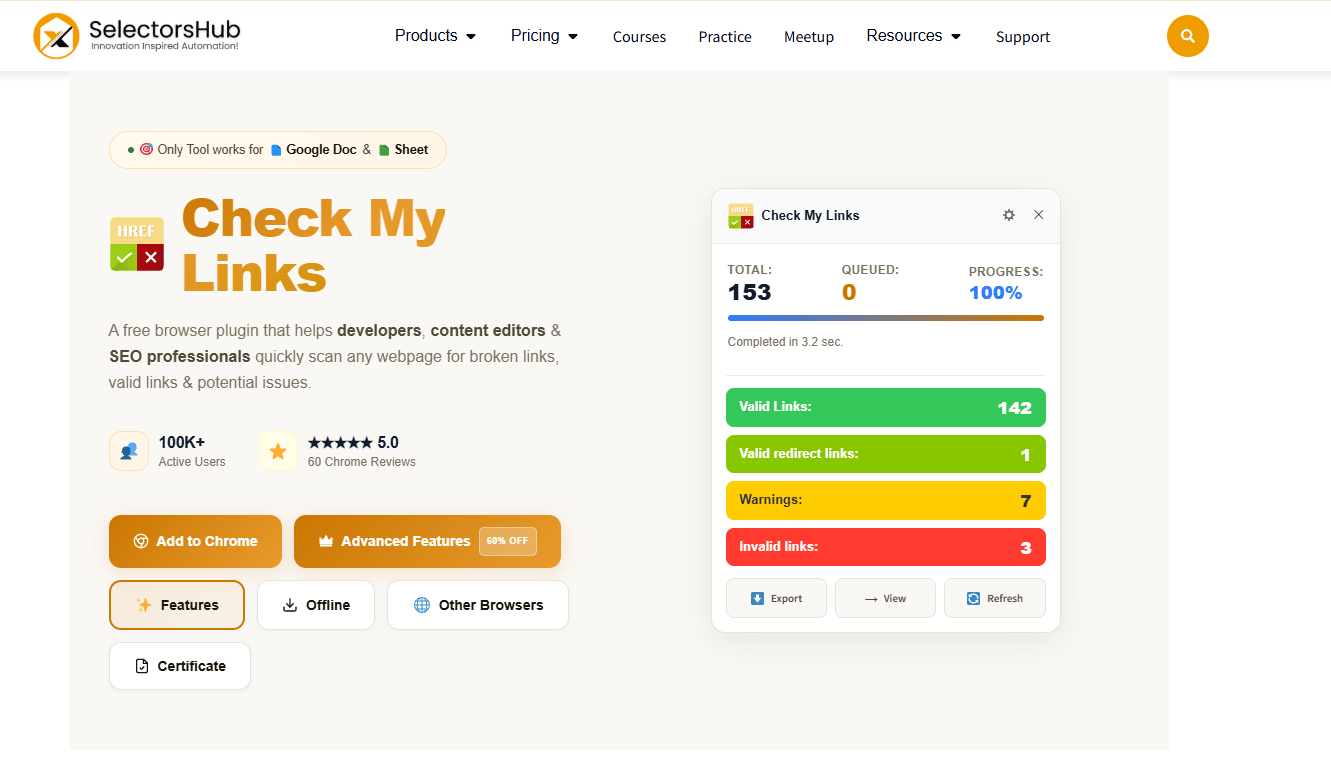
Check My Links is a browser extension that scans the active tab and highlights every link by status: Green for live, red for broken. It is the fastest lightweight option for manual prospect review, particularly when inspecting resource pages, link roundups, or blog posts for dead outbound links.
Best for: Marketers doing quick manual prospecting on individual pages before adding prospects to a campaign tool.
Key features
- Browser extension, runs on the active tab
- Page-level link checks with color-coded status
- Visual highlighting of broken and live links
- Fast manual review without leaving the browser
- Free access
Why choose Check My Links: This is not a campaign platform. It is a quick discovery layer. Use it when you are manually browsing a list of target pages and want immediate visual confirmation of which outbound links are dead before you open your outreach tool.
Check My Links pricing: The extension is free.
7. Broken Link Checker (BLC)
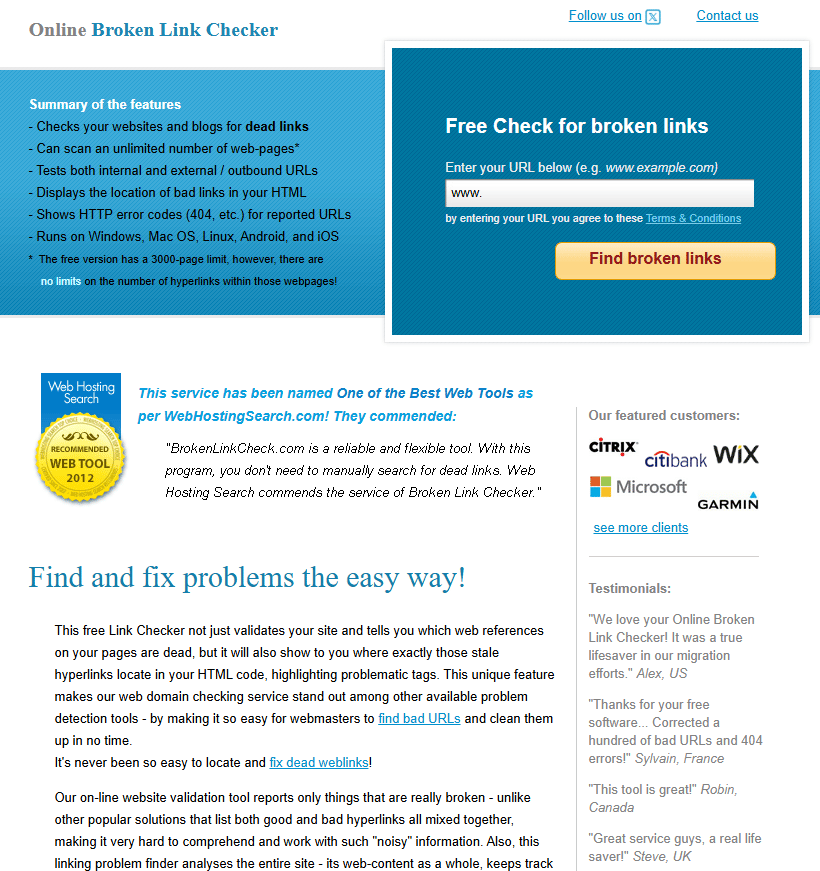
Broken Link Checker (BLC) is a site-monitoring tool designed to scan websites on a schedule and report broken links for review. It is particularly common in WordPress workflows, where broken internal and outbound links accumulate as content libraries grow.
Best for: WordPress site owners and content teams managing large archives who want ongoing broken link monitoring.
Key features
- Scheduled automated link scans
- Broken link reports with source and destination detail
- Visual link review dashboard
- Redirect support
- WordPress-focused workflow
Why choose Broken Link Checker (BLC): Use this tool for site health maintenance rather than outbound prospecting. It helps prevent broken outbound links from slipping through on your own pages before you start asking editors to link to your content.
Broken Link Checker (BLC) pricing: Check the official site for current plan options before committing.
8. Google Search Console
Google Search Console is Google's free property monitoring tool. For broken link building specifically, it is most useful for link reclamation: Finding pages on your own site that have lost links due to 404 errors, URL changes, or missing redirects. The Coverage and Indexing reports show which URLs Google cannot crawl, and the External links report shows which pages on your site have the most inbound links.
Best for: Marketers starting with free link reclamation and teams that want Google's direct view of their site's crawl and link data.
Key features
- Indexing and crawl coverage reports
- External links report with top linked pages
- Page experience and Core Web Vitals data
- URL Inspection for individual page diagnostics
- Crawl issue alerts and sitemap submission
Why choose Google Search Console: It is free and authoritative. No other tool tells you exactly what Google sees when it crawls your site. It will not run outreach, but it is the right first stop for identifying high-value link reclamation opportunities before spending money on paid tools.
Google Search Console pricing: Free.
G2 rating: 4.7/5
9. Linkody
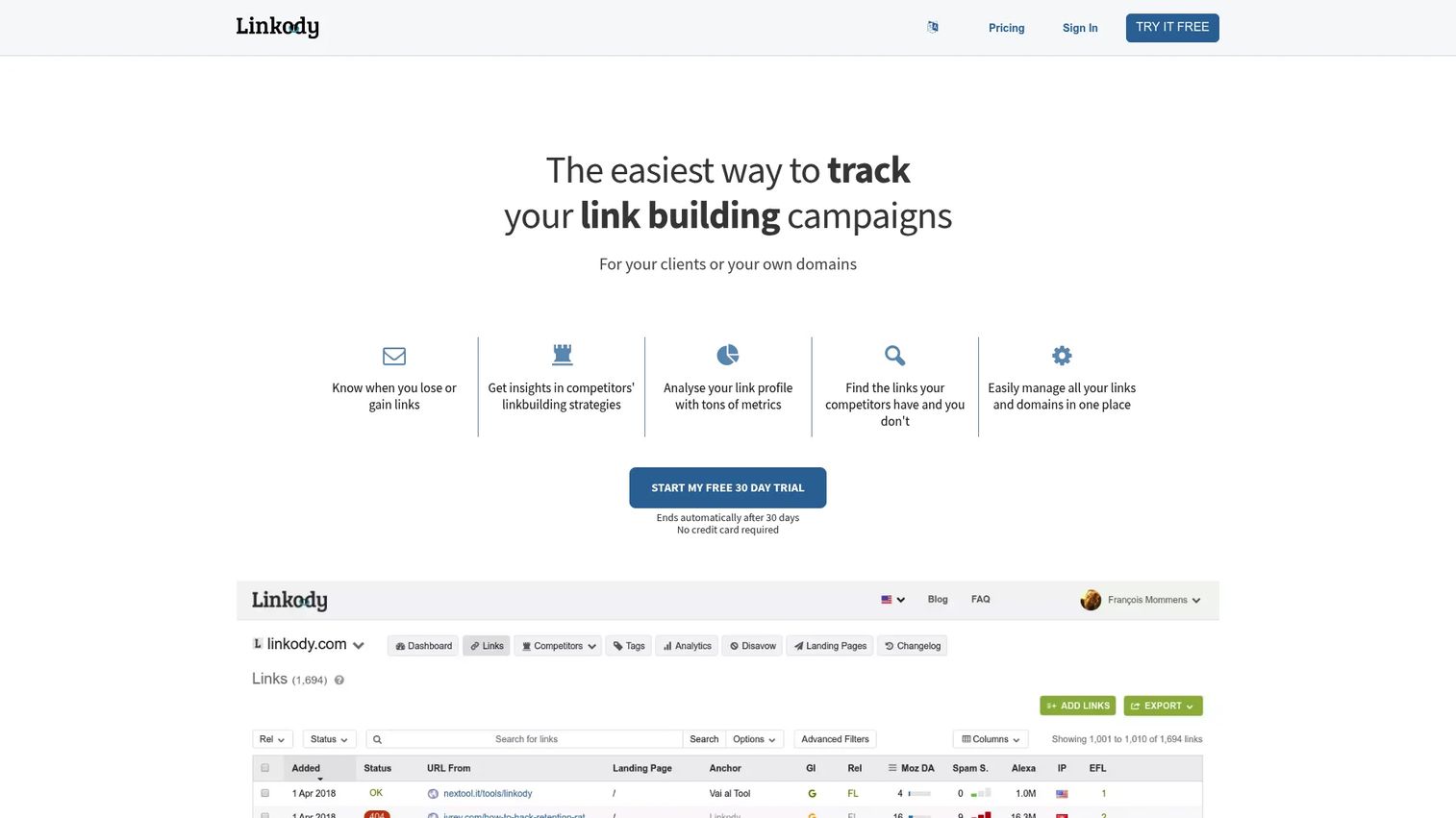
Linkody is a backlink monitoring platform that tracks your link profile and alerts you when links are gained or lost. For broken link building, the lost-link alert feature is the core use case: When a backlink disappears because a page was deleted, redirected, or changed, Linkody flags it so you can follow up before the link equity is permanently gone.
Best for: SEO teams that need affordable backlink monitoring and fast alerts on lost links after campaigns go live.
Key features
- 24/7 backlink monitoring with email alerts
- Lost link detection and status tracking
- Anchor text and referring domain reporting
- Competitor backlink analysis and Link Intersect
- Disavow file exports
- Moz, Ahrefs, and Majestic metrics integrated
Why choose Linkody: The monitoring gap is where most broken link campaigns leak value. You earn a placement, the editor later changes the page, and you do not notice for months. Linkody closes that gap with ongoing alerts, and the €13.90/month entry point makes it accessible for small teams.
Linkody pricing: Plans start at €13.90/month for the Webmaster tier. Advanced is €22.90/month and Pro is €45.90/month, all billed monthly. A 30-day free trial is available. Annual billing includes three months free.
10. BuzzStream
BuzzStream is an end-to-end outreach platform for digital PR, link building, and content promotion. It manages contact records, email sequences, follow-ups, and team collaboration inside a single CRM-style interface. For broken link building campaigns, it handles the outreach layer once you have identified your prospects and found contact information.
Best for: Teams that care about relationship history, want to avoid duplicate pitches, and need organized follow-up tracking across multiple campaigns.
Key features
- Outreach CRM with contact history
- Email templates, bulk sending, and scheduling
- Automated follow-up sequences
- Contact discovery from web prospecting
- Team collaboration and campaign reporting
Why choose BuzzStream: This is the right tool when discovery is covered and outreach lives in scattered inboxes. BuzzStream prevents the two most common broken link campaign failures: Pitching the same contact twice from different team members, and letting good prospects go cold because follow-ups were not tracked.
BuzzStream pricing: The Starter plan is $49/month for one user and 500 contacts. Growth is $174/month for three users and 25,000 contacts. Professional is $424/month for six users. A free trial is available.
G2 rating: 4.2/5
11. Pitchbox
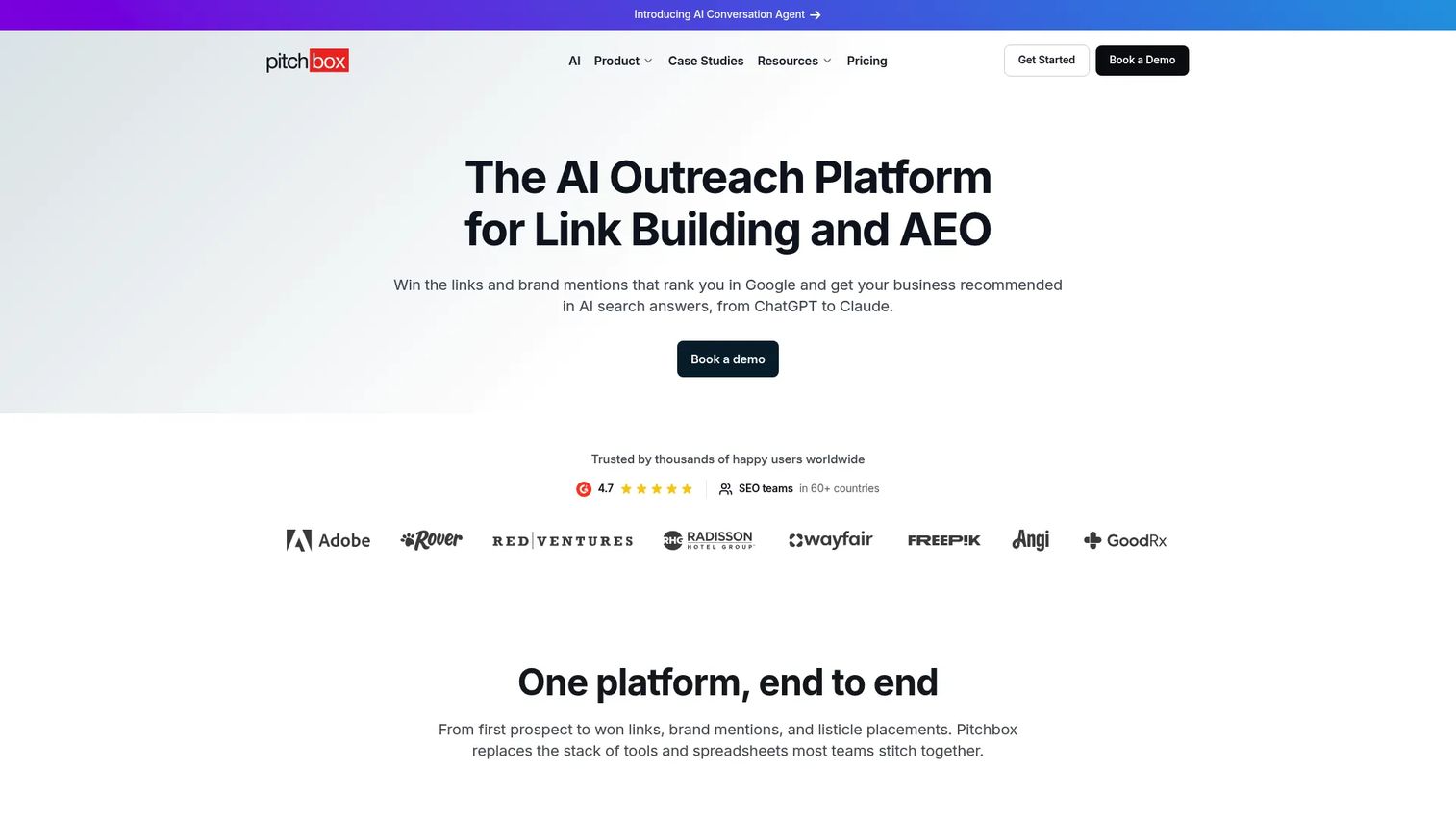
Pitchbox is an AI-powered outreach automation platform built for teams running repeatable link building and digital PR campaigns. It combines prospecting, personalization, automated follow-ups, link monitoring, and campaign reporting inside a single workflow environment.
Best for: Agencies and established SEO teams running outreach at volume who need workflow automation, team pipelines, and deliverability controls.
Key features
- Prospecting workflows with built-in email finding
- AI personalization and AI Reply Agent
- Automated outreach sequences and follow-ups
- Link-building CRM and unified inbox
- Email deliverability monitoring and campaign reporting
Why choose Pitchbox: Pitchbox earns its price when campaigns are repeatable. The fit is not for one-off broken link checks. It is for teams where link building is a core operational function and campaign setup time is a real bottleneck.
Pitchbox pricing: The Pro plan is $210/month, billed annually ($300/month billed monthly). Advanced is $420/month annually and Scale is $825/month annually. All plans require an annual commitment. Enterprise pricing is custom. Demo-based free trials are available.
G2 rating: 4.7/5
12. Respona
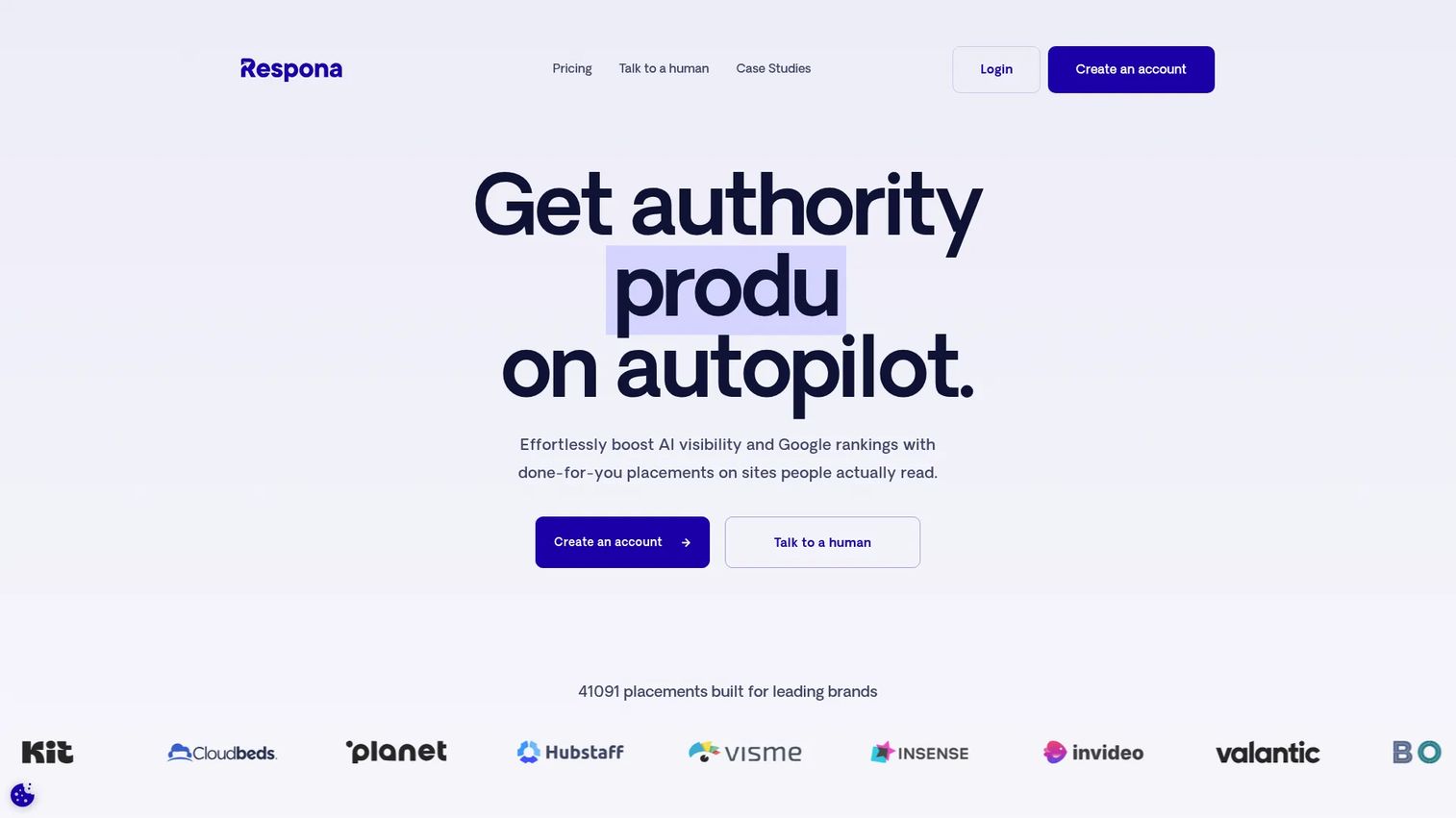
Respona is a done-for-you link building and AI visibility service. Rather than a self-serve outreach tool, it handles prospecting, editorial outreach, and link placement on your behalf. Its AI visibility tracking also monitors how your brand appears in AI-generated search results across major platforms.
Best for: Brands and agencies that want managed backlink acquisition and improved AI search visibility without running outreach in-house.
Key features
- Done-for-you publisher prospecting and outreach
- Editorial placements: Listicles, reviews, comparisons, contextual posts
- AI visibility tracking across AI search engines
- Domain approval and placement customization
- Real-time placement tracking dashboard
Why choose Respona: Respona fits teams that want link placements without building an outreach workflow. The per-placement pricing model means you pay for results rather than seat access, which makes it straightforward to evaluate ROI against campaign goals.
Respona pricing: Placements start at $100 each for the Starter tier. Standard is $160/placement, Authority is $240/placement, Power is $400/placement, and Elite is $500/placement. Bulk discounts and subscription options are available. Pricing is per placement, not per seat or per month.
G2 rating: 4.8/5
13. Hunter.io
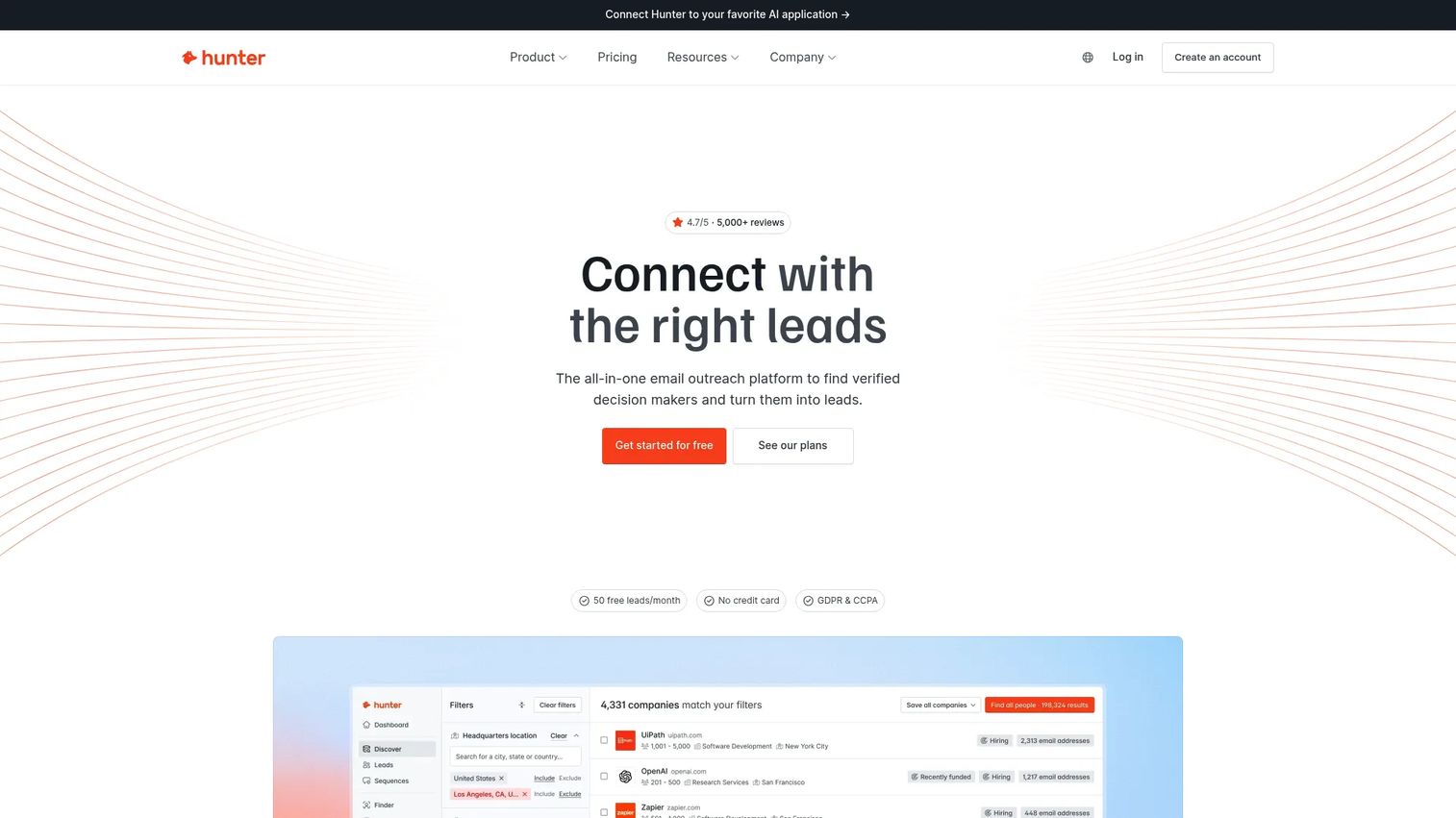
Hunter.io is a cold outreach platform centered on professional email discovery and verification. For broken link building, it fills the contact gap: Once you have identified which site owners or editors to pitch, Hunter finds and verifies the right email address so your outreach reaches a real inbox.
Best for: Teams that need reliable email discovery and verification after prospects have been qualified through a backlink or crawl tool.
Key features
- Domain Search to find emails at a company
- Email Finder for specific contacts
- Email Verifier to reduce bounce rates
- Bulk tasks for large prospect lists
- Automated email Sequences with follow-ups
Why choose Hunter.io: Hunter is not a backlink tool. It sits at the contact-data layer. Use it after your discovery workflow has identified which pages and domains are worth targeting. The free tier covers 50 credits per month, which is enough to test before committing to a paid plan.
Hunter.io pricing: The free tier includes 50 credits per month. The Starter plan is $34/month billed annually ($408 upfront). Growth is $104/month annually and Scale is $209/month annually. Monthly billing is also available at higher rates.
G2 rating: 4.4/5
14. JustReachOut
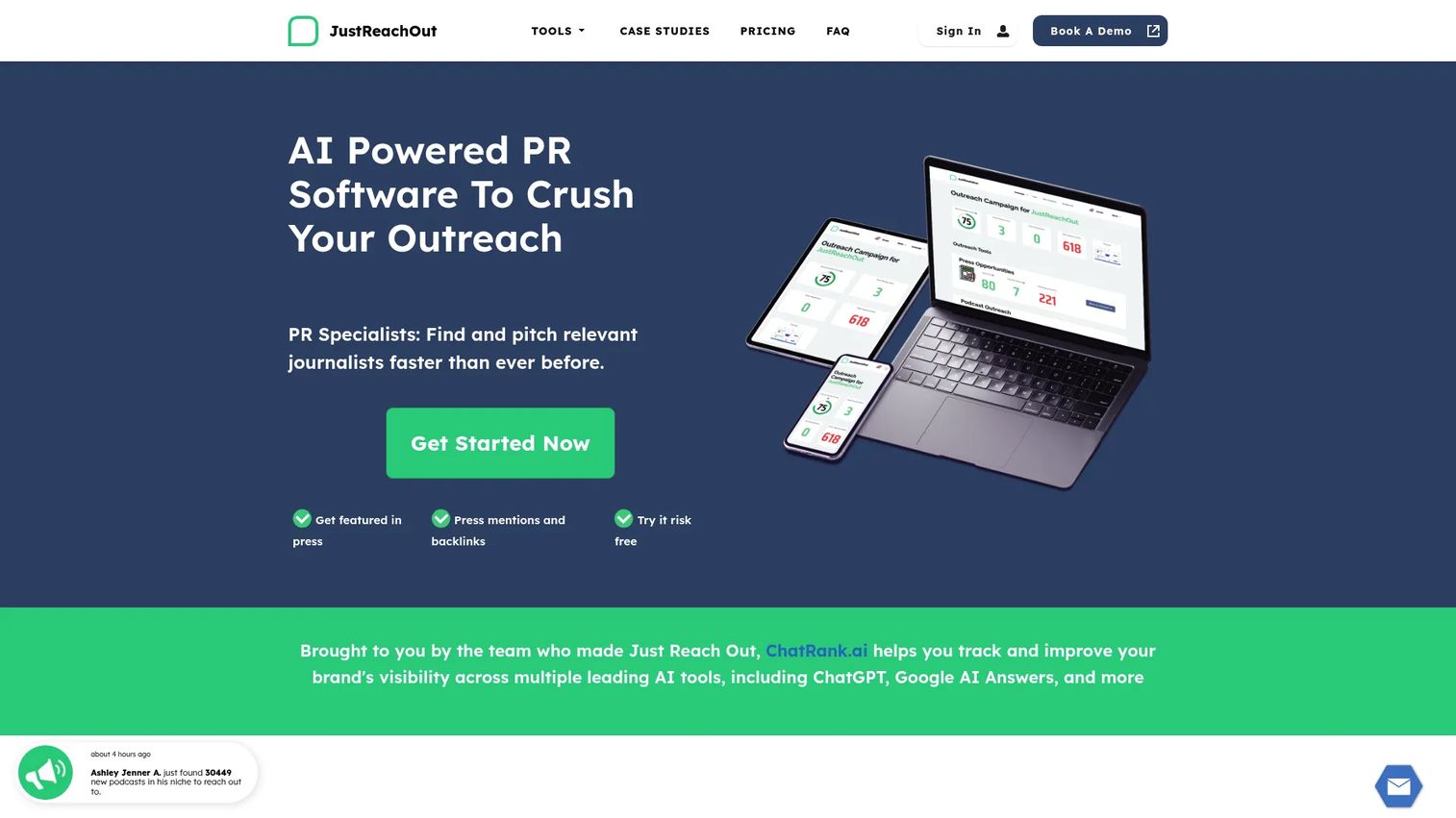
JustReachOut is an AI-powered PR outreach platform that includes broken link building as a named outreach type alongside journalist pitching, guest post outreach, and podcast discovery. Its journalist database and AI pitch engine help marketers who treat broken link building as part of a broader PR and visibility strategy.
Best for: Marketers and founders who treat broken link building as part of digital PR and want journalist or publisher outreach alongside standard link building.
Key features
- Journalist and publisher database with search
- AI PR pitch engine for personalized outreach
- Dedicated broken link building workflow
- Guest post and podcast outreach support
- Automatic follow-ups and human-verified email addresses
Why choose JustReachOut: Use it when broken link building is one tactic inside a broader PR outreach program. The pitch workflow is built for relationship-led outreach rather than raw volume, which suits teams where credibility matters more than scale.
JustReachOut pricing: The Starter Outreach plan is $98/month billed annually ($147/month billed monthly). Advanced Outreach is $165/month annually. Ultimate Outreach is $331/month annually. A 7-day free trial is included with monthly plans.
15. SE Ranking
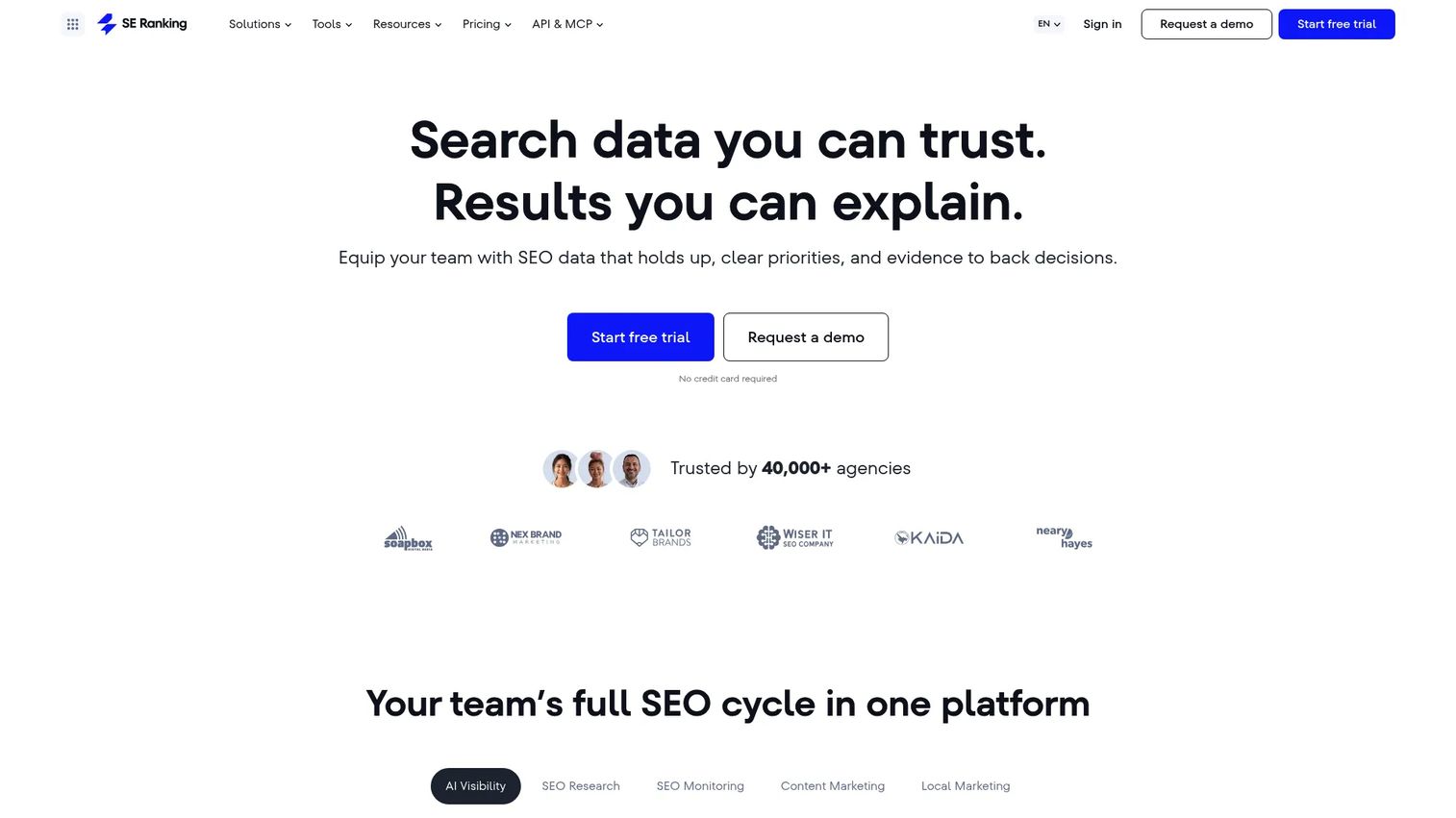
SE Ranking is an SEO and GEO platform covering rank tracking, keyword research, website auditing, backlink checking, content marketing, and AI-search visibility in one subscription. For broken link building, the Backlink Checker and Website Audit are the relevant modules: Backlink Checker analyzes referring domains and link profiles, while Website Audit surfaces broken links and crawl errors on target sites.
Best for: Smaller teams and budget-conscious SEO managers who need backlink analysis alongside rank tracking and site auditing without paying for separate tools.
Key features
- Backlink Checker with referring domain data
- Website Audit for crawl errors and broken links
- Rank Tracker across major search engines
- Competitor research and backlink monitoring
- AI-search visibility tracking
Why choose SE Ranking: SE Ranking covers core broken link building research at a lower entry price than the larger backlink platforms. The fit is teams already using an SEO suite for other functions who want backlink capability without a second platform subscription.
SE Ranking pricing: The Core plan is $103.20/month billed annually ($129/month billed monthly). Growth is $223.20/month annually. Enterprise pricing is custom. A 14-day free trial is available. No permanent free plan exists.
G2 rating: 4.7/5
16. LinkMiner
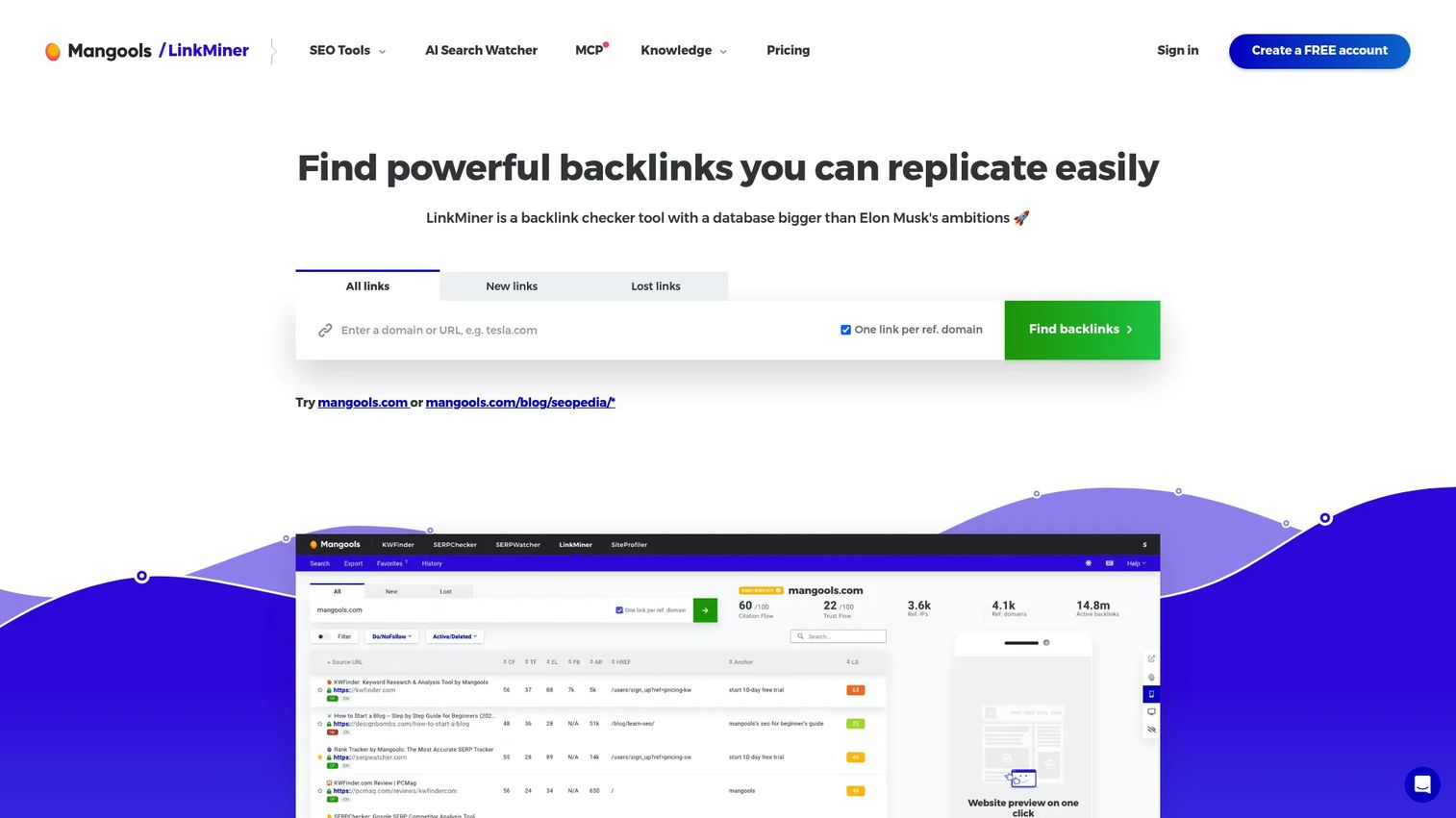
LinkMiner is Mangools' backlink checker, included in all Mangools subscription tiers. It lets you preview backlinks pointing to any domain or URL, evaluate them with Link Strength and Trust Flow metrics, spot new or lost links, and save promising prospects to a favorites list for later review.
Best for: Marketers who need straightforward backlink research without the overhead of an enterprise SEO suite.
Key features
- Backlink previews with Link Strength metric
- Citation Flow and Trust Flow data
- New and lost backlink detection
- Competitor backlink research
- Favorites list for prospect management
Why choose LinkMiner: LinkMiner works well for quick prospect review and lightweight research. The Mangools bundle includes KWFinder, SERPChecker, and other tools alongside LinkMiner, making the subscription a reasonable fit for small SEO teams that also need keyword and SERP data.
LinkMiner pricing: LinkMiner is included in Mangools plans, not sold separately. The Basic plan is $37.70/month. Premium is $52.70/month and Agency is $97.70/month. A free tier with limited backlink access is available.
Considerations when choosing broken link building tools
Match the tool to the workflow stage
Before buying, identify your actual bottleneck. If you cannot find quality dead-page opportunities, start with a backlink database. If you have a prospect list but no contact data, add Hunter.io. If outreach is disorganized, invest in a CRM layer. Buying outreach automation before fixing prospect quality wastes budget on bad targets.
Check backlink data freshness
Dead pages, redirects, and referring pages change quickly. A broken page from two years ago may have been removed from every link that pointed to it, leaving no opportunity. Ask vendors how frequently their index updates. Tools that crawl more often give you more current dead-page data, which matters for prioritizing outreach before competitors do.
Evaluate outreach deliverability
For tools with built-in email sending, check whether they support inbox connection with your own domain, email verification before sending, unsubscribe handling, and follow-up controls. Poor deliverability can damage your sender reputation across all email, not just link building campaigns.
Look for replacement content signals
The best broken link opportunities come from pages with clear content angles you can match or improve. Tools that show you the original page title, cached content, or anchor text context help you decide whether rebuilding is worth the investment before you commit.
Count the full workflow cost
Growth marketers flag tool sprawl as a primary objection. Add up backlink data access, crawl tools, email finding credits, outreach seats, and monitoring fees before concluding any single tool is affordable. Some teams run a leaner stack with one strong backlink tool, Hunter.io for contacts, and BuzzStream for outreach, spending less than a full-suite subscription.
Conclusion
The best broken link building workflow starts with knowing your gap. For backlink opportunity research, Ahrefs and Semrush give you the deepest data. Majestic and Moz Pro add proprietary authority signals useful for prospect qualification. Screaming Frog, Check My Links, and Google Search Console cover discovery and site-health work at low or zero cost.
For outreach, BuzzStream fits teams managing relationships across small to mid-size campaigns, while Pitchbox handles the volume and automation needs of agencies. Respona works differently, as a managed placement service rather than a self-serve tool. Hunter.io fills the contact gap across any stack.
Linkody covers monitoring after campaigns go live. SE Ranking and LinkMiner give budget-conscious teams backlink capability inside broader SEO subscriptions.
Start with one stage at a time. Pick a discovery tool, run one campaign, measure what broke in the workflow, and add tools where the gaps are real. A two-tool stack that you actually use produces more links than a six-tool stack sitting mostly idle.
If your team also needs a better way to show product value after SEO brings buyers to your site, interactive product experiences can materially improve conversion on the pages those links point to. Start your journey with Guideflow today!
FAQs about broken link building tools
A broken link building tool is software that helps with at least one stage of the broken link building workflow: Finding dead URLs, evaluating the backlinks pointing to those URLs, identifying replacement content, contacting site owners, or monitoring whether placements go live. Most tools cover one or two stages well rather than the full workflow.
The answer depends on the bottleneck. For discovering broken pages with strong backlink profiles, Ahrefs and Semrush lead. For crawling target sites at a technical level, Screaming Frog is the standard choice. For managing outreach, follow-ups, and team collaboration, BuzzStream works for relationship-focused campaigns and Pitchbox handles higher-volume agency operations.
Google Search Console and Check My Links are both free. Google Search Console helps identify crawl errors and lost links on your own site. Check My Links spots broken outbound links on individual pages you are manually prospecting. Free tools can support discovery and link reclamation, but they lack the backlink depth, contact data, and campaign automation that paid tools provide.
Backlink-focused tools crawl the web and index which URLs link to which destinations. When a destination returns a 404 or similar error, the tool flags it as a broken backlink. You can then filter those broken backlinks by referring domain authority, the number of linking pages, or relevance to your content, so you prioritize the opportunities with the most link equity before starting outreach.
Yes, when outreach is relevant and the replacement content is genuinely useful. A 2025 AdviceScout survey found that 35% of SEO experts named broken link building and resource replacement among their most successful strategies. Generic mass outreach performs poorly and can damage your sender reputation. The campaigns that work are specific: Targeted at pages with strong referring domains, matched to closely relevant replacement content, and pitched to the actual editor responsible for the page.
Broken link building targets dead resources on other sites where you can offer a replacement to earn a new backlink. Link reclamation recovers links your brand already earned, typically by fixing a URL change, restoring a deleted page, or contacting a publisher whose link stopped pointing to your current content. Link reclamation is often faster because the publisher already chose to cite you once.
Not for a small manual campaign of ten to twenty prospects. At that scale, a standard email client and a shared spreadsheet work. Once campaigns involve more than a few dozen prospects, multiple follow-up sequences, or more than one person sending pitches, outreach software prevents duplicate contacts, missed follow-ups, and inconsistent messaging. BuzzStream starts at $49/month and covers most small-team needs.
Name the specific broken link you found, explain the page it was on, and link directly to your replacement resource. Keep the email short and make the editor's job easy: They should be able to verify the broken link, review your replacement, and decide in under two minutes. Avoid inflated claims about your content. A specific, helpful pitch with no pressure converts far better than a template that leads with how much the broken link is hurting their SEO.