A recall notice lands. Now you have hours, not days, to answer one question: where did this lot go, and where did it come from? If your answer lives across spreadsheets, email threads, and a filing cabinet, you have a data problem before you have a compliance problem.
That is the gap traceability software fills. The global supply chain traceability software market was worth USD 4.7 billion in 2024 and is projected to hit USD 9.5 billion by 2032, growing at roughly 9.3% CAGR, according to Business Research Insights. The pressure driving that growth is not abstract. FSMA 204 raises the bar on what food companies must capture and produce on demand, and manufacturers face parallel expectations for lot-level accountability.
The problem is rarely a lack of data. It is scattered data with no audit trail connecting one record to the next. Good food traceability software and manufacturing traceability software close that loop, turning source-to-shelf movement into evidence you can produce fast. Whether you need product traceability software for a regulated production floor or lightweight traceability solutions for a lean team, the right platform gives you end-to-end visibility, recall readiness, and compliance software that holds up under audit.
If you are also evaluating adjacent systems, our guides on audit management software and AI cybersecurity solutions cover neighboring parts of the compliance stack. For teams whose evaluation touches how buyers experience a product, interactive demo tools for product marketing is a useful companion read.
What's inside
This guide is for operations, quality, compliance, and supply chain leaders at food, CPG, and manufacturing companies, plus product and platform teams building a traceability stack. It covers tools for food traceability, manufacturing traceability, and broader product traceability workflows.
We selected platforms on four criteria that matter in practice: end-to-end visibility across supply tiers, lot and batch traceability with fast investigation, compliance and evidence support (including FSMA 204 where relevant), and mobile or field data capture. We also weighed supplier collaboration, since traceability breaks the moment a supplier's data does not arrive clean.
TL;DR
- Best for FSMA 204 and investigations: Trustwell FoodLogiQ Traceability, built around critical tracking events and ESS exports.
- Best for supplier collaboration and evidence: Retraced, with multi-tier supplier data and document validation.
- Best for mobile field capture: SafetyCulture, a mobile-first inspections and operations platform.
- Best for manufacturing visibility: Zebra, with rugged devices and frontline operational automation.
- Best for smaller teams that need simpler setup: FoodDocs, with digital HACCP and traceability logging for multi-site food businesses.
What is traceability software?
Traceability software is a system that records and connects the movement of materials, ingredients, and finished goods across a supply chain, so a company can trace any unit backward to its source and forward to its destination.
In practice, that definition unpacks into several capabilities that work together:
- End-to-end visibility: A continuous record of where a product came from and where it went, spanning suppliers, production, and distribution. This is the difference between knowing a lot exists and knowing its full journey.
- Lot and batch traceability: The ability to assign, track, and query lot or batch identifiers at every step. Lot traceability follows discrete lots; batch traceability handles process manufacturing where materials mix into a batch and split into many outputs.
- Compliance and recordkeeping: Structured capture of the events regulators expect, retained in a format you can export on demand rather than reconstruct.
- Evidence-based documentation: Certificates, test results, and supplier attestations attached to the records they support, so a claim is backed by a document, not a memory.
- Supplier data exchange: A way for upstream partners to submit and validate the data you depend on, closing gaps before they reach your floor.
- Mobile reporting and capture: Field and floor workers logging events on a phone or tablet at the moment they happen, so the record reflects reality instead of a later best guess.
The common thread is an audit trail: an immutable chain of who did what, when, and to which unit. That chain is what turns a pile of records into supply chain visibility a regulator or customer will accept.
When to use traceability software
Not every operation needs the same depth. These are the moments where dedicated software earns its place.
When you need audit-ready records
If a customer or regulator can ask for your traceability records at any time, manual systems become a liability. Software keeps evidence-based documentation attached to the events it supports, with an audit trail that survives scrutiny. You stop assembling records under pressure and start producing them on demand.
When you manage multi-tier suppliers
The moment your supply chain runs more than one tier deep, visibility gaps multiply. You need supplier collaboration built in: a way for partners to submit lot data, certificates, and attestations that validate before they enter your system. Without it, one supplier's bad data breaks the whole chain.
When recalls or investigations need faster root cause analysis
A recall is a race. Software that maps lot and batch movement lets you isolate affected units, trace them forward and backward, and narrow root cause in minutes. That speed limits scope, reduces waste, and shortens the window of exposure.
When field teams need mobile capture and reporting
If the people closest to the product work on a floor or in the field, desktop-only tools create a lag between event and record. Mobile data capture closes that gap, letting workers log events, run inspections, and flag issues where the work happens.
Comparison table
The table below summarizes each platform by intent, differentiation, pricing, and G2 rating. Where a vendor does not publish pricing or a current aggregate rating is unavailable, the cell notes that directly.
| # | Product | Intent | Key differentiation | Pricing | G2 rating |
|---|---|---|---|---|---|
| 1 | Trustwell FoodLogiQ Traceability | FSMA 204 and investigations | CTE capture, timeline and map investigations, ESS exports | Contact sales | Not enough reviews |
| 2 | Retraced | Supplier collaboration and evidence | Multi-tier traceability, AI document validation | Not public | Not listed |
| 3 | SafetyCulture | Mobile field capture | Mobile-first inspections and operations | Free; Premium $24/seat/mo annual | 4.6/5 |
| 4 | Zebra | Manufacturing visibility | Rugged devices, frontline automation | Request a quote | Not listed |
| 5 | FoodDocs | Simpler setup for food teams | Digital HACCP, traceability and recall logging | From $79/site/mo | 4.9/5 |
| 6 | SafetyChain | Food manufacturing quality | Digital forms, CAPA, OEE | Request pricing | 4.5/5 |
| 7 | VicinityFood | Food ERP with traceability | Recipe management, lot traceability | Contact sales | Not listed |
| 8 | Wherefour | Batch manufacturing ERP | Lot tracking, FIFO/FEFO, recall readiness | Custom quote | 4.5/5 |
| 9 | Normex | Food traceability workflows | Traceability, compliance, audit management | Not public | Not listed |
1. Trustwell FoodLogiQ Traceability
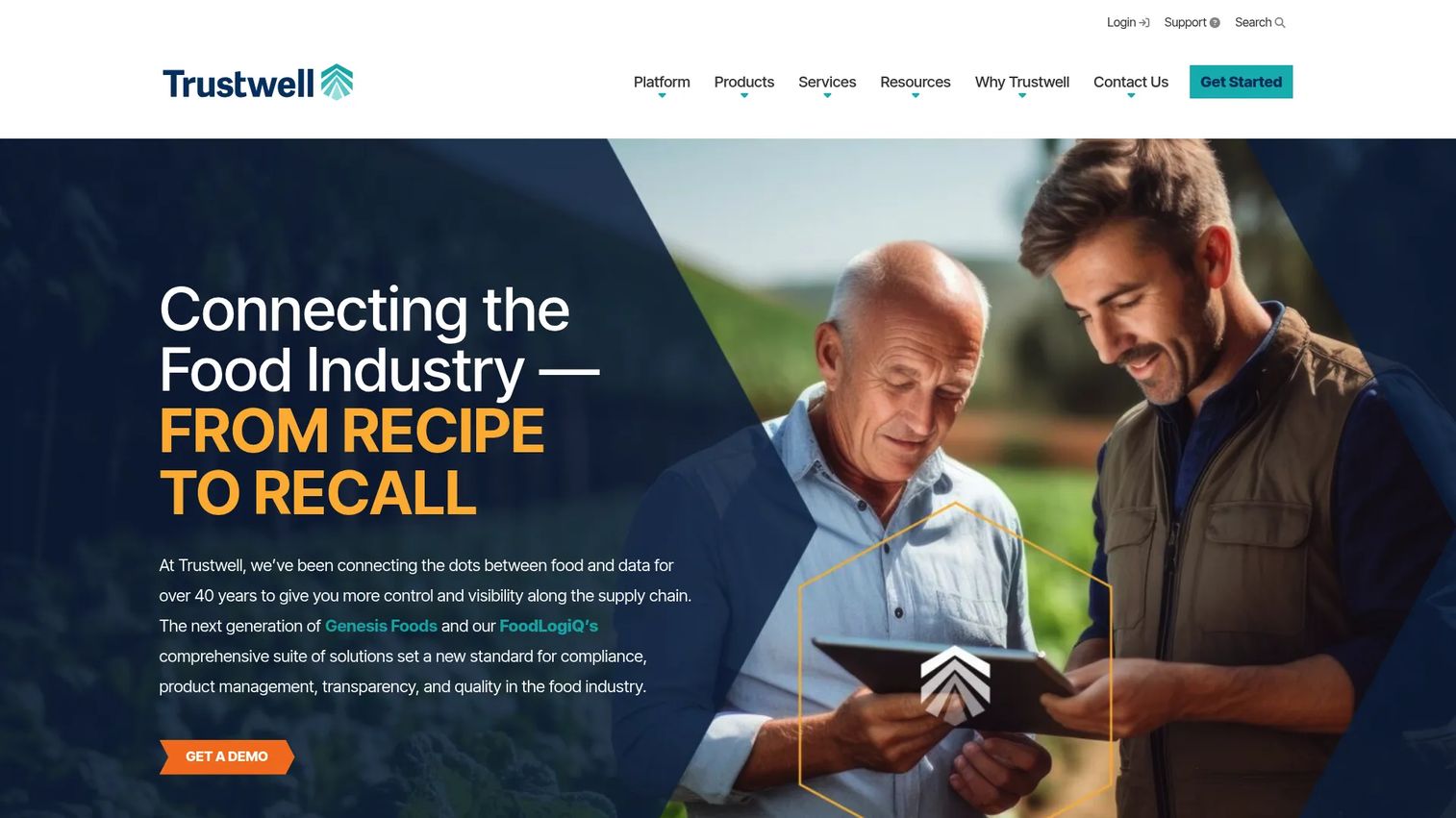
Trustwell FoodLogiQ Traceability is built for food brands that need to capture critical tracking events, share lot data across the chain, and produce compliance records fast. It maps supply chain movement visually and turns raw events into investigations you can act on. The platform positions itself squarely as FSMA 204 traceability software, which matters because the rule reshapes what many food companies must capture and hand over.
Best for: Food brands needing enterprise traceability and FSMA 204 readiness.
Key strengths
- Critical tracking event capture: Records the CTEs regulators expect at each supply chain node, aligned with GS1 standards for consistent identifiers across partners.
- Timeline and map investigations: Batch-lot traceability rendered as a visual timeline and map, so root cause analysis during a recall moves in minutes.
- ESS exports: Generates the FSMA 204 Electronic Sortable Spreadsheet on demand, turning a compliance request into an export rather than a scramble.
Why choose Trustwell: If FSMA 204 is your driving pressure, this is the platform designed around it. The investigation tooling and CTE model reflect the regulation's actual data expectations, and the visual timeline shortens the gap between a compliance request and a defensible answer. It fits food companies that treat traceability as an operational system, not a checkbox.
Trustwell pricing: Trustwell does not publish public pricing on its site. The product page prompts visitors to request a demo or contact sales, which is typical for enterprise traceability tools where scope drives cost. G2 lists Trustwell reviews but notes there are not yet enough to provide an aggregate buying signal.
2. Retraced
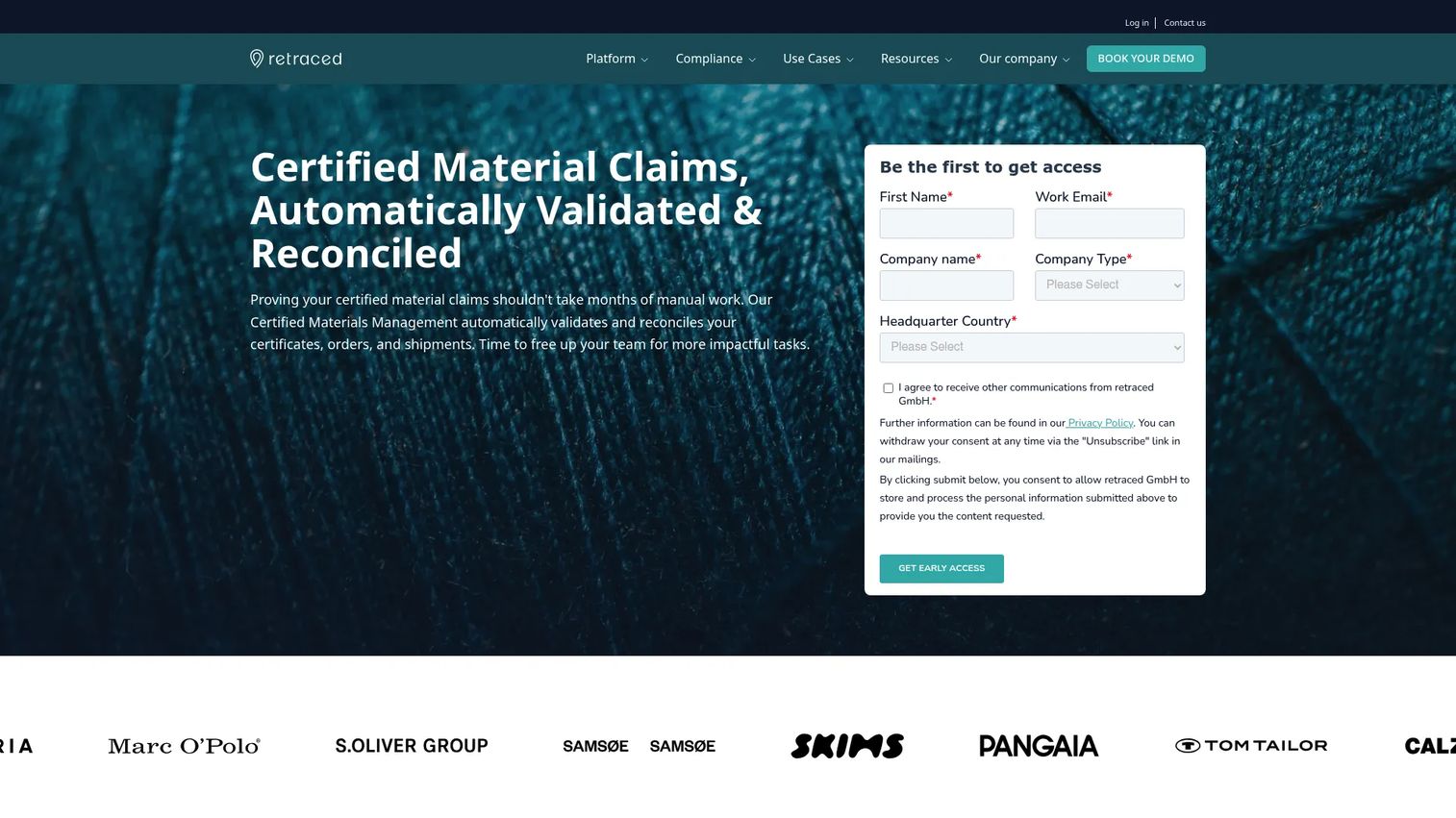
Retraced approaches traceability as supply chain infrastructure rather than a compliance afterthought, with a strong focus on multi-tier transparency. Built around fashion and textile supply chains, its model of supplier collaboration and evidence translates well to any operation that depends on upstream data quality. It treats the supplier relationship, not just the internal record, as the unit of work.
Best for: Fashion and textile brands needing supplier traceability and compliance workflows.
Key strengths
- Multi-tier supply chain traceability: Maps product journeys across several supplier tiers, surfacing the deep-chain visibility most single-tier systems miss.
- AI-powered document validation: Checks certificates and attestations automatically, so evidence-based documentation arrives verified rather than assumed.
- Supplier lifecycle management: Handles supplier onboarding and ongoing collaboration in one place, keeping the data relationship active over time.
Why choose Retraced: If your risk lives upstream, in the suppliers two or three tiers back that you rarely see, Retraced is built for that reality. Its document validation reduces the manual burden of chasing and checking paperwork, and its supplier lifecycle tooling keeps collaboration structured. Teams that view transparency as brand infrastructure, not just audit defense, will recognize the framing.
Retraced pricing: Retraced does not display public pricing on its first-party site, and no current G2 aggregate rating was available. Evaluation typically starts with a direct conversation to scope supplier tiers and workflow needs.
3. SafetyCulture
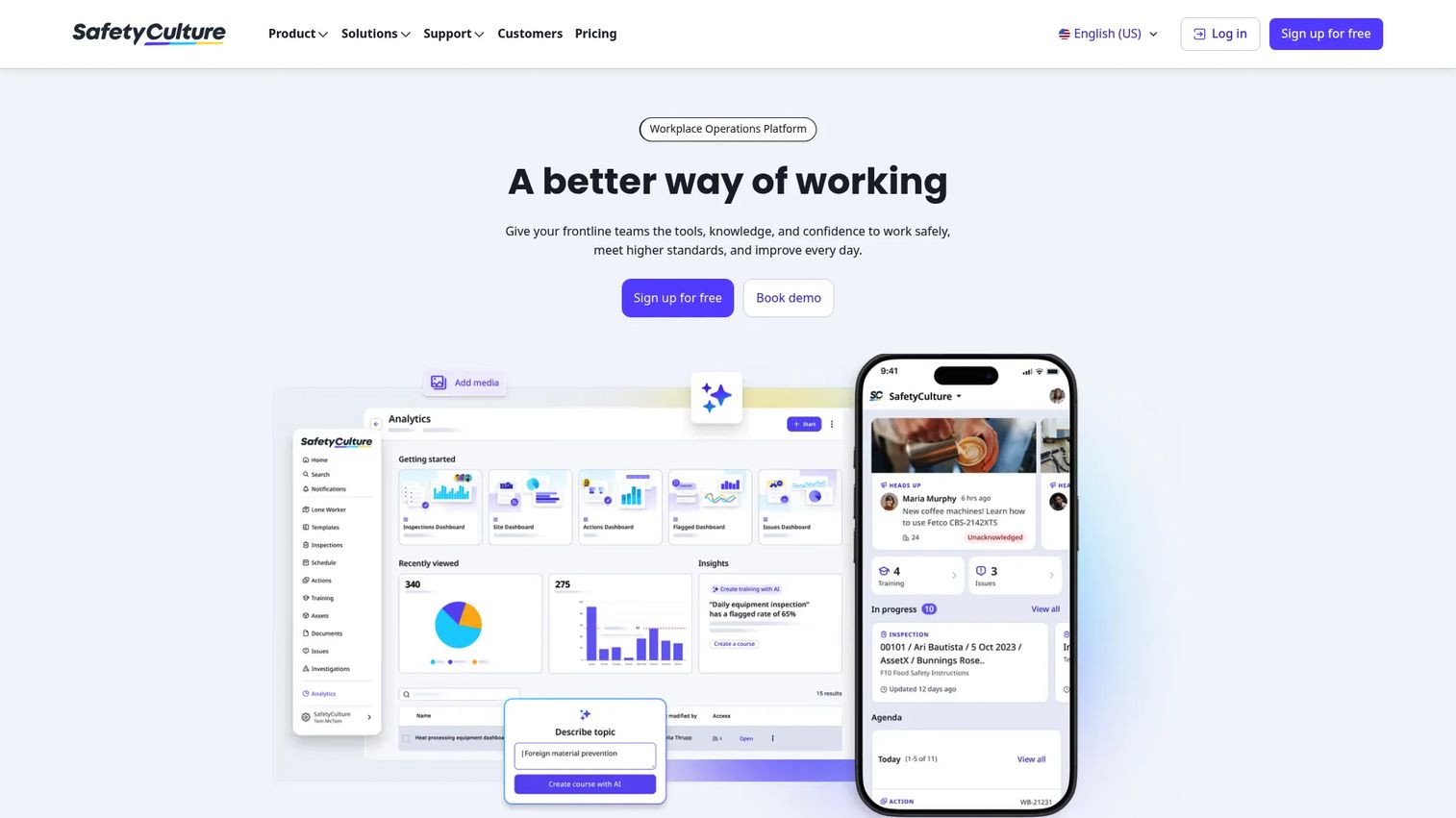
SafetyCulture is a mobile-first workplace operations platform covering inspections, training, tasks, issues, and safety workflows. For traceability, its strength is field-to-floor data capture: workers log events, run checks, and flag problems on a phone or tablet in the moment. That makes it a strong fit for practical food traceability use cases where the record has to reflect what actually happened on the line.
Best for: Teams that need a mobile-first platform for inspections and operational safety workflows.
Key strengths
- Mobile data capture: Templates, inspections, and issue logging built for phones and tablets, so frontline events become structured records instantly.
- Investigations and actions: Turns a flagged issue into a tracked action with an audit trail, closing the loop from problem to resolution.
- Analytics and sensors: Dashboards and connected sensors surface trends and exceptions across sites before they become recalls.
Why choose SafetyCulture: If your traceability gaps come from field and floor lag rather than deep-tier supplier data, SafetyCulture attacks the right problem. It is broad rather than compliance-specialized, which suits teams that want inspections, training, and operational tracking in one place. The mobile capture is genuinely strong, and adoption tends to be fast because the interface is built for non-desk workers.
SafetyCulture pricing: SafetyCulture offers a Free plan for small teams of up to 10 with basic inspections and reports. Premium runs $24 per seat per month billed annually, or $29 per seat per month billed monthly, and adds advanced tools. Enterprise is custom-priced. G2 reviewers rate it 4.6 out of 5.
4. Zebra
Zebra brings the hardware layer to manufacturing traceability: rugged mobile computers, barcode scanners, RFID, printers, and the software that ties them to frontline operations. Where software-only tools depend on clean data entry, Zebra addresses capture at the physical point of movement. For plants tracking materials across a floor, that scanning and labeling foundation is often what makes lot data reliable in the first place.
Best for: Organizations needing enterprise-grade devices and operational automation for frontline work.
Key strengths
- Rugged capture hardware: Mobile computers, scanners, printers, tablets, and RFID products built to log lot and batch movement in demanding production environments.
- Zebra software solutions: Workcloud and machine vision tools that connect device data to operational workflows and visibility.
- Industry-specific workflows: Prebuilt patterns for manufacturing, warehousing, and logistics, so traceability fits the way the floor already runs.
Why choose Zebra: If your traceability weakness is data capture accuracy on a busy floor, Zebra solves the layer software alone cannot. It excels for manufacturers who need automation-oriented visibility across large physical operations. This is an enterprise commitment in devices and integration, best suited to organizations ready to standardize capture hardware across sites.
Zebra pricing: Zebra does not expose a single product price. Device and model pages show guide prices after you select a location, and the site routes buyers to request a quote. A current G2 aggregate rating was not available at the time of writing.
5. FoodDocs
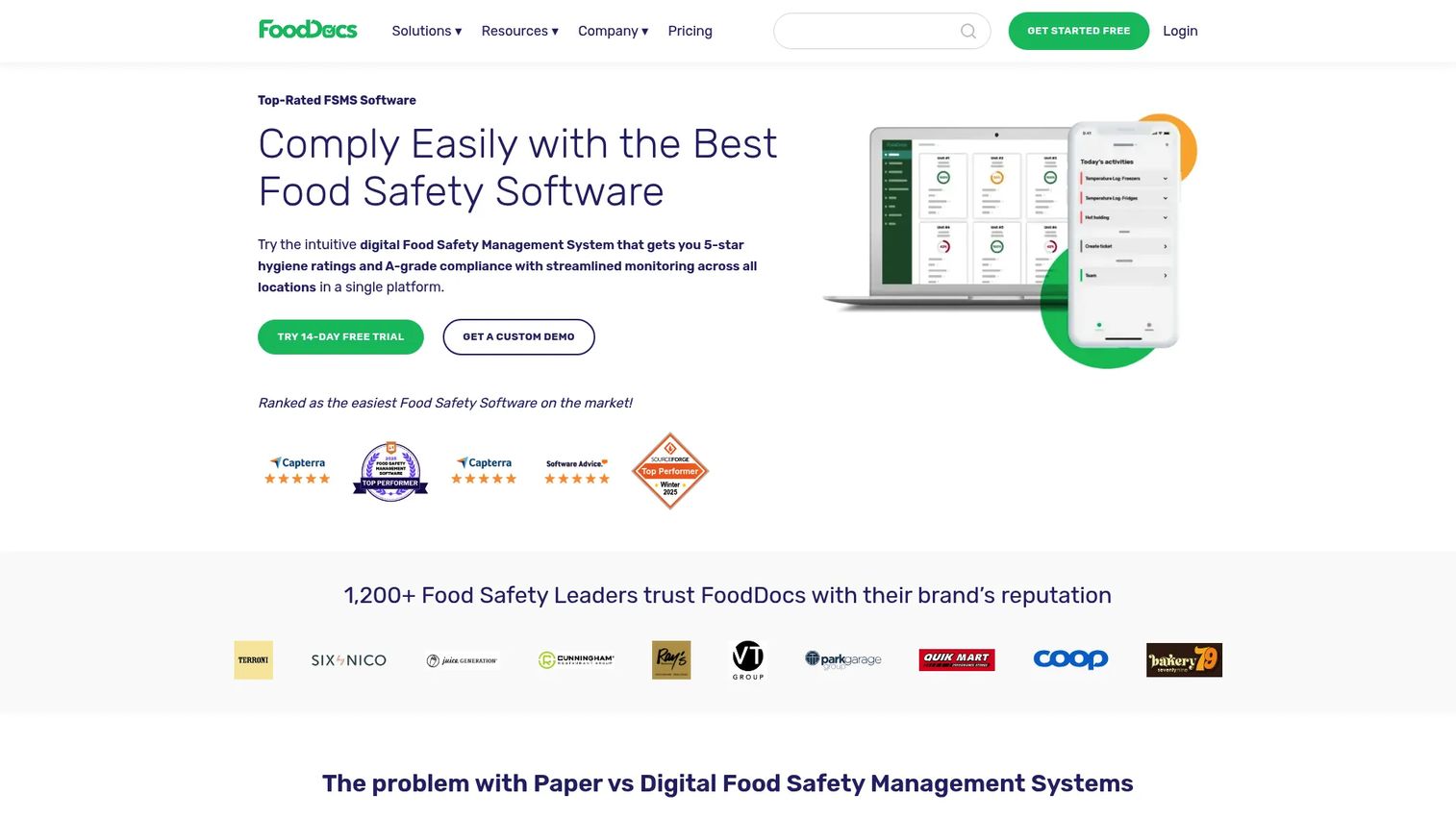
FoodDocs is food safety management software built for teams that want digital HACCP, monitoring, and traceability without a heavy implementation. It is a strong example of traceability software for food manufacturing aimed at smaller or faster-moving operations. The platform leans on smart automation to generate food safety plans, then keeps traceability and recall logs alongside daily monitoring.
Best for: Multi-site food businesses needing digital HACCP and food safety workflows.
Key strengths
- Smart food safety monitoring: A guided system that builds and maintains monitoring routines, reducing the setup effort that stalls smaller teams.
- HACCP plan builder: Generates and updates HACCP plans automatically, keeping compliance documentation current as processes change.
- Traceability and recall logging: Batch traceability and recall records kept next to daily logs, so a recall pulls from data you already maintain.
Why choose FoodDocs: If you run a lean or multi-site food business and cannot afford a long rollout, FoodDocs gets you to structured compliance quickly. Its supplier onboarding and monitoring flows are approachable for teams without a dedicated compliance department. The value is speed to a working system, not deep-tier supplier analytics.
FoodDocs pricing: FoodDocs publishes tiered pricing: Lite at $79 per site per month, Standard at $167 per site per month, and Professional at $250 per site per month, with a custom-priced Enterprise plan. A 14-day free trial is available, and prices exclude VAT. G2 reviewers rate it 4.9 out of 5.
6. SafetyChain
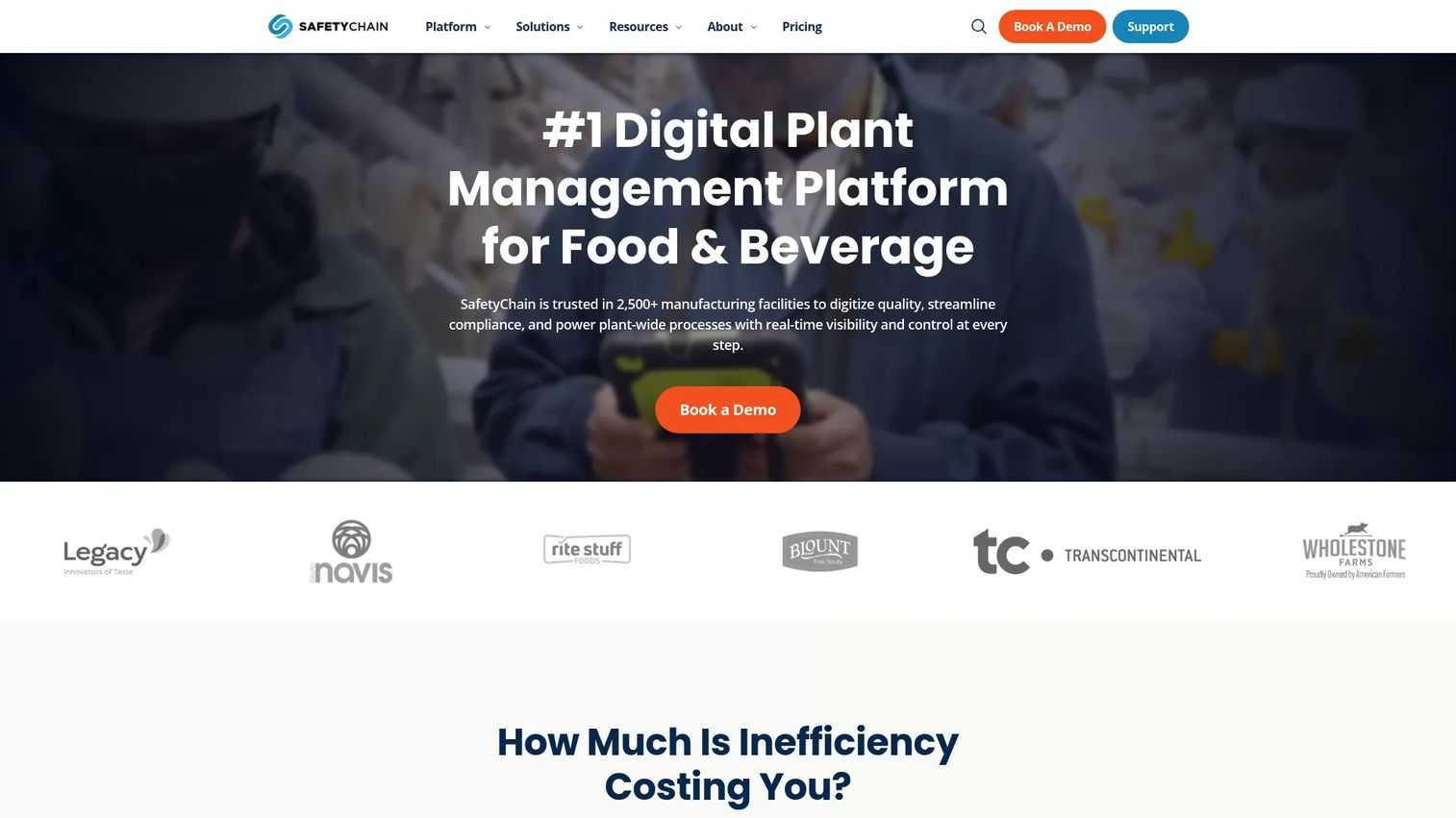
SafetyChain is digital plant management software for food and beverage manufacturers, digitizing quality, compliance, and production processes in one system. Its traceability value comes from capturing records at the point of production, tying quality checks and CAPA to the lots they affect. That production-floor grounding makes it well suited to manufacturers who want traceability and quality management to share the same data.
Best for: Food and beverage manufacturers needing plant-wide quality, compliance, and production management.
Key strengths
- Digital forms and offline capture: Mobile data capture that works offline on the floor, so records survive spotty connectivity and sync when back online.
- CAPA, audits, and compliance workflows: Structured corrective action and audit trails that link findings to the lots and processes involved.
- Production performance and BI: OEE tracking and BI integrations that connect quality and traceability data to production output.
Why choose SafetyChain: If you want traceability that lives inside quality and production rather than bolted on beside it, SafetyChain fits. It excels for plants that treat quality data and lot records as one system, giving investigations a fuller operational picture. The platform is built for food and beverage manufacturing specifically, so its workflows match that floor.
SafetyChain pricing: SafetyChain uses facility-based subscription pricing across Essential, Advanced, and Supplier packages with add-ons, shown as request-pricing rather than a public numeric figure. G2 reviewers rate it 4.5 out of 5.
7. VicinityFood
VicinityFood is food ERP and MRP software for food and beverage manufacturers, with traceability embedded in the production and inventory model. Because lot traceability lives inside the ERP, batch records connect directly to recipes, scheduling, and inventory. That integration suits process manufacturers who want traceability as a native part of production, not a separate log.
Best for: Food manufacturers needing a configurable ERP/MRP system.
Key strengths
- Recipe management: Formula and recipe control that ties ingredient lots to finished batches for genuine process traceability.
- Lot traceability: Lot-level tracking woven through production and inventory, so a trace query pulls from live operational data.
- Production scheduling: Scheduling connected to the same lot and inventory records that power traceability.
Why choose VicinityFood: If you are already running or planning a food ERP, keeping traceability inside that system avoids the sync problems of separate tools. It excels for process manufacturers whose recipes, batches, and inventory need to trace as one connected record. This is a configurable ERP commitment, best for teams ready to run production and traceability together.
VicinityFood pricing: VicinityFood does not publish public pricing and uses a contact or demo-based sales process. No substantive G2 product rating was available at the time of writing.
8. Wherefour
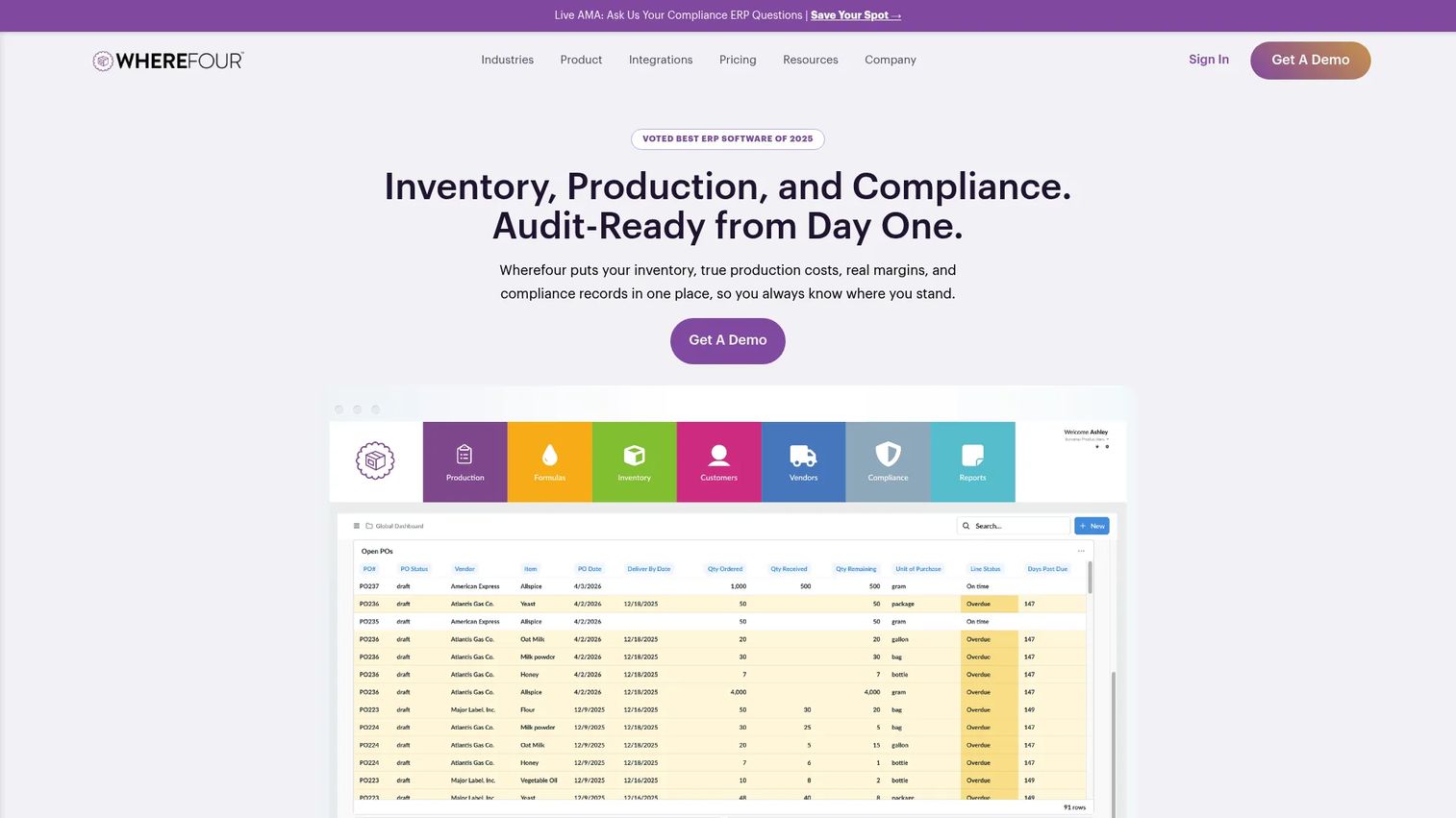
Wherefour is manufacturing ERP and traceability software for food, beverage, and other regulated manufacturers, with real-time inventory and batch control at its core. It combines lot tracking, FIFO/FEFO handling, and barcode labeling with recall readiness, giving smaller manufacturers ERP-grade traceability without enterprise weight. The audit trail and COA management make it a practical fit for regulated production.
Best for: Manufacturers that need a configurable ERP with traceability and inventory control.
Key strengths
- Real-time inventory and lot tracking: Live inventory with FIFO/FEFO logic and barcode labeling, so lot movement stays accurate as material flows.
- Production and batch control: Formulas, yields, and work orders that link batch traceability directly to what the floor produces.
- Compliance and recall readiness: Audit trails, COA management, and recall tooling built for regulated manufacturing.
Why choose Wherefour: If you want batch traceability and inventory in one system but do not need a heavyweight enterprise ERP, Wherefour hits that middle ground. It excels for smaller regulated manufacturers who need real recall readiness and clean lot control. Pricing is quote-based and configured per operation, which fits teams that want the system shaped to their process.
Wherefour pricing: Wherefour does not publish a price list and configures pricing per operation, offering monthly, quarterly, or annual billing with custom quotes. G2 reviewers rate it 4.5 out of 5.
9. Normex
Normex is positioned around food traceability, compliance management, and audit management for leaner teams. Its stated focus is workflow coverage: keeping traceability, compliance, and audit records connected so a smaller operation can maintain readiness without a large system. Buyers should confirm current product availability directly, since first-party details were limited at the time of writing.
Best for: Food traceability and compliance workflows for leaner teams.
Key strengths
- Food traceability: Workflow-level tracking of product movement suited to smaller food operations.
- Compliance management: Structured compliance records that keep documentation organized and retrievable.
- Audit management: Audit trail tooling that ties findings to the records they concern.
Why choose Normex: For lean teams that want traceability, compliance, and audit management under one workflow-focused roof, Normex targets that segment. Because first-party information was limited during research, confirm current availability, features, and pricing directly with the vendor before committing. Treat it as a candidate to validate rather than a settled choice.
Normex pricing: No public pricing or current G2 rating could be verified from first-party sources at the time of writing. Contact the vendor directly to confirm availability and cost.
Considerations before you buy
The right platform depends less on the feature list and more on where your traceability actually breaks. Work through these before you commit.
Compliance depth and FSMA 204 fit
If FSMA 204 applies to you, confirm the platform captures critical tracking events and exports the Electronic Sortable Spreadsheet, not just generic records. Ask how the vendor keeps pace with regulatory change. A tool that maps to the rule's data model saves you from rebuilding workflows later.
Audit trail and evidence governance
Every record should carry an immutable audit trail: who entered it, when, and against which lot. Evidence-based documentation, certificates, test results, and attestations should attach to the events they support. Without governance, you have data but not defensible evidence.
Supplier collaboration and onboarding
Traceability fails at the weakest supplier link. Evaluate how the platform handles supplier onboarding, data submission, and validation across multiple tiers. The goal is upstream data that arrives clean, not paperwork you chase after the fact.
Mobile capture and field workflows
If your events happen on a floor or in the field, mobile data capture is not optional. Check offline support, ease of use for non-desk workers, and how quickly a logged event becomes a searchable record. Adoption dies when capture is clumsy.
Maintainability and integration
For product and platform teams, the real cost is ongoing maintenance. Check how the tool integrates with your ERP, quality, and analytics stack, and how it holds up as processes and product lines change. A brittle traceability system rots the same way onboarding rots when the UI shifts.
Conclusion
Traceability software is an operational system, not a compliance checkbox. The best fit depends on where your chain is thinnest.
If FSMA 204 and fast investigations drive your decision, Trustwell FoodLogiQ Traceability is built around that exact workflow, from critical tracking events to ESS exports. If your risk lives upstream across multiple supplier tiers, Retraced puts supplier collaboration and evidence validation at the center. For teams whose gaps come from field and floor lag, SafetyCulture delivers strong mobile capture and fast adoption. Manufacturers wanting traceability inside production should look at SafetyChain, VicinityFood, or Wherefour depending on ERP depth, and Zebra when capture hardware is the missing layer. And if you need a simpler operational start, FoodDocs gets a food team to structured compliance quickly.
Start with your biggest failure point, then shortlist the two or three tools built to fix it. Run a scoped pilot against a real recall scenario before you buy.
FAQs
Traceability software records and connects the movement of materials, ingredients, and finished goods across a supply chain, so any unit can be traced backward to its source and forward to its destination. It maintains an audit trail of who did what, when, and to which lot, turning scattered records into evidence you can produce on demand. Food traceability software adds compliance-specific capture like critical tracking events.
Food traceability software centers on regulatory compliance, ingredient provenance, and recall readiness, often with features tied to FSMA 204, HACCP, and critical tracking events. Manufacturing traceability software emphasizes lot and batch tracking across production, inventory, and quality, frequently inside an ERP or plant management system. The lines blur for food and beverage manufacturers, who often need both.
Yes, when the platform is built for it. FSMA 204 traceability software captures critical tracking events at each supply chain node and produces the Electronic Sortable Spreadsheet regulators can request. Trustwell FoodLogiQ Traceability is designed around this workflow. Confirm any vendor's specific FSMA 204 support rather than assuming generic recordkeeping qualifies.
Lot traceability assigns a unique identifier to a discrete lot and tracks it through every step, so you can trace it both directions. Batch traceability handles process manufacturing, where ingredient lots mix into a batch that splits into many outputs, linking each finished unit back to its input lots. In practice, both rely on consistent identifiers, often aligned to GS1 standards, captured at every event.
Strong supplier collaboration lets partners submit lot data, certificates, and attestations directly, then validates that data before it enters your system. It should support multi-tier onboarding so you gain visibility two or three tiers upstream, not just from your direct suppliers. The aim is clean upstream data that arrives verified, rather than paperwork you chase and check by hand.
Field and floor workers create most traceability events, and desktop-only tools introduce lag between the event and the record. Mobile data capture lets workers log events, run inspections, and flag issues where the work happens, so records reflect reality. Offline support matters in plants and field settings where connectivity is unreliable.
Selection typically involves quality, compliance, operations, and supply chain leaders, since traceability touches all four functions. Product and platform teams often weigh in on integration, maintainability, and data governance, because a traceability system that rots as processes change becomes a liability. The strongest evaluations pair compliance depth with a clear view of operational fit and long-term upkeep.