


You reorder the same part twice because two spreadsheets disagreed on stock. A rush order slips because nobody flagged the shortage until the shop floor ran dry. Finance closes the month on numbers that were already stale when they were exported. If you run a growing manufacturing operation, you have lived some version of this.
The problem is not that your team is careless. It is that production, inventory, procurement, and finance each live in a different tool, and none of them talk. Every handoff is a place where a number goes wrong. Manufacturing resource planning software exists to collapse those silos into one operating picture, so a change in a sales order updates the production schedule, the purchase plan, and the stock forecast at the same time.
The category is not niche. The global MRP software market was valued at USD 14.5 billion in 2024 and is projected to reach USD 23.15 billion by 2031, at an 8.11% CAGR, according to OpenPR (2024). In the United States alone, the MRP software market reached USD 2.2 billion in 2024 and is expected to hit USD 3.6 billion by 2033, per Dhiraj Analytics (2024). Demand is climbing because more small and mid-sized manufacturers are hitting the wall where spreadsheets stop scaling.
This guide is a buyer's shortlist. The lens throughout is fit: production complexity, traceability needs, your accounting and ecommerce stack, and how much implementation your team can absorb. If you evaluate operational tools the way a product manager evaluates a stack, by segment and maintainability, that framing is baked in here. For adjacent operational categories, you may also find our roundups of audit management software and contract lifecycle management software useful.
What's inside
This guide compares 10 MRP software options for 2026, built for buyers weighing cloud MRP and manufacturing resource planning software against their current setup. We chose tools based on four criteria that decide real fit:
- Production planning depth: multi-level BOMs, work orders, and scheduling, not just stock counts.
- Inventory and traceability: real-time stock visibility plus lot, batch, and serial number tracking.
- Integrations: how cleanly the tool connects to your accounting and ecommerce systems.
- Fit for small manufacturers: pricing transparency and implementation effort matched to team size.
Every entry lists who it fits best, verified pricing where public, key strengths, and a G2 rating so you can shortlist before reading in full.
TL;DR
- Best overall for small manufacturers: MRPeasy. Affordable, cloud-native, and covers planning, inventory, procurement, and finance without ERP weight.
- Best for process and food manufacturing: Wherefour. Batch and lot-centric workflows built for traceability and recall readiness.
- Best for ecommerce-connected product businesses: Katana. Real-time inventory tied to commerce and sales channels.
- Best modular all-in-one: Odoo. One platform spanning manufacturing, inventory, sales, and accounting.
- Best for enterprise and multi-entity scale: NetSuite. Full cloud ERP with manufacturing planning built in.
- Best for makers and small-batch: Craftybase. Recipe costing, COGS, and inventory for handmade businesses.
What is MRP software?
MRP software is a system that plans the materials, capacity, and production schedule a manufacturer needs to fulfill demand, then keeps inventory, procurement, and finance aligned to that plan in real time.
In practice, it turns a demand signal (a sales order or forecast) into a coordinated set of actions: what to make, what to buy, when to schedule each work order, and what it costs. MRP systems replace the disconnected spreadsheets most growing manufacturers start with, giving planners, buyers, and finance one shared source of truth.
Core capabilities to expect from manufacturing resource planning software:
- Production planning: multi-level bills of materials, work orders, production scheduling, and capacity planning.
- Inventory management: real-time stock levels, multi-location warehouses, and reorder logic.
- BOM and lot tracking: structured BOMs plus lot, batch, and serial number tracking for traceability.
- Procurement and purchasing: automatic purchase suggestions driven by demand and stock gaps.
- Accounting and finance integration: connection to your ledger so costs, COGS, and margins stay accurate.
The distinction that trips up buyers: inventory-only tools count stock, while true MRP software plans production against that stock. When you need work orders, routings, and shop floor control, you have outgrown pure inventory management.
When to use MRP software
When spreadsheets stop scaling
There is a tipping point where manual planning becomes a liability. You spend more time reconciling versions than planning. Stockouts and overbuying happen in the same week. Nobody trusts the master sheet, so people keep private copies. That rework is the signal. Production scheduling software removes the version chaos by making one plan the plan, updated automatically as orders and inventory change.
When inventory and production need one system
Separate tools for stock and production create lag and error. A planner schedules a run against inventory that a buyer already committed elsewhere. Finance reports margins on costs that shifted after the export. When planners, buyers, and finance work from the same live data, the delays and double-entry disappear. This is the core reason teams move from inventory management add-ons to a real MRP system.
When traceability and compliance matter
If you make food, cosmetics, supplements, or anything regulated, batch and lot tracking are not optional. You need to trace any finished unit back to its raw materials and forward to every customer who received it. Serial number tracking matters for warranty and recall readiness. Traceability software built into your MRP means a recall is a query, not a fire drill.
MRP software comparison for 2026
Use this table to shortlist before reading the full entries. Pricing and ratings should be verified at the vendor's site at the time you buy, since plans change.
| # | Product | Intent | Key use case | Pricing | G2 rating |
|---|---|---|---|---|---|
| 1 | MRPeasy | Small manufacturer MRP | Cloud production planning, inventory, procurement | From $49/user/mo | 4.6/5 |
| 2 | Wherefour | Process manufacturing ERP | Batch, lot tracking, traceability | Custom quote | 4.5/5 |
| 3 | Odoo | Modular all-in-one | Manufacturing plus inventory, sales, accounting | Community free; Enterprise quote | 4.2/5 |
| 4 | Brahmin Solutions | Inventory and manufacturing | Web-based inventory control and production | Not publicly listed | 3.5/5 |
| 5 | Katana | Ecommerce-connected MRP | Real-time inventory and production for product brands | Free; Core from $299/mo | 4.4/5 |
| 6 | Fishbowl | Inventory plus manufacturing | Warehouse and manufacturing tied to QuickBooks | From $229/mo (annual) | 4.0/5 |
| 7 | Cin7 | Multichannel inventory | Inventory, POS, ecommerce with manufacturing | From $349/mo | 4.1/5 |
| 8 | NetSuite | Enterprise cloud ERP | Multi-entity ERP with manufacturing planning | Quote-based | 4.1/5 |
| 9 | Craftybase | Maker and small-batch | Recipe costing, COGS, inventory for makers | From $49/mo | 5.0/5 |
| 10 | SOS Inventory | QuickBooks-native SMB | Inventory, orders, manufacturing for QuickBooks | From $64.95/mo | 4.2/5 |
Best MRP software for 2026
1. MRPeasy
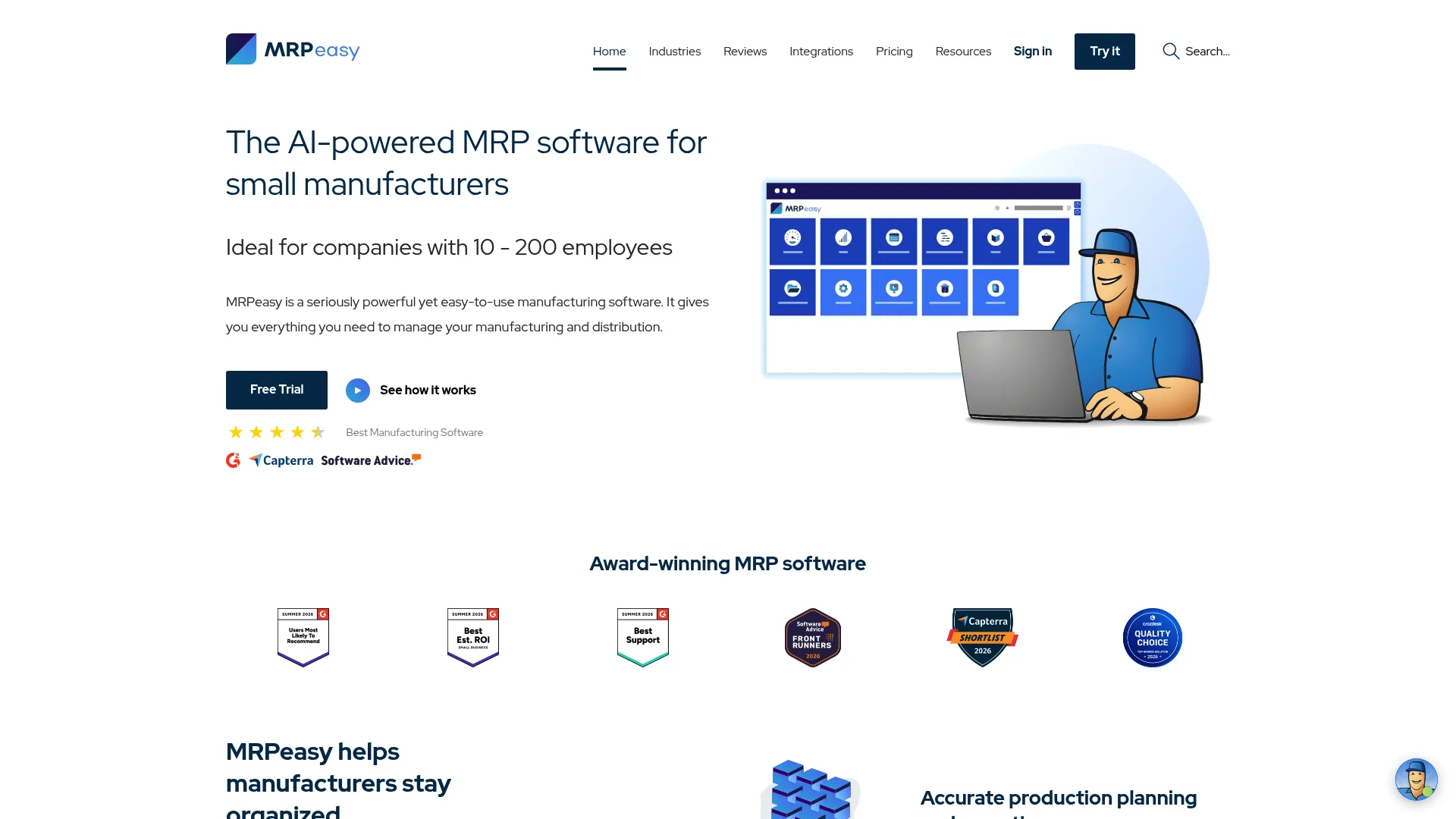
MRPeasy is cloud-based MRP software built specifically for small manufacturers. It covers the full loop most growing shops need: production planning and reporting, inventory and warehouse management, procurement, sales, workforce, and finance connectivity. The interface is deliberately lighter than a full ERP, which is why smaller teams get it running without a large implementation project.
Best for: Small manufacturers that need affordable, cloud-native MRP without ERP overhead.
Key strengths
- Production planning and reporting: Schedule work orders and reprioritize with drag-and-drop rescheduling as demand shifts.
- Inventory and warehouse management: Track real-time stock across locations with reorder logic tied to production demand.
- BOM management: Build and maintain multi-level bills of materials that drive purchase and production suggestions.
Why choose MRPeasy: It hits the sweet spot for teams that have outgrown spreadsheets but are not ready to run an enterprise ERP. The per-user pricing scales predictably, and the production-first design means planners and buyers work from the same live plan rather than reconciling exports.
MRPeasy pricing: MRPeasy has four paid plans billed per user per month: Starter at $49, Professional at $69, Enterprise at $99, and Unlimited at $149. Annual billing is also offered. There is a free trial rather than a permanent free tier, so plan to evaluate inside the trial window.
2. Wherefour
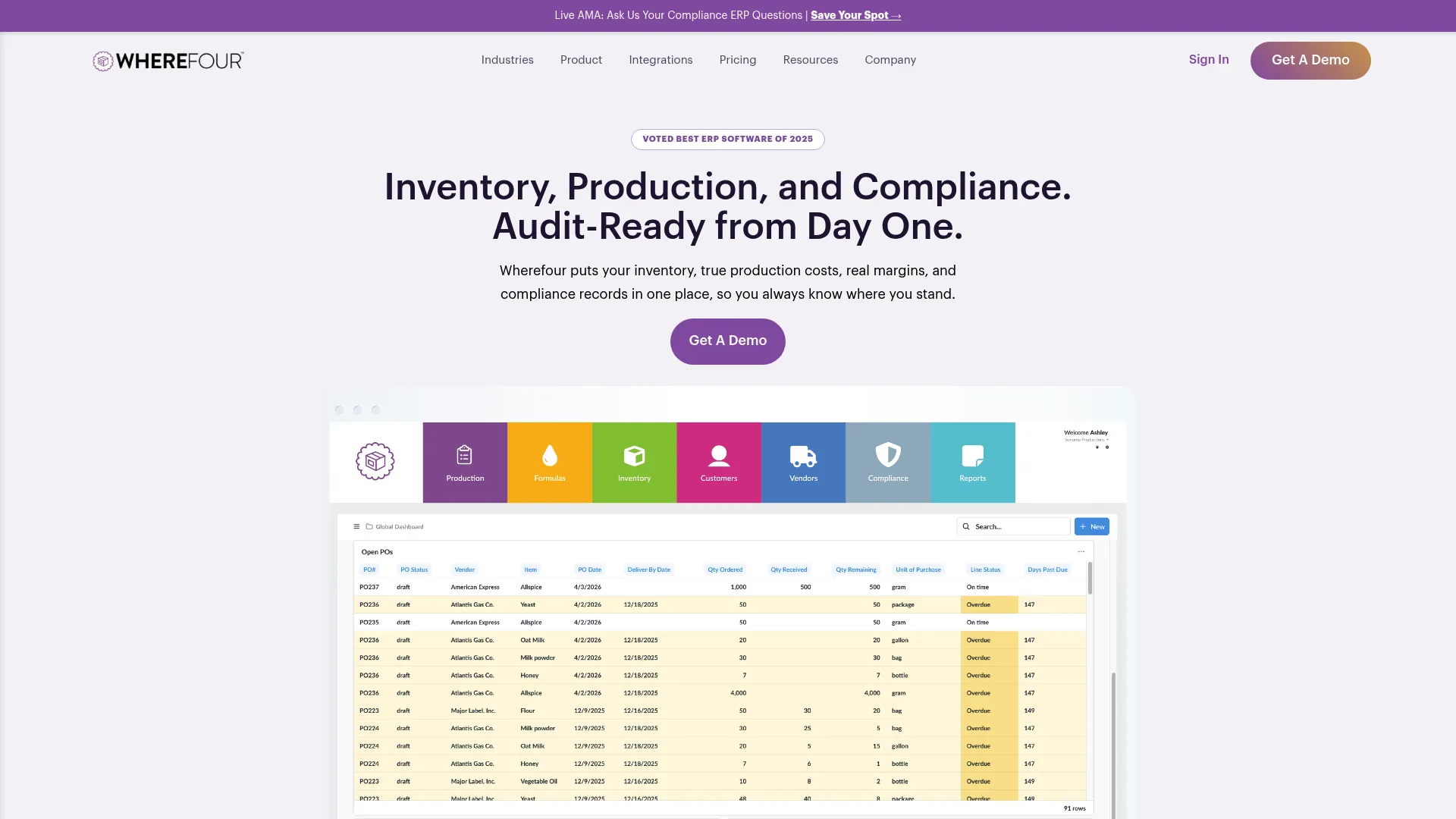
Wherefour is manufacturing ERP and traceability software built for growing process manufacturers. It centers on real-time inventory, lot tracking, production and batch control, and the compliance and recall workflows that food, beverage, and regulated makers depend on. If your operation is batch-based rather than discrete, Wherefour speaks your language.
Best for: Process and food manufacturers who need configurable inventory, production, and traceability workflows.
Key strengths
- Real-time inventory and lot tracking: Trace any batch backward to raw materials and forward to every shipment.
- Production and batch control: Manage recipes, yields, and batch runs rather than discrete assembly only.
- Compliance and recall readiness: Run traceability queries that turn a recall into a report instead of a scramble.
Why choose Wherefour: For process manufacturers, generic MRP tools force awkward workarounds. Wherefour is configured around batches, lots, and compliance from the start, which is why it fits food, beverage, and other regulated categories where traceability software is a hard requirement, not a nice-to-have.
Wherefour pricing: Wherefour does not publish a price list. Pricing is configured per operation and can be billed monthly, quarterly, or annually. You will need a quote scoped to your workflows, so budget time for a scoping conversation before you can compare it dollar-for-dollar against public-priced tools.
3. Odoo
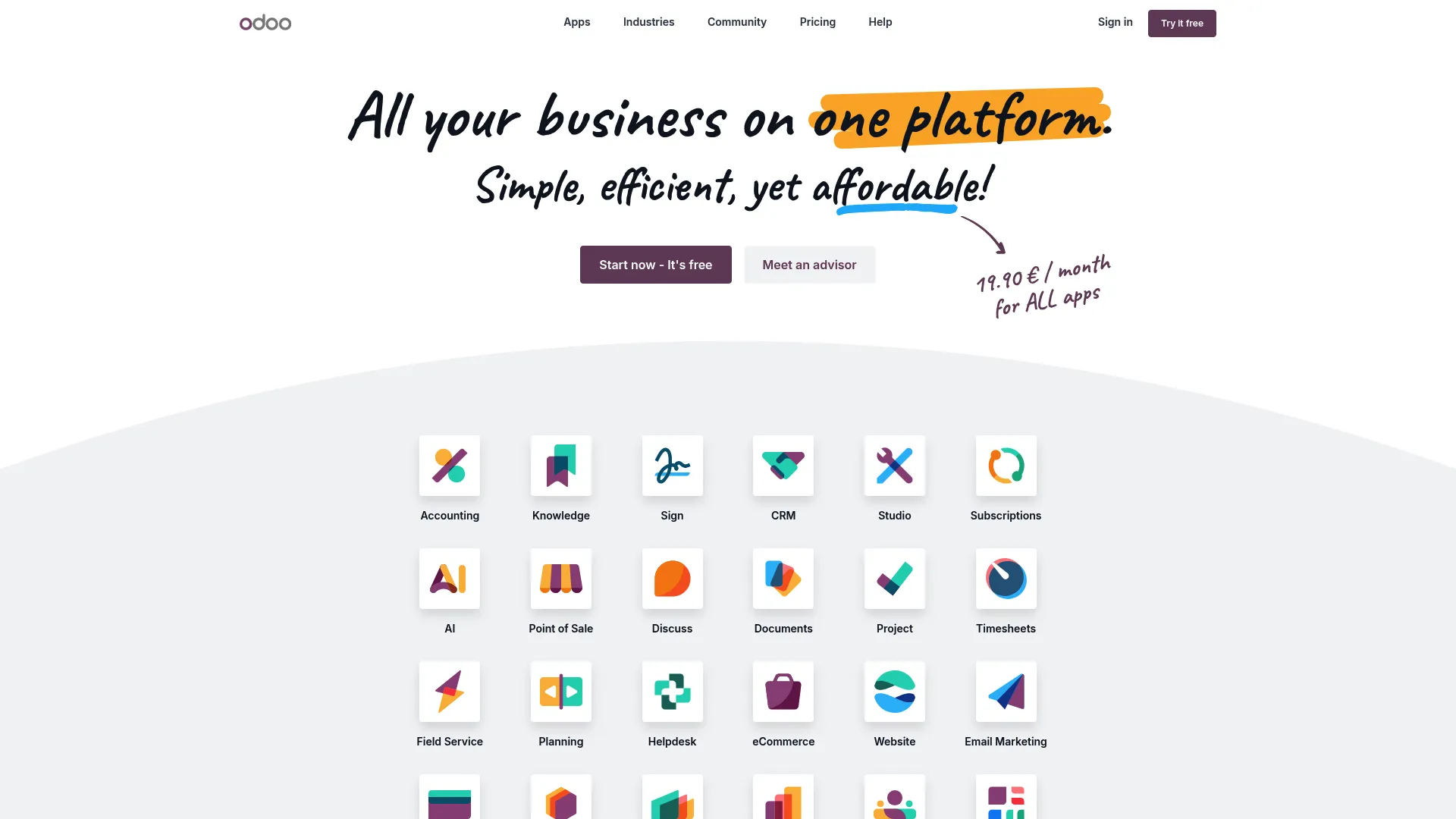
Odoo is an all-in-one, open-source business suite where manufacturing is one module among many. You can run production planning, inventory management, sales, CRM, ecommerce, accounting, project management, and point of sale on a single platform. That breadth is the appeal for teams that want one system of record rather than a stack of point tools.
Best for: Businesses that want a modular ERP-style suite and plan to run several functions on one platform.
Key strengths
- Modular manufacturing: Add work orders, routings, and quality alongside inventory as your needs grow.
- Integrated inventory and accounting: Keep stock, purchasing, and the ledger in one place to close reporting gaps.
- Broad app ecosystem: Extend into ecommerce, POS, and project management without new vendors.
Why choose Odoo: Choose Odoo when your ambitions extend past manufacturing alone and you want CRM, ecommerce, and finance under one roof. The modular design lets you start with manufacturing and inventory, then layer on more. That flexibility comes with more configuration than a single-purpose MRP, so weigh it against your appetite for setup.
Odoo pricing: Odoo ships in two versions: Community, which is open-source and free, and Enterprise, which is licensed. The site directs buyers to request a quote or custom demonstration rather than listing a public starting price, so confirm current Enterprise pricing directly before committing.
4. Brahmin Solutions
Brahmin Solutions is web-based inventory and manufacturing software aimed at retailers, wholesale distributors, manufacturers, and brands. It covers inventory control, manufacturing, and multicurrency operations, positioning itself for businesses that need to manage stock and production together without a heavy ERP.
Best for: Businesses that need web-based inventory control with manufacturing and multicurrency support.
Key strengths
- Inventory control: Manage stock levels and movements across locations from one web-based system.
- Manufacturing: Handle production alongside inventory rather than bolting on a separate tool.
- Multicurrency: Operate across regions and currencies for brands selling in more than one market.
Why choose Brahmin Solutions: It appears consistently in MRP comparison research as an SMB-focused option, which makes it worth evaluating if you sell across channels and currencies. It suits teams that want inventory and light manufacturing in one place without committing to a full ERP rollout.
Brahmin Solutions pricing: Brahmin Solutions does not publish first-party pricing on its site. Request a quote directly and confirm current plan structure and inclusions before you shortlist, since no public numeric price was available to verify.
5. Katana
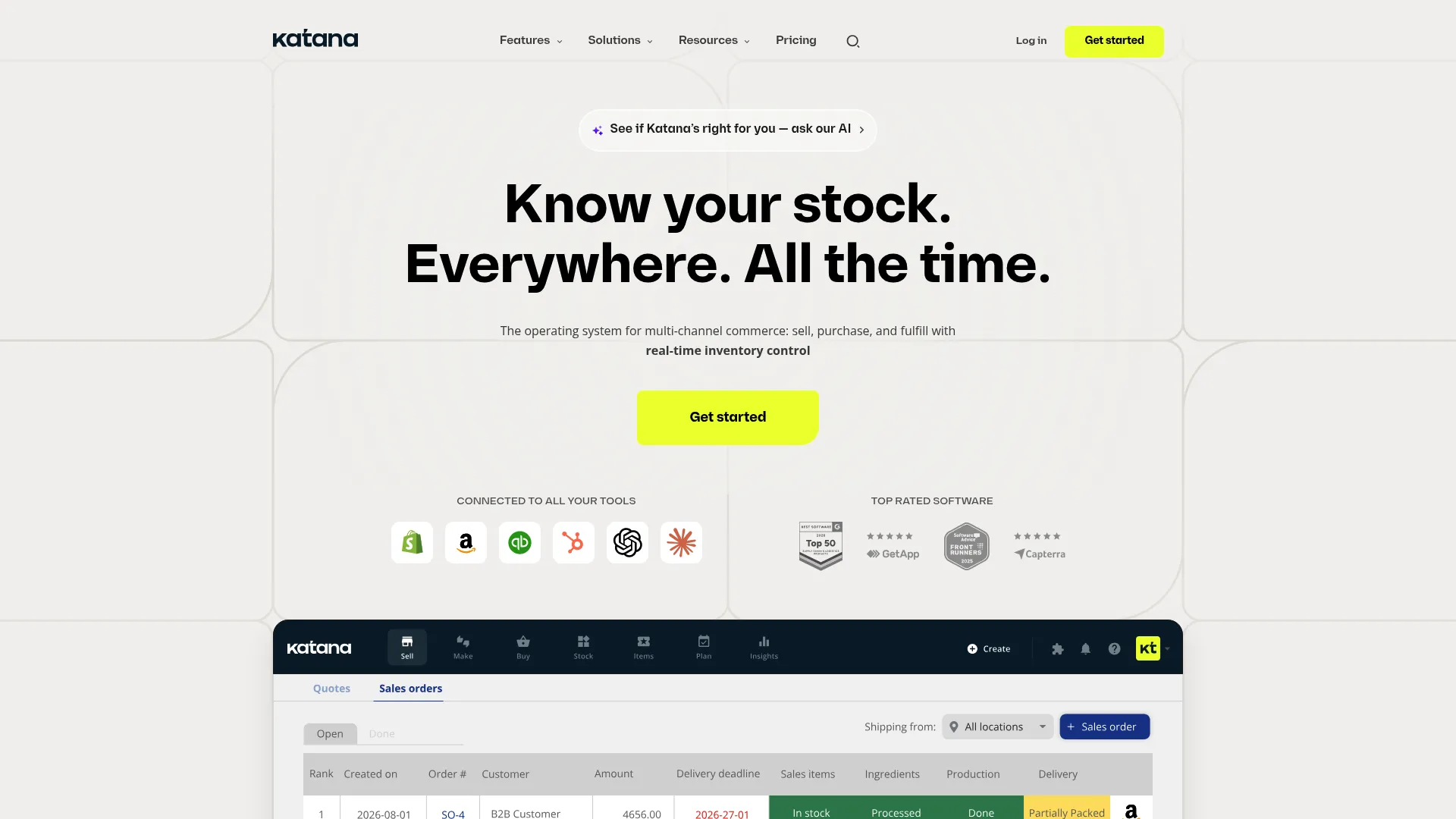
Katana is cloud inventory and manufacturing software built for product businesses, with a strong lean toward ecommerce-connected operations. It combines real-time stock tracking, production planning, and sales-channel integrations so fast-moving brands can see live inventory across sales orders, manufacturing, and fulfillment in one view.
Best for: Product businesses and light manufacturers that sell through ecommerce channels and need real-time inventory.
Key strengths
- Real-time inventory management: Live stock tracking across sales orders, production, and warehouses.
- Production and sales planning: Plan manufacturing against actual demand pulled from connected channels.
- Ecommerce integrations and API: Connect commerce platforms and extend workflows through the API.
Why choose Katana: If your business runs on ecommerce and you need inventory and production to stay in sync with your sales channels, Katana is purpose-built for that motion. It fits growing product brands better than a heavyweight ERP, and the permanent free tier lets very small teams start before committing budget.
Katana pricing: Katana offers a permanent Free plan supporting up to 30 SKUs. The Core plan starts at $299/month, and the Advantage plan is custom priced and billed annually. The free tier makes it easy to test the workflow before you scale into a paid plan.
6. Fishbowl
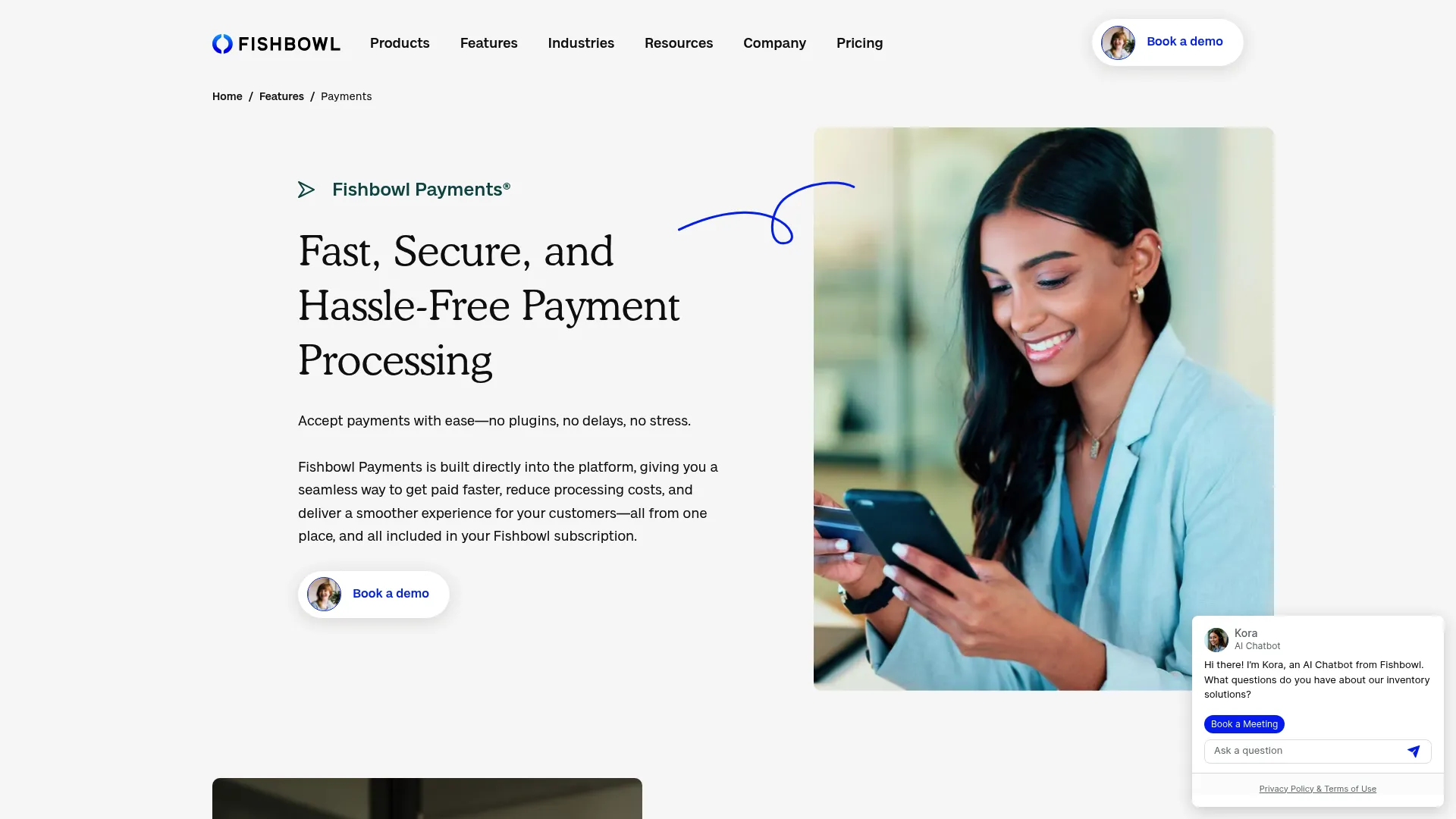
Fishbowl is inventory management software with strong warehouse, fulfillment, and manufacturing capabilities, long known for tying tightly into QuickBooks. It suits businesses whose accounting already lives in a QuickBooks-style ecosystem and who need serious inventory operations layered on top.
Best for: Teams that need warehouse and manufacturing control connected to QuickBooks accounting.
Key strengths
- Real-time inventory and SKU tracking: Keep accurate stock counts across products and locations.
- Multi-location warehouse management: Coordinate inventory across multiple warehouses from one system.
- Barcode scanning and fulfillment: Speed picking, packing, and fulfillment with barcode workflows.
Why choose Fishbowl: For teams anchored in QuickBooks, Fishbowl extends accounting into full inventory and manufacturing without ripping out the ledger they already trust. It works best when inventory and warehouse operations are the priority and you want manufacturing added on top of a strong stock foundation.
Fishbowl pricing: Fishbowl's cloud plans start with Essentials at $229/month, Growth at $429/month, and Scale at $729/month, all billed annually. Fishbowl Advanced is quoted separately, with Advanced Manufacturing starting at $675/month and Advanced Warehouse from $595/month, priced by users and deployment. There is no free tier.
7. Cin7
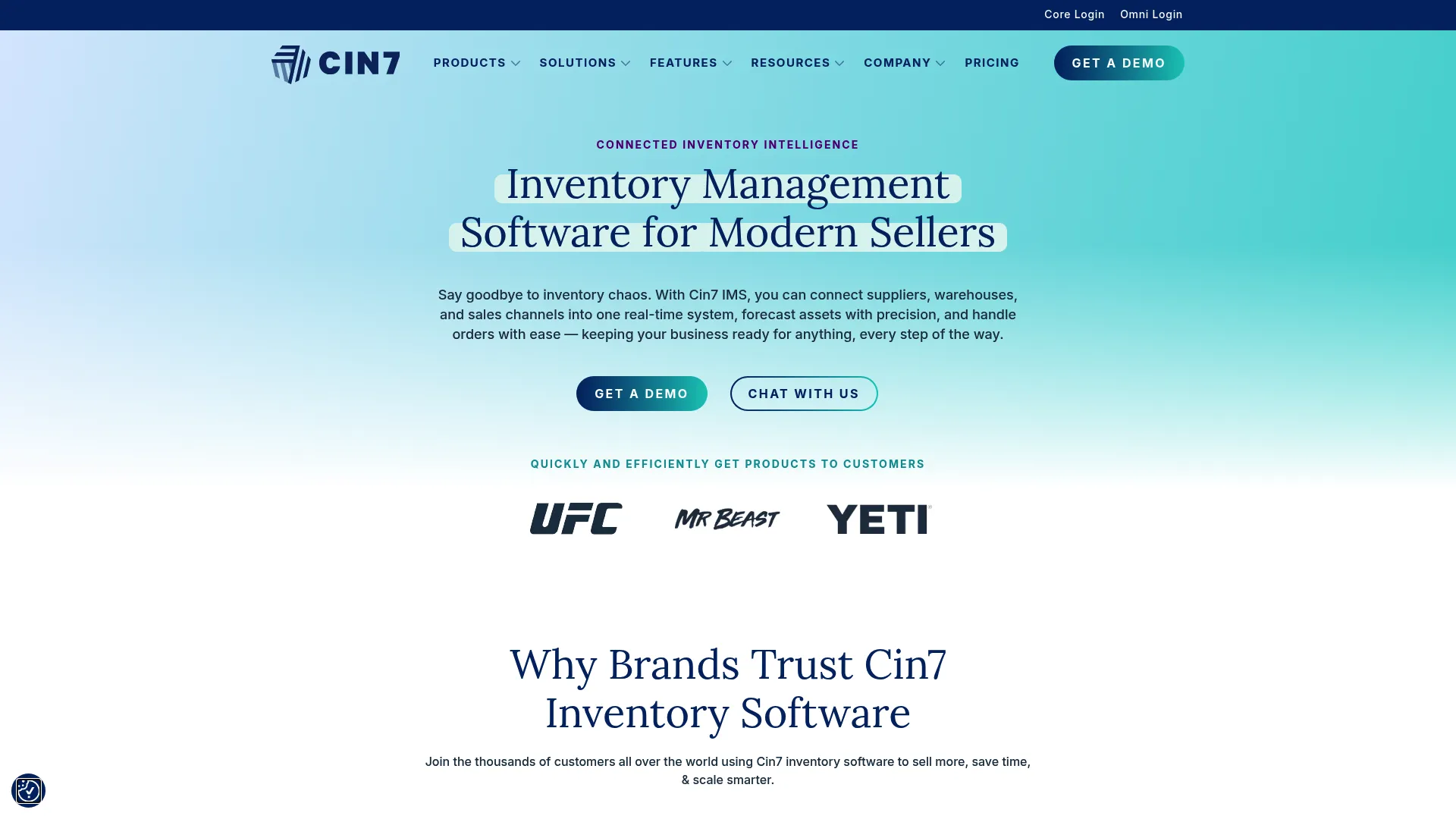
Cin7 is cloud inventory management software built for multichannel operations, with POS, ecommerce, warehouse, and accounting integrations, plus manufacturing adjacencies. It fits inventory-heavy businesses selling across many channels that have outgrown simple stock tools and need order management and light production together.
Best for: Multichannel businesses needing inventory control with POS, ecommerce, and manufacturing adjacencies.
Key strengths
- Multichannel inventory management: Track and sync stock across every sales channel from one system.
- Ecommerce and accounting integrations: Connect commerce platforms and your ledger to close reporting gaps.
- AI-powered forecasting and B2B portal: Forecast demand and serve wholesale buyers through a dedicated portal.
Why choose Cin7: When you sell across marketplaces, retail, and your own store, keeping inventory accurate everywhere is the hard part. Cin7 is designed for that multichannel complexity, with POS and ecommerce depth that pure MRP tools lack. It fits businesses where inventory and order management lead and manufacturing is a supporting workflow.
Cin7 pricing: Cin7 publishes monthly USD plans: Standard at $349, Pro at $599, and Advanced at $999. The Omni tier is custom priced. Prices exclude taxes, and there is no free tier, so match the plan to your channel count and order volume.
8. NetSuite
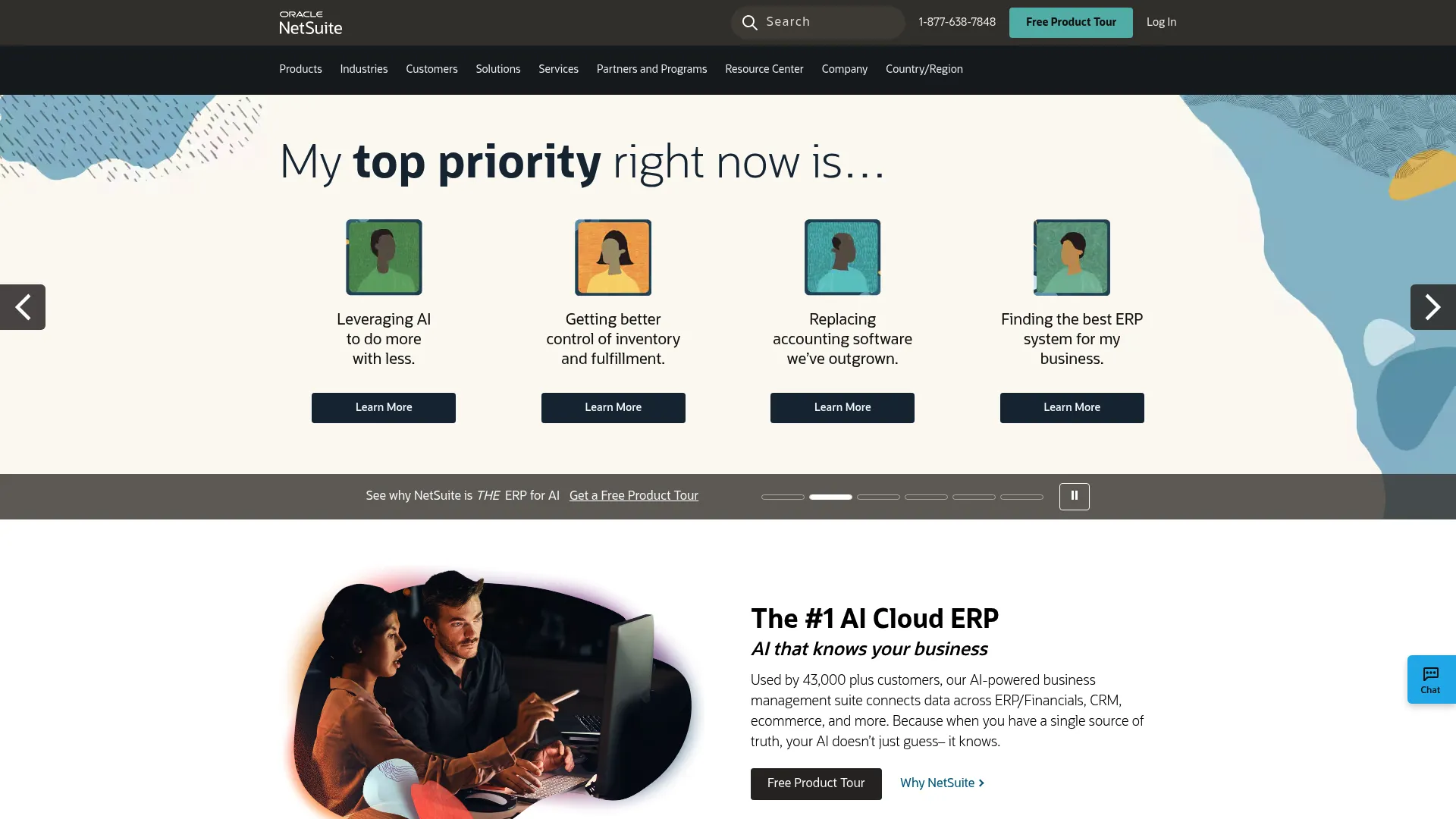
NetSuite is Oracle's cloud-based business management suite spanning ERP, CRM, and commerce, with manufacturing planning built into a much larger financial and operational platform. It is more than a pure MRP choice, which is exactly why growing companies with multi-entity structures and serious finance requirements land on it.
Best for: Mid-market and enterprise companies needing integrated cloud ERP with manufacturing planning and strong finance.
Key strengths
- Cloud ERP and financial management: Run finance, operations, and manufacturing on one platform.
- CRM and order-to-cash automation: Automate the full quote-to-cash cycle across entities.
- SuiteCloud customization: Extend and tailor the platform as operations grow more complex.
Why choose NetSuite: Choose NetSuite when MRP is one requirement inside a broader need for enterprise-grade ERP, multi-entity consolidation, and finance alignment. It is the heaviest option on this list by design. For a single-site small manufacturer it is likely more than needed, but for scaling operations it consolidates a sprawling stack.
NetSuite pricing: NetSuite pricing is quote-based and not published on the site. It typically involves an annual license plus a one-time implementation cost, scoped to modules and user count. Expect a sales-led process and confirm total cost of ownership, including implementation, before committing.
9. Craftybase
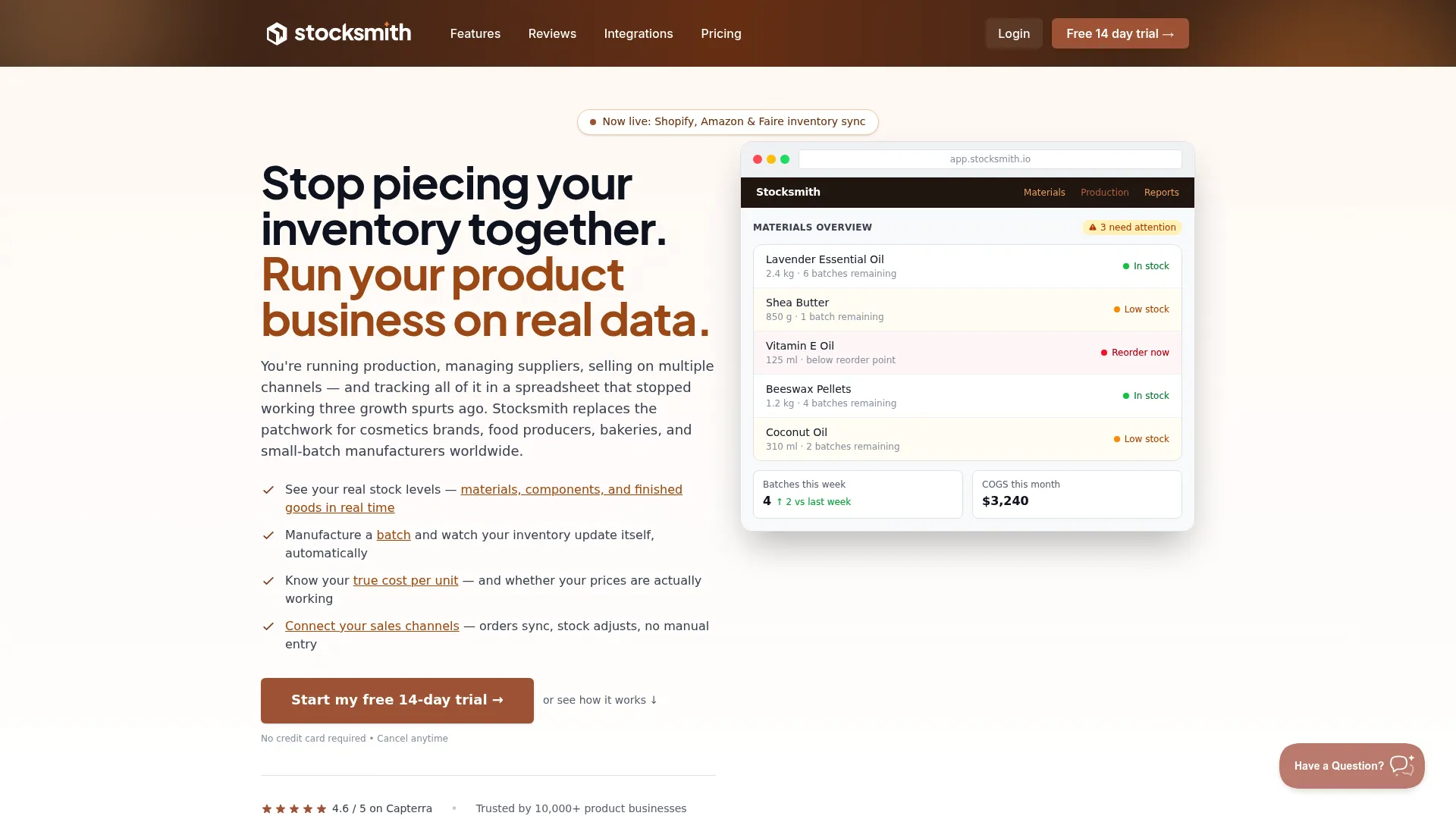
Craftybase is inventory, costing, and manufacturing software built for makers and small-scale, handmade businesses. It focuses on the workflows that matter to lean product creators: recipe and bill-of-materials costing, automatic COGS reporting, and multi-channel inventory sync.
Best for: Handmade and small-batch businesses that need inventory, COGS, and recipe costing without ERP complexity.
Key strengths
- Recipe and BOM costing: Cost every product accurately down to raw materials and components.
- Automatic COGS reporting: Keep cost of goods sold accurate for pricing and tax without manual math.
- Multi-channel inventory sync: Sync stock and orders across the channels makers actually sell on.
Why choose Craftybase: For a maker or small-batch producer, most MRP tools are overbuilt. Craftybase is scoped to lean operations, so you get real costing and inventory control without carrying features you will never use. It fits businesses that value accurate COGS and simple production over multi-site scheduling depth.
Craftybase pricing: Craftybase has four paid monthly plans: Studio at $49, Indie at $99, Business at $199, and Growth at $349. There is no free version, but a 14-day free trial is available with no credit card required, which is enough to validate the costing workflow.
10. SOS Inventory
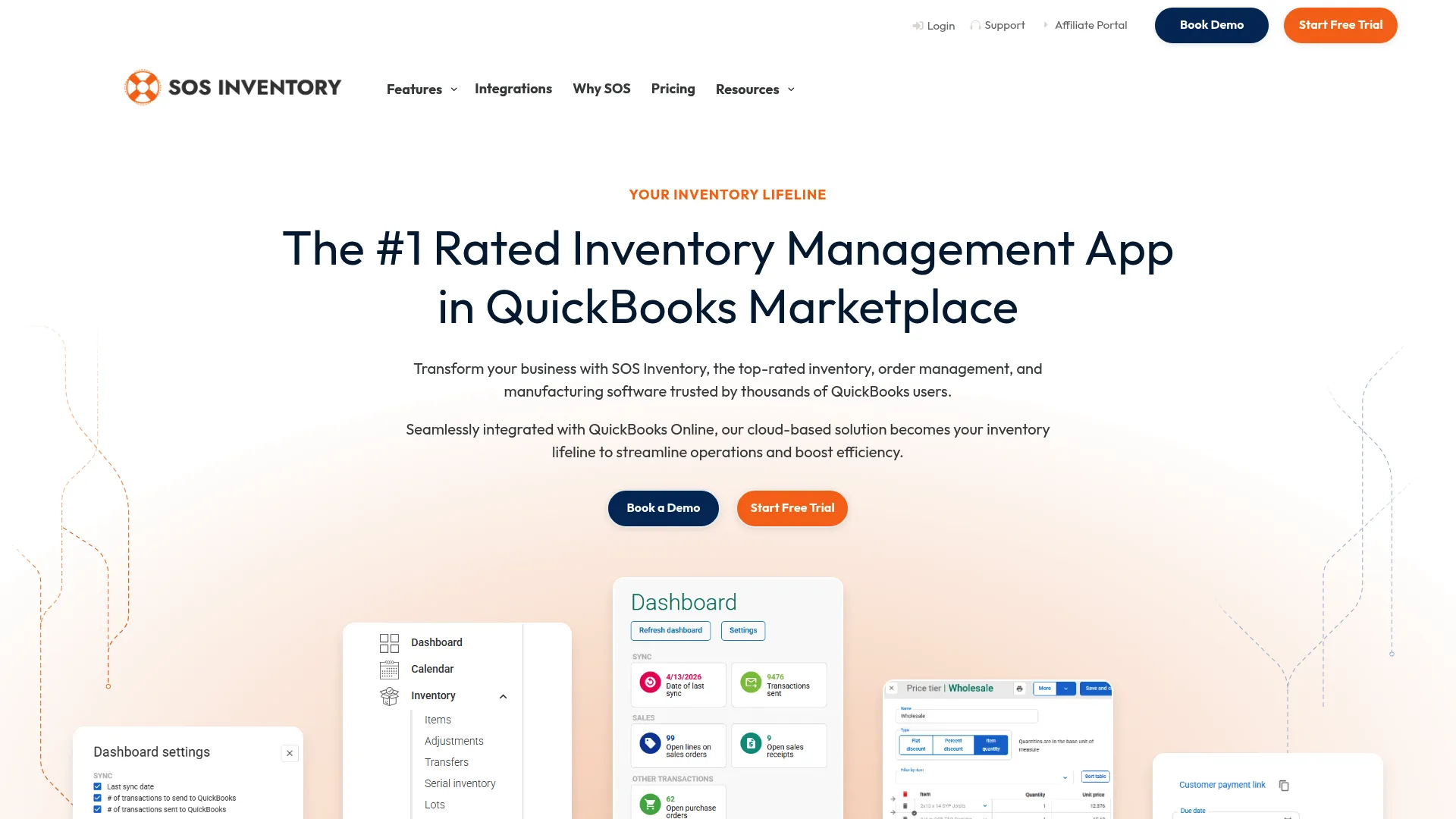
SOS Inventory is cloud-based inventory, order management, and manufacturing software built specifically for QuickBooks Online users. It layers inventory, fulfillment, and light manufacturing on top of QuickBooks, which makes it a natural fit for small businesses that want operational control without leaving their accounting system.
Best for: Small and mid-sized QuickBooks Online businesses needing inventory, fulfillment, and manufacturing workflows.
Key strengths
- QuickBooks Online integration: Sync inventory and orders directly with the accounting system you already run.
- Inventory, order, and manufacturing management: Handle stock, orders, and production in one connected tool.
- Serial and lot tracking with barcoding: Track units and batches for traceability and faster fulfillment.
Why choose SOS Inventory: If your books live in QuickBooks Online and you need more than QuickBooks can do for inventory and production, SOS Inventory is a direct, affordable extension. It suits small teams that want simple operational control and serial or lot tracking without the cost and complexity of a full ERP.
SOS Inventory pricing: SOS Inventory has three paid monthly plans: Companion at $64.95, Plus at $139.95, and Pro at $194.95. Annual billing is available, and a 14-day free trial lets you test the QuickBooks connection before you commit. There is no permanent free tier.
What to evaluate before you buy
Production complexity
Be honest about what you actually make. If you need simple job tracking, an inventory tool with light manufacturing may be enough. If you run multi-level BOMs, work orders, routings, and finite capacity planning, you need true MRP depth. Buying an inventory-only tool for a real manufacturing operation is the most common mismatch, and it forces the spreadsheets right back into the workflow.
Traceability requirements
Check for lot, batch, and serial number tracking explicitly. For regulated or food and beverage manufacturers, this is non-negotiable. The test is simple: can you trace any finished unit back to raw materials and forward to every customer in a single query? If not, recall readiness is at risk, and traceability software should move up your priority list.
Accounting and ecommerce integration
Confirm exactly how the tool connects to your ledger and sales channels. Some MRP accounting software integrates natively with QuickBooks or Xero, while others require middleware. Same for Shopify, WooCommerce, and marketplaces. Disconnected systems recreate the reporting gaps you are trying to close, so make integration depth a hard selection criterion, not an afterthought.
Implementation and team size
Match the tool to your operational maturity. A lean single-site shop should not buy an enterprise ERP, and a multi-site operation will outgrow a maker-focused tool fast. Ask how long implementation takes, who owns it internally, and what breaks when you add a location. Cloud MRP software generally shortens setup, but scope still matters.
Reporting and visibility
Look past nicer dashboards to whether the data drives decisions. Real-time stock visibility, shop floor control signals, and procurement alerts let planners and buyers act before problems surface. The point of visibility is faster, better decisions, not prettier reports. If the reporting cannot answer "what do we make and buy next," it is not doing the job.
Conclusion
The right MRP software is the one that matches your production complexity and your integration reality, not the one with the longest feature list. For most small manufacturers moving off spreadsheets, MRPeasy is the strongest cloud-native starting point. Process and food makers should look hard at Wherefour for its batch and traceability depth. Ecommerce-connected brands fit Katana, makers fit Craftybase, QuickBooks shops fit SOS Inventory or Fishbowl, and companies needing full ERP scale land on Odoo or NetSuite.
Start by naming your two hardest constraints, usually production complexity and your accounting stack, then shortlist the two or three tools that clear both. Run a trial or scoped demo with real orders and real BOMs before you commit. The goal is not to add another dashboard. It is to replace the disconnected spreadsheets with one system that keeps production, inventory, procurement, and finance in agreement.
FAQs
MRP software plans the materials and production a manufacturer needs to meet demand, then keeps inventory, purchasing, and finance aligned to that plan. In plain terms, it decides what to make, what to buy, and when, using bills of materials, production scheduling, and real-time inventory. It replaces the guesswork and spreadsheet reconciliation most growing shops rely on.
MRP is narrower and manufacturing-focused: material planning, production scheduling, inventory, and procurement. ERP is broader, wrapping those functions inside finance, HR, CRM, and other business-wide modules. Many teams start with a dedicated MRP system and move into ERP, or an ERP with strong manufacturing, when they add entities, sites, or finance complexity that a pure MRP tool was not built to handle.
At minimum, look for multi-level bills of materials, production scheduling and capacity planning, real-time inventory management, purchasing driven by demand, and traceability through lot, batch, and serial number tracking. Tie each feature back to an outcome: BOMs and scheduling prevent shortages, traceability enables recalls, and accounting integration keeps costs and margins accurate.
Cloud MRP software usually wins for small manufacturers because setup is faster, there is no on-premise server to maintain, and updates are automatic. It also makes multi-location and remote access straightforward. That said, fit depends on your production complexity and any compliance requirements, so confirm the cloud option covers your traceability and data needs before deciding.
Pricing varies widely by scale, user count, and module depth. Entry-level cloud MRP tools on this list start around $49 to $65 per month or per user, mid-tier inventory-plus-manufacturing platforms run into the hundreds monthly, and enterprise ERP with manufacturing is quote-based with implementation costs. Always verify current pricing on the vendor's site before you buy, since plans and tiers change.
Yes, and that is the most common reason teams switch. When errors, stockouts, and version conflicts pile up, one shared source of truth replaces the tangle of private spreadsheets. MRP software keeps production, inventory, and finance working from the same live data, so a change in one place updates everywhere instead of requiring manual re-entry.
If inventory is your primary need, prioritize real-time stock visibility, multi-location support, and clean integrations with your accounting and ecommerce systems. Cin7 and Fishbowl are strong for inventory-heavy multichannel and warehouse operations, while Katana leads for ecommerce-connected product brands. Revisit the comparison table above to match inventory depth against your channel count and production requirements.