


A single retired server can hold years of customer records, credentials, and regulated data. When it leaves your environment without a documented trail, three things happen at once: you lose resale value, you lose proof, and you inherit compliance exposure you can't see until an auditor asks for it. The uncomfortable part is that most of these failures happen quietly. A laptop goes missing from a pallet. A drive gets "recycled" without a wipe log. A certificate of destruction never arrives. Nobody notices until a breach investigation traces the leak back to a device you thought was gone.
The stakes are getting larger, not smaller. The global IT asset disposition market is projected to grow from USD 21.77 billion in 2026 to USD 48.48 billion by 2034, a 10.53% CAGR, according to Fortune Business Insights (2024). Within ITAD services, data destruction and sanitization already holds roughly 38 to 39% of market share, per Mordor Intelligence (2024) and Persistence Market Research (2024). That share tells you what buyers are actually paying for: defensible proof that data is gone. This category sits close to adjacent disciplines like audit management, where the same principle applies: if you can't produce the record, the work didn't happen.
If you own internal tooling, lifecycle operations, or a compliance-sensitive workflow, the question isn't whether you need a process. It's whether your process holds up when someone pulls the thread.
What's inside
This guide compares 8 IT asset disposition software and service platforms for teams that need secure decommissioning, audit-ready reporting, and value recovery. Some entries are software you operate. Some are ITAD companies you hire. A few are research destinations that help you compare vendors before you commit.
We selected and ranked each option on five criteria that matter to operators, not marketers:
- Compliance depth: alignment with standards like NIST 800-88, NAID AAA, R2, and e-Stewards.
- Chain-of-custody controls: serialized tracking from pickup to final disposal.
- Audit documentation: certificates, logs, and exportable evidence.
- Value recovery: resale, refurbishment, redeployment, and recycling workflows.
- Operational fit: who owns the workflow, and how it scales across releases and geographies.
TL;DR
- Best for ITAD operators needing an end-to-end suite: Recycly, if you run an ITAD or e-waste business and want one operational system for sales, collection, inventory, and compliance.
- Best for asset tracking context around disposition: Asset Panda, when you want lifecycle visibility and disposition inside a broader asset management program.
- Best for market research and vendor discovery: Gartner Peer Insights, when you're still comparing ITAD vendors and want verified peer reviews.
- Best for service-led secure disposition: Reworx Recycling for SMB-scale secure recycling and data destruction.
- Best for enterprise, regulated environments: Iron Mountain, Dell Technologies, HP, and Sims Lifecycle Services, when documentation, governance, and global logistics carry the deal.
What is IT asset disposition software?
IT asset disposition software is a system for retiring, tracking, sanitizing, remarketing, and recycling IT equipment while producing the documentation needed to prove the work happened. It sits at the end of the hardware lifecycle, after acquisition and use, and turns a messy operational reality into an auditable record.
A modern ITAD workflow covers the full arc of an asset leaving your environment:
- Collection and retrieval: scheduling pickups, drop-offs, or freight, and logging assets at the point they leave your control.
- Chain of custody: serialized tracking that follows each device through transit, receiving, and processing.
- Data sanitization: wiping or physically destroying storage media to a defined standard.
- Remarketing and value recovery: reselling, refurbishing, redeploying, or donating equipment that still has worth.
- Recycling: responsibly processing e-waste that has reached end of life.
- Certificate generation: producing a certificate of destruction and disposition records per asset.
- Reporting: exportable audit trails you can hand to auditors, regulators, or internal governance.
Across all of that, four themes decide whether a program is worth running:
- Security: secure IT asset disposition means no device leaves without a documented wipe or destruction event.
- Compliance: evidence mapped to standards like NIST 800-88, GDPR, HIPAA, NAID AAA, R2, and e-Stewards.
- Sustainability and ESG: reuse and recycling that reduce e-waste and support environmental commitments.
- Value recovery: capturing residual value instead of paying to make assets disappear.
The distinction that trips people up: some tools are software you run internally, some are ITAD companies you hire, and some blend both. Knowing which model you need is the first real decision.
When to use IT asset disposition software
Not every team needs a dedicated ITAD platform on day one. These three triggers usually signal that a spreadsheet has stopped being enough.
Decommission endpoints and servers without losing proof
When devices leave your environment, informal tracking breaks down fast. A laptop handed to a courier, a rack pulled during a data center migration, a batch of phones swapped in a refresh, each one is a potential gap in your chain of custody. Formal workflow tracking matters because the burden of proof falls on you. If a device that held regulated data can't be accounted for, you can't demonstrate it was sanitized. Serialized logs and audit trails turn "we're pretty sure it was wiped" into an evidence package that survives scrutiny.
Recover resale value from retired equipment
Retired hardware is not automatically worthless. Enterprise laptops, servers, network gear, and displays often carry meaningful residual value two or three years into their life. Remarketing and resale workflows let you route eligible assets to resale or refurbishment instead of straight to recycling. Redeployment inside the organization and donation are the other two levers. The difference between a program that recovers value and one that pays to dispose is usually workflow discipline, not luck.
Support compliance-heavy disposal programs
Regulated environments raise the bar. Healthcare, finance, government, and any organization handling personal data need evidence, not assurances. That means data sanitization mapped to NIST 800-88, certificates of destruction per asset, and processing partners certified under NAID AAA, R2, and e-Stewards. Under GDPR and HIPAA, an uncontrolled disposal is a reportable risk. Compliance reporting that produces audit-ready documentation is what separates a defensible program from a liability.
Comparison table
The table below ranks the 8 IT asset disposition software and service options by how well they fit an operator running a compliance-heavy, value-recovery-minded program. Read the Intent column first to sort software you run from ITAD services you hire, then use Key use case to match your workflow ownership model. Pricing and ratings reflect verified, current values where available; where a figure isn't publicly listed, we've written around it rather than guess.
| # | Product | Intent | Key use case | Pricing | G2 rating |
|---|---|---|---|---|---|
| 1 | Recycly | ITAD ERP software | End-to-end ITAD business operations | £3k onboarding + £54/user/mo | Not published |
| 2 | Asset Panda | Asset management software | Lifecycle tracking with disposition context | From $3,000/year | 4.2/5 |
| 3 | Gartner Peer Insights | Research and reviews | Vendor discovery and peer feedback | Free to read | Not published |
| 4 | Reworx Recycling | ITAD service provider | Secure recycling and data destruction | From $100/box | Not published |
| 5 | Iron Mountain | ITAD and info management | Enterprise records, shredding, chain of custody | Shredding from $140 | 4.0/5 |
| 6 | Dell Technologies | Asset recovery and takeback | Enterprise device retirement programs | Hardware from $599.99 | 4.2/5 |
| 7 | HP | Takeback and refurbishment | HP-centric fleet recovery | Plans from $7.99/mo | 4.3/5 |
| 8 | Sims Lifecycle Services | Enterprise ITAD services | Global ITAD and data center decommissioning | Quote-based | Not published |
1. Recycly
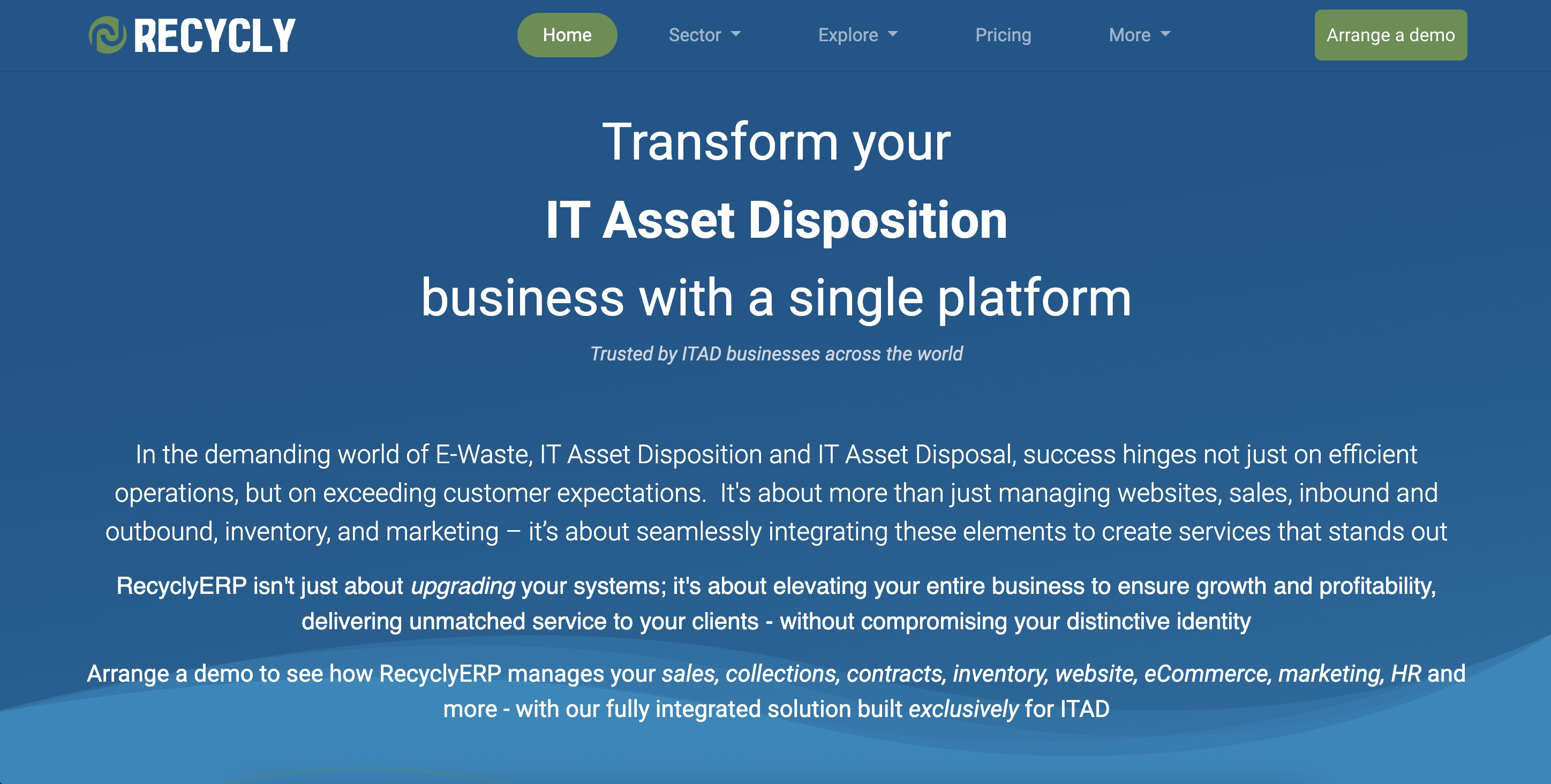
Recycly is ITAD ERP software built for the businesses that do disposition for a living, not for the IT team retiring a handful of devices. It combines sales, collections, inventory, eCommerce, and compliance workflows into one operational system, so an ITAD operator can run the entire lifecycle without stitching together separate tools. If your organization is the vendor rather than the customer, this is the category-native option.
Best for: ITAD and e-waste businesses that need an all-in-one ERP to run collections, inventory, resale, and compliance from a single platform.
Key strengths
- Collection and drop-off management: schedule pickups and drop-offs and log assets at the point of intake, anchoring chain of custody from the first touch.
- CRM, quotations, contracts, and invoicing: manage the commercial side of an ITAD business alongside the operational side, so deals and disposition stay connected.
- Inventory, warehouse, and asset snapshot management: track processed assets, snapshots, and stock across the warehouse, supporting resale and remarketing workflows.
Why choose Recycly: Most tools on this list serve the buyer of ITAD services. Recycly serves the seller. If you operate an ITAD or e-waste business and want compliance automation, audit-ready records, and a resale workflow inside one ERP instead of five apps, it fits a niche the enterprise service providers don't touch.
Recycly pricing: Recycly lists public pricing at £3,000 for onboarding as a one-time fee, plus £54 per user, per month. There's a minimum of three users, and volume discounts apply for 11 or more users. There is no free tier.
2. Asset Panda
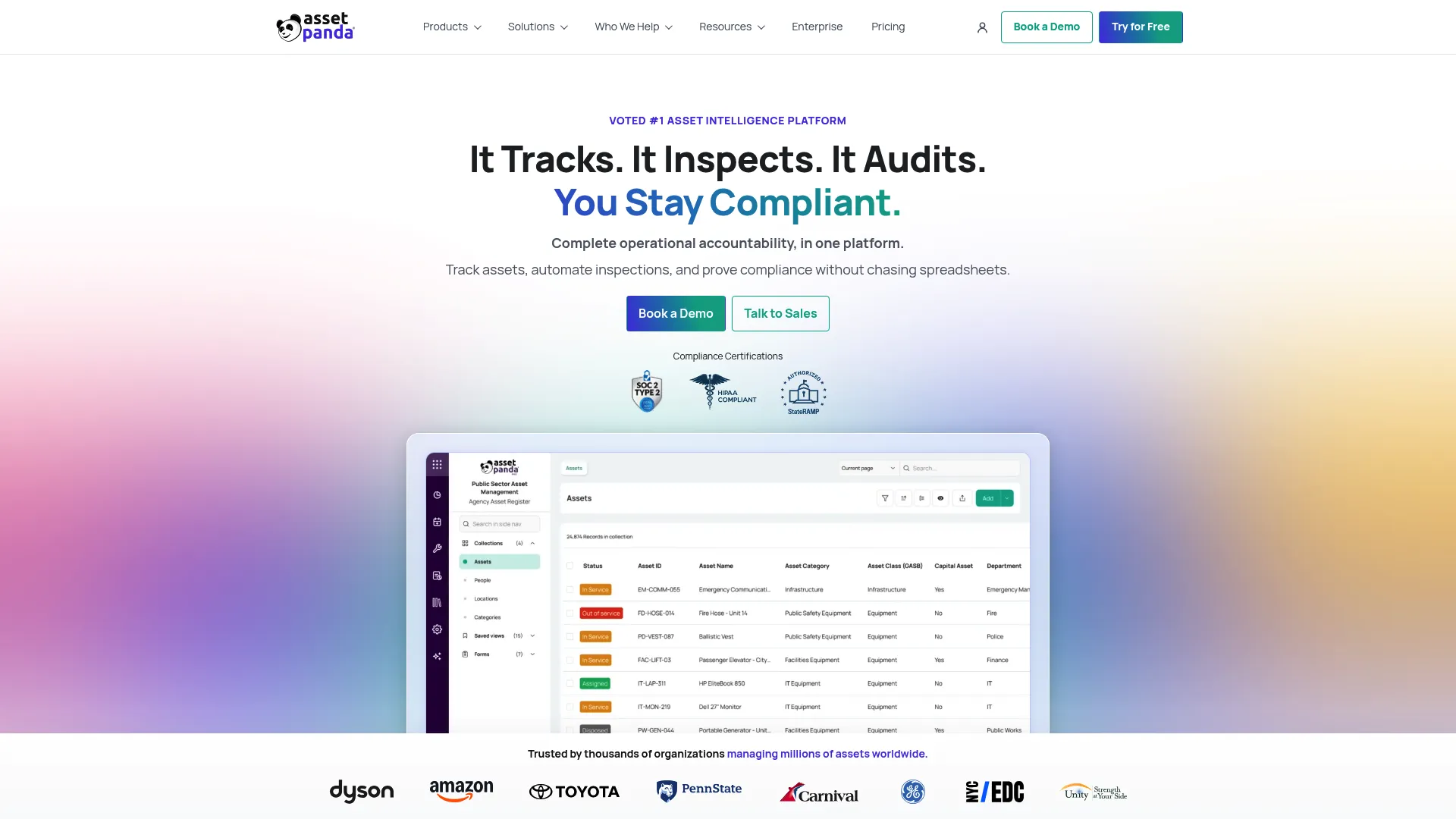
Asset Panda is cloud-based asset tracking and management software for web and mobile. It isn't a pure ITAD-native platform, and it's more of an adjacent fit than a dedicated disposition suite. But that adjacency is the point: Asset Panda helps teams understand disposition inside the full asset lifecycle, so retirement isn't a disconnected event but a stage in a record you've maintained since acquisition.
Best for: Teams that want customizable asset tracking with mobile scanning and compliance workflows, and that treat disposition as part of broader lifecycle governance.
Key strengths
- Asset tracking and lifecycle history: maintain a continuous record of each device from acquisition through retirement, giving disposition a documented starting point.
- Mobile barcode and QR scanning: scan assets in the field to keep inventory accurate and to log status changes as devices move toward end of life.
- Inspections, audits, and maintenance workflows: run structured audits and maintenance checks that feed the same record you'll rely on at disposition.
Why choose Asset Panda: Choose it when your bigger problem is knowing what you own and where it is, and disposition is one workflow among many. Product managers and operations leaders who want program visibility across the lifecycle, rather than a specialized destruction pipeline, get more from the tracking depth than from a disposition-only tool.
Asset Panda pricing: Publicly listed user-based pricing starts at $3,000 per year for the Starter plan and $7,500 per year for Business+, billed annually. Asset Panda also offers a free trial through a "Try for Free" option on its site.
3. Gartner Peer Insights
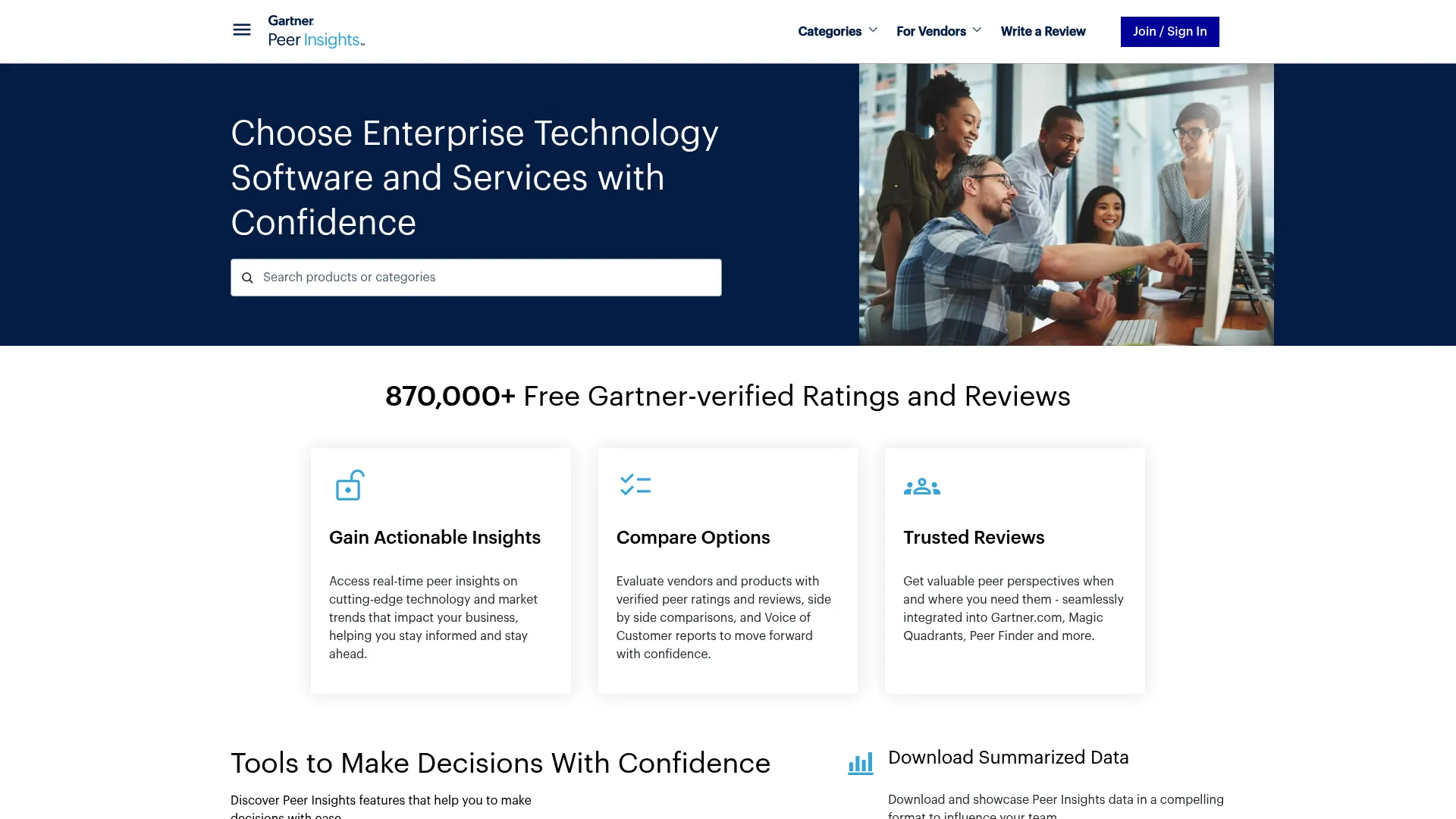
Gartner Peer Insights is not software you deploy. It's Gartner's platform for enterprise software and service reviews and ratings, and it belongs on this list because vendor selection is half the battle in ITAD. Before you sign with any ITAD company, this is where you read verified peer reviews, compare products, and check whether a provider's compliance claims hold up against real buyer experience.
Best for: Enterprise buyers and vendors who want verified peer review intelligence while shortlisting ITAD vendors, not executing disposition.
Key strengths
- Verified peer reviews and ratings: read feedback from buyers who have actually run programs with a given ITAD provider, filtered by company size and industry.
- Product comparisons: line up candidate vendors side by side to see where compliance depth, service geography, and reporting differ.
- Voice of the Customer reports: synthesized market intelligence that helps you understand a category before you commit budget.
Why choose Gartner Peer Insights: Use it for evaluation, not execution. If you're early in the buying journey and comparing ITAD services across providers, peer reviews cut through vendor marketing faster than any datasheet. It's the research layer that de-risks the decision you make with everything else on this list.
Gartner Peer Insights pricing: Peer Insights is a complimentary self-service platform. Public reading and review submission are free for both Gartner clients and non-clients, so there's no cost to use it during evaluation.
4. Reworx Recycling
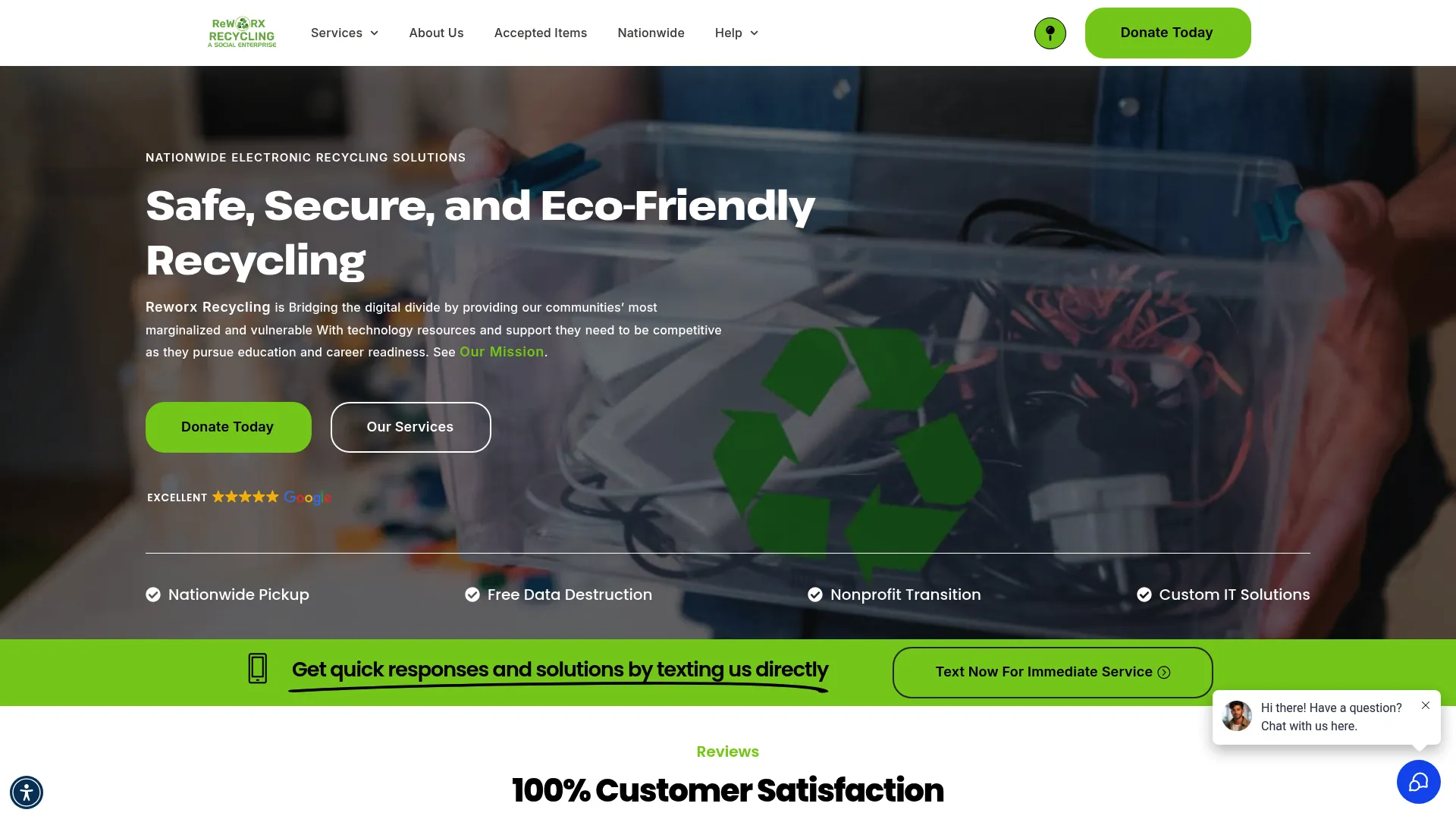
Reworx Recycling is an electronics recycling and IT asset disposition provider offering pickups, drop-off, data destruction, and related e-waste services. This is a service-led option, not a software platform. You engage Reworx when you want a provider to physically handle secure disposition, including hard drive shredding and secure data wiping, rather than run the workflow yourself.
Best for: Businesses that need secure electronics recycling and data destruction handled by a provider, especially at SMB scale.
Key strengths
- Nationwide pickup for businesses: arrange collection so retired assets leave your site under a documented handoff instead of an ad hoc pile.
- Free data destruction: included data destruction reduces the cost of doing secure IT asset disposition the right way.
- Hard drive shredding and secure data wiping: physical shredding and verified wiping give you two paths to a defensible sanitization outcome.
Why choose Reworx Recycling: Choose it when you want a service provider more than a system. For teams without the volume to justify an internal ITAD platform, a service-led provider handles the logistics, sanitization, and recycling while you keep the resulting certificates and records. The published, per-unit pricing also makes it easy to budget a small program.
Reworx Recycling pricing: Reworx publishes rates for mail-in recycling: $100 for a small box, $200 for a medium box, and $500 per pallet via freight. White Glove Service runs from $800 to $2,500 or more per project. The site also notes that some business pickups may be free depending on material and volume.
5. Iron Mountain
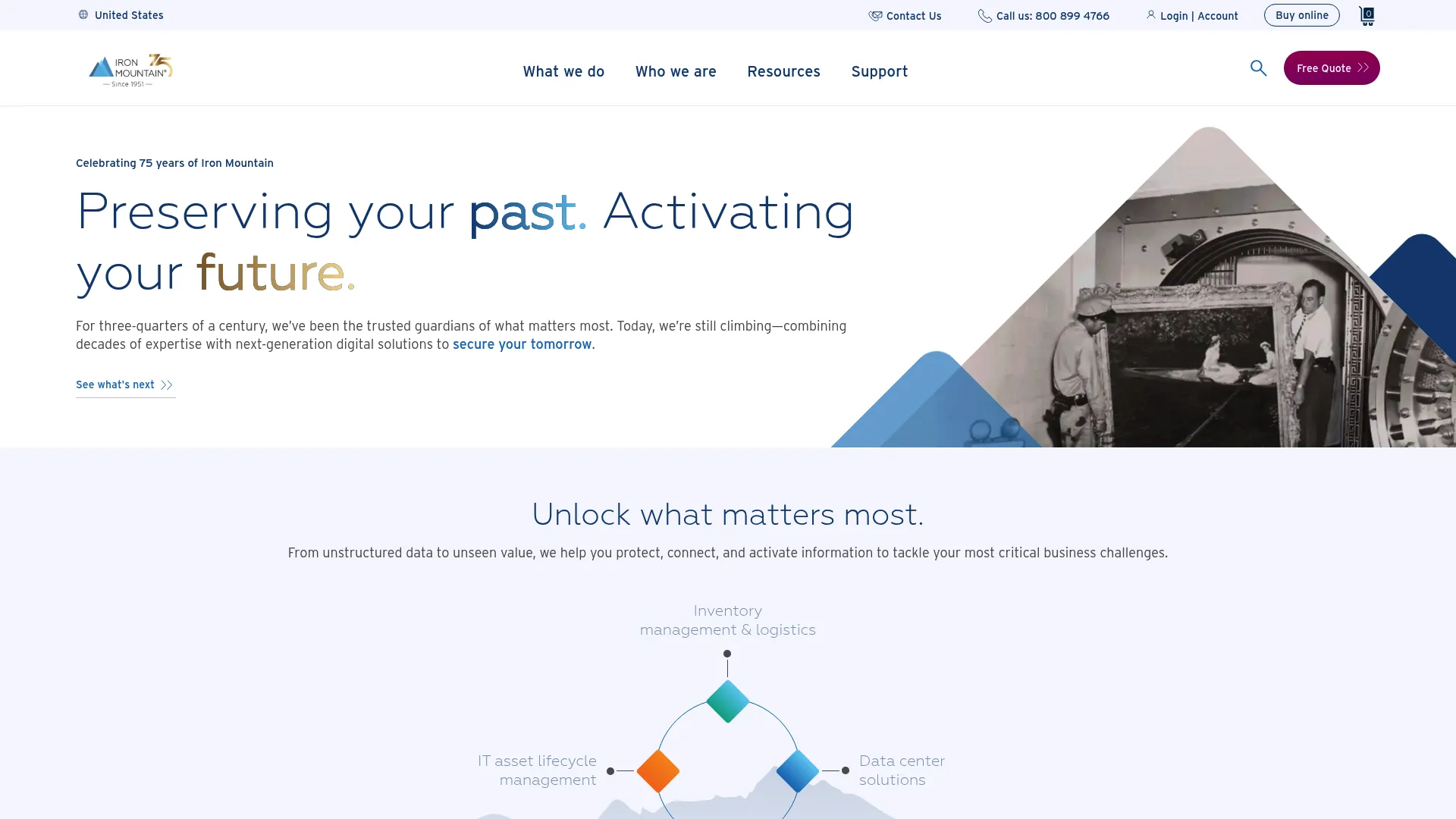
Iron Mountain is a global information management company offering secure records storage, shredding, data centers, and digital content services, with ITAD sitting inside that broader portfolio. For large organizations, its appeal is governance at scale: secure handling, documented chain of custody, and the kind of enterprise-grade compliance posture that regulated industries expect from a vendor of record.
Best for: Enterprises that need secure physical records, shredding, and information management services with heavy documentation and governance requirements.
Key strengths
- Secure onsite and offsite shredding with chain-of-custody controls: destroy media under a documented process that generates the evidence auditors want.
- Records storage and management via Iron Mountain Connect: manage physical and digital records through a governed portal that ties into disposition workflows.
- Data center colocation and supporting services: handle large-scale decommissioning within the same provider relationship, useful for infrastructure retirement.
Why choose Iron Mountain: It's a common shortlist name for regulated environments precisely because the documentation and governance are built for scrutiny. If your program has to satisfy internal audit, external regulators, and a board, the breadth of secure handling and the maturity of the compliance controls do heavy lifting that a smaller provider may not match.
Iron Mountain pricing: Iron Mountain Express, its online storefront, lists public starting prices for select offerings: one-time document shredding starting at $140 and storage boxes starting at $60. Most broader services, including enterprise ITAD, are quote-based or governed by customer pricing schedules. Iron Mountain holds a 4.0 out of 5 rating on G2.
6. Dell Technologies
Dell Technologies is a technology company spanning PCs, servers, storage, AI, cybersecurity, and IT services, and its asset recovery and takeback programs make it a natural disposition partner for hardware-centric environments. When a fleet is already Dell-heavy, routing retirement through Dell's recovery services keeps device lifecycle management inside one vendor relationship, from purchase to remarketing to responsible recycling.
Best for: Organizations that need a broad enterprise-and-endpoint infrastructure vendor and want device retirement handled alongside acquisition.
Key strengths
- Asset recovery and takeback: return retired equipment through Dell's programs, capturing residual value where it exists and recycling responsibly where it doesn't.
- Enterprise device lifecycle support: manage endpoints and infrastructure across their full life, so retirement is a planned stage rather than an afterthought.
- Servers and data storage coverage: extend recovery beyond laptops to the infrastructure layer, useful for data center refresh cycles.
Why choose Dell Technologies: Choose it when your environment is hardware-centric and already standardized on Dell. Consolidating acquisition, support, and disposition with one vendor simplifies the operational picture and can improve value recovery on equipment Dell knows well. For mixed fleets, you may pair it with a neutral ITAD provider for non-Dell gear.
Dell Technologies pricing: Dell publishes retail hardware pricing, with laptops starting around $599.99, while enterprise offerings and recovery programs are generally quote-based rather than itemized publicly. Dell Technologies carries a 4.2 out of 5 rating on G2 at the seller level.
7. HP
HP is a global technology company selling PCs, printers, displays, accessories, and enterprise solutions, and its HP Renew Solutions and takeback programs give HP-centric fleets a disposition path aligned with sustainability goals. Where Dell fits Dell-heavy environments, HP fits organizations standardized on HP hardware that want refurbishment and responsible recovery under the manufacturer's own programs.
Best for: Organizations and buyers running HP hardware that want takeback, refurbishment, and sustainability-aligned recovery direct from HP.
Key strengths
- Takeback and recovery programs: return end-of-life HP equipment through manufacturer channels, supporting ESG reporting with documented recovery.
- Refurbishment focus: route eligible devices to refurbishment rather than recycling, extending useful life and improving value recovery.
- HP Workforce Experience Platform: manage device and employee experience across the fleet, connecting lifecycle management to disposition planning.
Why choose HP: It's strongest when your fleet is HP-centric and sustainability is a stated priority. Manufacturer-led takeback keeps disposition simple for standardized environments and produces recovery documentation that supports ESG commitments. As with Dell, mixed-vendor fleets may still need a neutral provider for equipment HP doesn't cover.
HP pricing: HP's official site shows subscription offerings such as the HP All-In Plan starting at $7.99 per month, while hardware pricing varies by product and recovery programs are handled separately. There isn't a single universal platform price. HP holds a 4.3 out of 5 rating on G2 at the seller level.
8. Sims Lifecycle Services
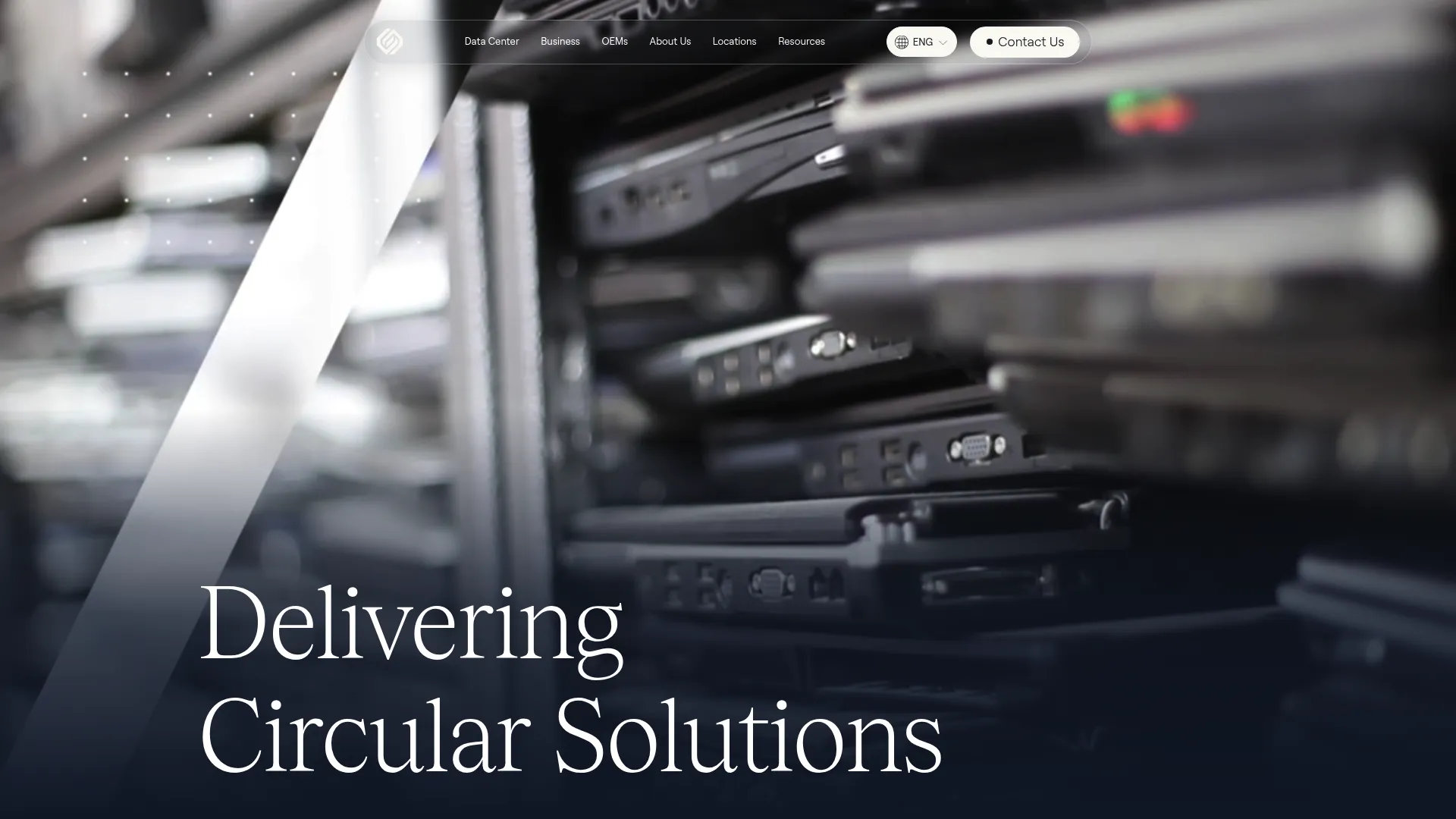
Sims Lifecycle Services is a global IT asset disposition, data center decommissioning, data destruction, reuse, and recycling services provider. This is enterprise ITAD in its purest form: end-to-end handling of retired assets, from secure sanitization through reuse and recycling, at a scale and geographic reach built for large, distributed organizations.
Best for: Enterprises that need global ITAD, data center decommissioning, and secure recycling handled by a single specialized provider.
Key strengths
- IT asset disposition: manage the full disposition lifecycle for retired assets under one provider, with compliance and sustainability built in.
- Data center decommissioning: retire infrastructure at scale, useful when consolidating facilities or migrating to cloud.
- Data destruction and secure sanitization: sanitize storage media to defensible standards, producing the destruction evidence regulated programs require.
Why choose Sims Lifecycle Services: It shows up in enterprise procurement conversations because ITAD is its core business, not a bolt-on. For organizations retiring assets across multiple regions, the combination of secure destruction, global logistics, and reuse-and-recycling workflows addresses compliance and ESG in one relationship. Verify regional coverage against your specific footprint.
Sims Lifecycle Services pricing: Sims Lifecycle Services does not publish public pricing; its ITAD and decommissioning services are quote-based and depend on scope, volume, and geography. Expect a scoping conversation rather than a self-serve rate card.
Considerations before you buy
The right ITAD choice depends less on brand and more on whether the workflow holds up under audit. Run every candidate through these five checks before you commit.
Verify security certifications and audit evidence
Confirm NIST 800-88 alignment for data sanitization, NAID AAA status for secure destruction, and recycling certifications like R2 and e-Stewards. In regulated industries, these aren't nice-to-haves; they're the difference between a defensible program and an audit finding. Ask to see a sample certificate of destruction before you sign.
Check chain-of-custody depth
Ask exactly what evidence is generated at pickup, transit, processing, and disposal. Serialized tracking that follows each device end to end is the standard. Clarify whether the workflow is software-led, service-led, or both, because that determines who owns the record and where it lives.
Compare value recovery workflows
Ask whether resale, refurbishment, donation, and redeployment are supported, not just recycling. This directly changes total return on retired assets. A program that only recycles leaves money on the table for equipment that still has a market.
Review compliance reporting and exportability
You need certificates, logs, and reports you can hand to auditors on demand. Confirm how records are stored, how long they're retained, and how quickly you can retrieve audit trails when a request lands. Exportability matters as much as generation.
Confirm service geography and logistics
ITAD lives or dies on logistics. Verify pickup coverage, processing locations, and response times against your actual footprint. A provider that's excellent in one region may not serve another. Match service geography to where your assets actually are before you sign.
Conclusion
The most practical way to choose is by workflow ownership, not marketing claims. If you run an ITAD or e-waste business yourself, Recycly gives you the end-to-end ERP to operate collections, resale, and compliance in one system. If disposition is one stage in a broader asset program, Asset Panda gives you the lifecycle tracking and visibility to keep retirement connected to a record you've maintained all along. If you're still shortlisting, Gartner Peer Insights de-risks the decision with verified peer reviews before you spend a dollar.
For teams that want a provider to physically handle secure disposition, Reworx Recycling covers SMB-scale recycling and data destruction with published pricing, while Iron Mountain, Dell Technologies, HP, and Sims Lifecycle Services carry the enterprise, regulated, and global programs where documentation, governance, and logistics decide the outcome.
Start with the option that matches your compliance depth and your workflow ownership model. Get the chain of custody and the certificate of destruction right first; everything else, including value recovery and ESG reporting, builds on that foundation.
FAQs
IT asset management (ITAM) software tracks assets during their useful life: what you own, where it is, and how it's used. IT asset disposition (ITAD) software handles the retirement and disposal stage: sanitization, remarketing, recycling, and the certificates that prove it happened. ITAM answers "what do we have," while ITAD answers "how did we retire it, and can we prove it." Strong programs connect the two so disposition inherits a clean record.
NIST 800-88 defines media sanitization methods and is the reference standard for wiping and destruction. NAID AAA certifies secure data destruction providers. R2 and e-Stewards certify responsible electronics recycling. GDPR and HIPAA don't prescribe a disposal method but hold you accountable for protecting personal and health data through end of life, which makes documented sanitization mandatory in regulated environments.
Sometimes yes. A service provider handles the physical work, but software adds value when you need centralized records, reporting, and governance across many disposal events. If you run high volume, operate across regions, or face frequent audits, software gives you a single source of truth for chain of custody and audit trails that a provider's per-project certificates alone may not.
You prove it with a continuous, serialized record: pickup logs capturing who took what and when, transit documentation, receiving and processing logs at the facility, and a certificate of destruction per asset. Together these form an unbroken audit trail. The test is simple: for any given serial number, can you produce the full history from your environment to final disposition without a gap?
Evaluate the workflow end to end: does it capture serialized chain of custody, generate audit-ready documentation, and support resale as well as recycling? Then assess cross-team ownership, because disposition touches IT, security, procurement, and compliance. Finally, weigh maintainability, will the workflow survive frequent releases and fleet changes without constant manual patching, and does reporting integrate with the systems your auditors already trust.
By prioritizing reuse over disposal. Resale, refurbishment, and redeployment keep equipment in service longer, and responsible recycling under R2 or e-Stewards reduces e-waste sent to landfill. Good ITAD software documents these outcomes, so you can report on reuse rates, materials recovered, and e-waste diverted, turning disposition into measurable ESG evidence rather than an unquantified cost.
Look for serialized, timestamped records at every handoff: pickup, transit, receiving, processing, and disposal. Reporting should tie each asset to a certificate of destruction and be exportable in formats auditors accept. The strongest reporting lets you retrieve the full history for any single device on demand, not just aggregate summaries that hide individual gaps.
Software-led options put the workflow and records in your hands: you operate the system, own the data, and generate documentation directly. Service-led ITAD companies do the physical work, collection, sanitization, and recycling, and hand you the resulting certificates. Many enterprise programs use both: software as the system of record, and a certified service provider for the logistics and destruction. The right mix depends on your volume, geography, and how much of the workflow you want to own.